Budget vs Actual Variance Analysis: Complete FP&A Reporting Guide

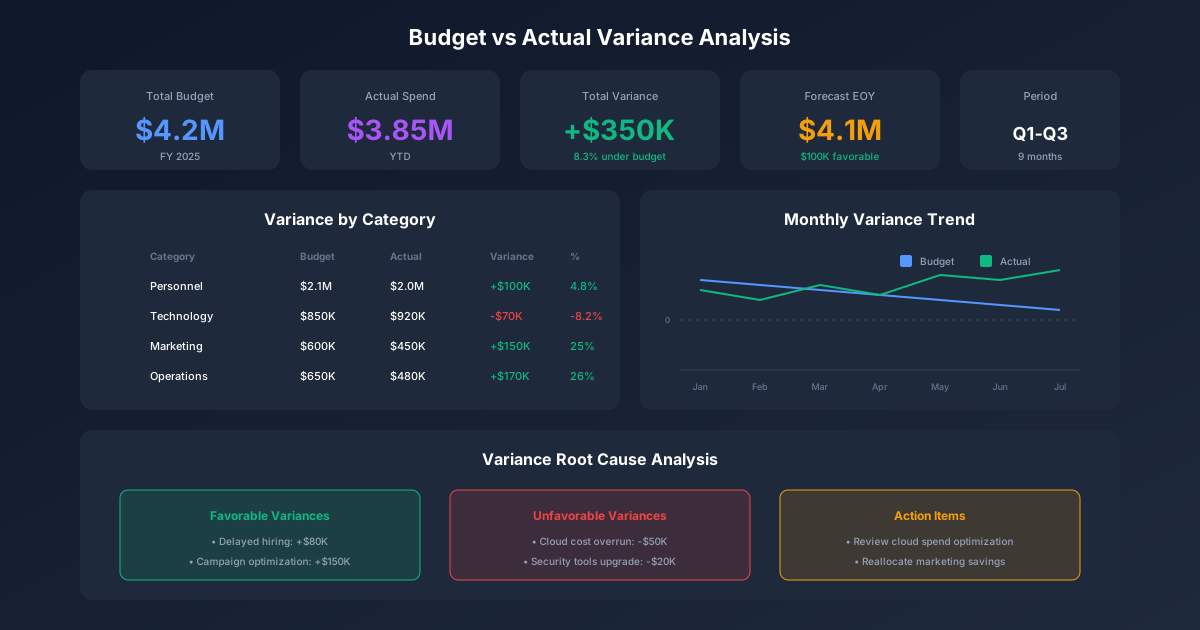
Variance analysis is the cornerstone of effective financial planning and analysis (FP&A). Yet many organizations struggle to move beyond basic "over/under" reporting to true analytical insights that drive business decisions. This comprehensive guide covers the full spectrum of variance analysis methodology—from calculation fundamentals to root cause investigation to executive-ready reporting frameworks. For foundational budgeting concepts, see our Department Budget Template Guide, and explore our complete Financial Planning Hub for additional resources.
Quick Start: Download our free Budget vs Actual Variance Template to implement the frameworks in this guide immediately.
Why Variance Analysis Matters
The Strategic Value of Variance Analysis
Budget vs actual variance analysis serves multiple critical functions in modern finance organizations:
Performance Measurement: Variances quantify the gap between planned and actual performance, providing objective measures of operational execution.
Early Warning System: Material variances signal potential issues before they become crises, enabling proactive management intervention.
Accountability Framework: Variance reporting creates clear accountability for budget owners, connecting spending decisions to business outcomes.
Forecast Accuracy Improvement: Analyzing why variances occur improves future forecasting accuracy and budgeting precision.
Resource Reallocation: Understanding variances enables intelligent resource reallocation from underperforming to high-potential areas.
The Cost of Poor Variance Analysis
Organizations with weak variance analysis capabilities face significant consequences:
BUSINESS IMPACT OF INADEQUATE VARIANCE ANALYSIS

Financial Consequences:
├── Budget overruns discovered too late to correct
├── Missed cost savings opportunities
├── Inefficient capital allocation
├── Eroded profit margins
└── Cash flow surprises

Operational Consequences:
├── Delayed decision-making
├── Finger-pointing vs problem-solving
├── Repeated mistakes across periods
├── Poor vendor/contract management
└── Misaligned incentives

Strategic Consequences:
├── Executive distrust in finance data
├── Reduced planning credibility
├── Reactive vs proactive management
├── Lost competitive opportunities
└── Diminished shareholder value
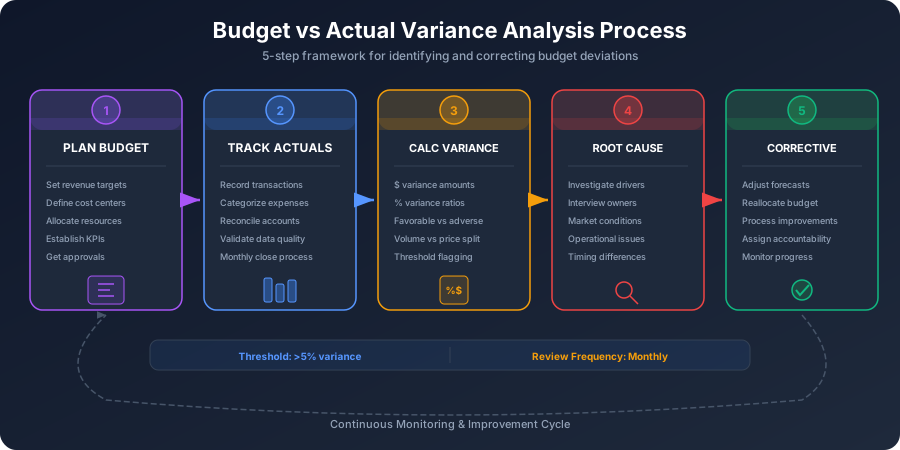
Variance Analysis Fundamentals
Basic Variance Calculations
Understanding variance calculations is the foundation for all variance analysis work.
Absolute Variance:
Variance ($) = Actual - Budget

Example:
Budget Revenue: $500,000
Actual Revenue: $475,000
Variance: $475,000 - $500,000 = ($25,000) Unfavorable
Percentage Variance:
Variance (%) = (Actual - Budget) / Budget × 100

Example:
Variance % = ($475,000 - $500,000) / $500,000 × 100
Variance % = -5.0% Unfavorable
Variance Interpretation Convention:
| Category | Favorable Variance | Unfavorable Variance |
|---|---|---|
| Revenue | Actual > Budget | Actual < Budget |
| Expense | Actual < Budget | Actual > Budget |
| Profit | Actual > Budget | Actual < Budget |
| Cost Rate | Actual < Budget | Actual > Budget |
Variance Classification Matrix
Not all variances require the same level of attention. Use a classification matrix to prioritize analysis efforts:
Variance Severity Matrix:
| Variance Level | Threshold | Response Required | Review Frequency |
|---|---|---|---|
| Immaterial | < 2% and < $5K | Document only | Monthly |
| Minor | 2-5% or $5K-$25K | Monitor trend | Monthly |
| Moderate | 5-10% or $25K-$100K | Root cause analysis | Weekly |
| Significant | 10-20% or $100K-$500K | Action plan required | Weekly |
| Critical | > 20% or > $500K | Executive escalation | Daily |
Materiality Considerations:
Materiality thresholds should be customized based on:
- Organization size and total budget
- Industry risk tolerance
- Line item sensitivity
- Business cycle phase
- Stakeholder expectations
Advanced Variance Decomposition
Moving beyond simple over/under analysis requires decomposing variances into their component drivers. This reveals the "why" behind the numbers.
Price-Volume-Mix Analysis
The most common variance decomposition separates total variance into price, volume, and mix components.
Revenue Variance Decomposition:
REVENUE VARIANCE ANALYSIS

Total Revenue Variance = Actual Revenue - Budget Revenue

Decomposed into:

1. PRICE VARIANCE
   = (Actual Price - Budget Price) × Actual Volume
   Measures: Impact of selling at different prices

2. VOLUME VARIANCE
   = (Actual Volume - Budget Volume) × Budget Price
   Measures: Impact of selling different quantities

3. MIX VARIANCE
   = (Actual Mix% - Budget Mix%) × Budget Total Volume × Budget Margin
   Measures: Impact of product/customer mix shifts

Verification:
Price Variance + Volume Variance + Mix Variance = Total Variance
Detailed Example:
| Product | Budget Units | Budget Price | Budget Revenue | Actual Units | Actual Price | Actual Revenue |
|---|---|---|---|---|---|---|
| Product A | 10,000 | $50 | $500,000 | 9,500 | $52 | $494,000 |
| Product B | 8,000 | $75 | $600,000 | 9,200 | $72 | $662,400 |
| Product C | 5,000 | $100 | $500,000 | 4,800 | $105 | $504,000 |
| Total | 23,000 | $1,600,000 | 23,500 | $1,660,400 |
Variance Decomposition:
TOTAL VARIANCE: $1,660,400 - $1,600,000 = $60,400 FAVORABLE

PRICE VARIANCE BY PRODUCT:
Product A: ($52 - $50) × 9,500 = $19,000 Favorable
Product B: ($72 - $75) × 9,200 = ($27,600) Unfavorable
Product C: ($105 - $100) × 4,800 = $24,000 Favorable
Total Price Variance: $15,400 Favorable

VOLUME VARIANCE BY PRODUCT:
Product A: (9,500 - 10,000) × $50 = ($25,000) Unfavorable
Product B: (9,200 - 8,000) × $75 = $90,000 Favorable
Product C: (4,800 - 5,000) × $100 = ($20,000) Unfavorable
Total Volume Variance: $45,000 Favorable

VERIFICATION: $15,400 + $45,000 = $60,400 ✓
Cost Variance Decomposition
Cost variances can be decomposed into rate and efficiency components:
Labor Cost Variance:
LABOR VARIANCE ANALYSIS

Total Labor Variance = Actual Labor Cost - Budget Labor Cost

1. RATE VARIANCE (Spending Variance)
   = (Actual Rate - Standard Rate) × Actual Hours
   Measures: Impact of paying different wage rates

2. EFFICIENCY VARIANCE (Usage Variance)
   = (Actual Hours - Standard Hours) × Standard Rate
   Measures: Impact of using more/fewer hours

Example:
Standard Rate: $45/hour
Standard Hours for actual output: 1,000 hours
Actual Rate: $48/hour
Actual Hours: 950 hours

Standard Cost: 1,000 × $45 = $45,000
Actual Cost: 950 × $48 = $45,600

Rate Variance: ($48 - $45) × 950 = $2,850 Unfavorable
Efficiency Variance: (950 - 1,000) × $45 = ($2,250) Favorable

Total Variance: $2,850 - $2,250 = $600 Unfavorable ✓
Material Cost Variance:
MATERIAL VARIANCE ANALYSIS

1. PRICE VARIANCE
   = (Actual Price - Standard Price) × Actual Quantity Purchased
   Measures: Impact of procurement price differences

2. USAGE VARIANCE
   = (Actual Quantity Used - Standard Quantity) × Standard Price
   Measures: Impact of material efficiency

Example:
Standard Price: $25/unit
Standard Quantity for actual output: 4,000 units
Actual Price: $23/unit
Actual Quantity: 4,200 units

Standard Cost: 4,000 × $25 = $100,000
Actual Cost: 4,200 × $23 = $96,600

Price Variance: ($23 - $25) × 4,200 = ($8,400) Favorable
Usage Variance: (4,200 - 4,000) × $25 = $5,000 Unfavorable

Total Variance: ($8,400) + $5,000 = ($3,400) Favorable ✓
Fixed vs Variable Cost Variance
Separating fixed and variable components reveals different management implications:
Variable Cost Variance:
VARIABLE COST VARIANCE

Flexible Budget = Standard Variable Rate × Actual Activity Level

Spending Variance = Actual Cost - Flexible Budget
Measures: Spending efficiency at actual activity level

Efficiency Variance = Flexible Budget - Static Budget
Measures: Impact of activity level changes

Example: Utilities (Semi-Variable)
Fixed Component: $10,000/month
Variable Rate: $2.50/machine hour
Budgeted Hours: 8,000
Actual Hours: 8,500
Actual Cost: $32,000

Static Budget: $10,000 + ($2.50 × 8,000) = $30,000
Flexible Budget: $10,000 + ($2.50 × 8,500) = $31,250
Actual: $32,000

Volume Variance: $31,250 - $30,000 = $1,250 Unfavorable (more activity)
Spending Variance: $32,000 - $31,250 = $750 Unfavorable (higher rate)
Total: $2,000 Unfavorable
Root Cause Analysis Framework
Calculating variances is only the beginning. True value comes from understanding why variances occurred and taking appropriate action.
The 5-Why Methodology for Variances
Apply systematic root cause analysis to significant variances:
VARIANCE ROOT CAUSE ANALYSIS: 5-WHY EXAMPLE

Observation: Q1 Marketing spend $85,000 over budget (22% unfavorable)

Why #1: Why is marketing over budget?
→ Digital advertising spend exceeded plan by $72,000

Why #2: Why did digital advertising exceed plan?
→ Cost-per-click increased 45% vs budget assumptions

Why #3: Why did CPC increase 45%?
→ Competitor increased bidding on our target keywords

Why #4: Why didn't we adjust strategy when CPC rose?
→ No automated alerts for CPC threshold breaches

Why #5: Why weren't alerts configured?
→ Marketing/Finance handoff gap in campaign monitoring

ROOT CAUSE: Process gap in real-time cost monitoring for digital campaigns

CORRECTIVE ACTIONS:
1. Implement automated CPC threshold alerts
2. Weekly Marketing-Finance campaign cost reviews
3. Quarterly budget re-forecast for digital spend
4. Contingency reallocation authority for CMO
Variance Investigation Decision Tree
Use a structured decision tree to guide investigation depth:
VARIANCE INVESTIGATION DECISION TREE

START: Variance Identified
     │
     ├──> Is variance > materiality threshold?
     │         │
     │         NO ──> Document and monitor
     │         │
     │         YES ──> Continue investigation
     │                      │
     ├──────────────────────┼──> Is this a timing variance?
     │                      │         │
     │                      │         YES ──> Will it reverse?
     │                      │         │         │
     │                      │         │         YES ──> Document expected reversal
     │                      │         │         │
     │                      │         │         NO ──> Treat as permanent variance
     │                      │         │
     │                      │         NO ──> Is this a volume-driven variance?
     │                      │                      │
     │                      │                      YES ──> Analyze activity driver
     │                      │                      │
     │                      │                      NO ──> Is this a rate variance?
     │                      │                               │
     │                      │                               YES ──> Analyze pricing/cost
     │                      │                               │
     │                      │                               NO ──> Mixed/complex variance
     │                      │                                      │
     │                      │                                      └──> Full decomposition
     │
     └──> DOCUMENT ROOT CAUSE AND ACTION PLAN
Common Variance Root Causes
Build a reference library of common variance drivers:
Revenue Variance Root Causes:
| Variance Type | Common Causes | Investigation Focus |
|---|---|---|
| Price Favorable | Competitor price increase, premium product demand, reduced discounting | Sustainability, market positioning |
| Price Unfavorable | Competitive pressure, excess inventory, sales incentives | Margin impact, pricing strategy |
| Volume Favorable | Market growth, sales effectiveness, new channels | Capacity constraints, scalability |
| Volume Unfavorable | Market decline, lost customers, supply issues | Customer feedback, competitive analysis |
| Mix Favorable | Premium product adoption, customer upgrade | Product development, pricing optimization |
| Mix Unfavorable | Commoditization, channel shift, promotions | Product strategy, customer segmentation |
Expense Variance Root Causes:
| Variance Type | Common Causes | Investigation Focus |
|---|---|---|
| Personnel Over | Unplanned hiring, overtime, salary increases | Headcount approval process, workload |
| Personnel Under | Vacant positions, attrition, delayed starts | Recruiting pipeline, retention |
| Operations Over | Vendor price increases, usage growth, scope creep | Contract terms, demand drivers |
| Operations Under | Deferred projects, efficiency gains, vendor credits | Timing, sustainability |
| Capital Over | Scope changes, rush procurement, specification changes | Project management, planning |
| Capital Under | Project delays, cancelled initiatives, better pricing | Pipeline review, vendor performance |
Variance Reporting Frameworks
Effective variance reporting transforms data into actionable intelligence for decision-makers.
Executive Summary Dashboard
Design executive reports for rapid comprehension and decision support:
EXECUTIVE VARIANCE DASHBOARD - JANUARY 2025

═══════════════════════════════════════════════════════════════════════
FINANCIAL SUMMARY                          Actual    Budget   Variance
═══════════════════════════════════════════════════════════════════════
Revenue                                    $4.2M     $4.5M    ($300K)  -7%
Gross Profit                               $2.5M     $2.8M    ($300K) -11%
Operating Expenses                         $1.8M     $1.9M     $100K   +5%
EBITDA                                     $700K     $900K    ($200K) -22%
═══════════════════════════════════════════════════════════════════════

KEY VARIANCE DRIVERS:
┌──────────────────────────────────────────────────────────────────────┐
│ Revenue -$300K                                                       │
│   └─ Enterprise deals slipped to Q2 (-$400K)                        │
│   └─ SMB overperformance (+$100K)                                   │
│                                                                      │
│ Gross Margin -3pts (56% vs 62% budget)                              │
│   └─ Product mix shift to lower-margin bundles                      │
│   └─ Increased cloud infrastructure costs                           │
│                                                                      │
│ OpEx +$100K favorable                                                │
│   └─ Marketing underspend due to campaign delays (+$150K)           │
│   └─ G&A hiring ahead of plan (-$50K)                               │
└──────────────────────────────────────────────────────────────────────┘

FORECAST IMPACT:
Original FY2025 EBITDA Target: $12.0M
Revised Forecast: $10.8M (-10%)
Required Actions Underway (see details below)

TRAFFIC LIGHT SUMMARY:
[RED]    Revenue          Requires intervention
[YELLOW] Gross Margin     Monitoring required
[GREEN]  Operating Exp    On track
[RED]    EBITDA           Corrective action in progress
Detailed Variance Report Template
Provide supporting detail for finance and operations teams:
DETAILED VARIANCE ANALYSIS REPORT
Period: January 2025
Prepared: February 5, 2025

═══════════════════════════════════════════════════════════════════════
SECTION 1: REVENUE ANALYSIS
═══════════════════════════════════════════════════════════════════════

Revenue by Segment:
┌─────────────────┬──────────┬──────────┬──────────┬──────────┬────────┐
│ Segment         │ Actual   │ Budget   │ Var ($)  │ Var (%)  │ Status │
├─────────────────┼──────────┼──────────┼──────────┼──────────┼────────┤
│ Enterprise      │ $2.1M    │ $2.5M    │ ($400K)  │ -16%     │ RED    │
│ Mid-Market      │ $1.2M    │ $1.2M    │ $0       │ 0%       │ GREEN  │
│ SMB             │ $900K    │ $800K    │ $100K    │ +13%     │ GREEN  │
├─────────────────┼──────────┼──────────┼──────────┼──────────┼────────┤
│ TOTAL           │ $4.2M    │ $4.5M    │ ($300K)  │ -7%      │ RED    │
└─────────────────┴──────────┴──────────┴──────────┴──────────┴────────┘

Enterprise Variance Analysis:
Root Cause: Two large enterprise deals ($250K, $150K) slipped to Q2
- Customer A: Legal review delayed (Expected close: Feb 15)
- Customer B: Budget approval pending (Expected close: Feb 28)

Impact Assessment: Timing variance - both deals remain in pipeline
Action Required: Accelerate legal/procurement engagement on deals in final stages

SMB Overperformance Analysis:
Root Cause: New self-service channel exceeded adoption projections
- 340 new self-service customers vs 250 budgeted
- Average deal size on track at $2,500

Implication: Consider increasing digital marketing allocation to SMB channel

═══════════════════════════════════════════════════════════════════════
SECTION 2: GROSS MARGIN ANALYSIS
═══════════════════════════════════════════════════════════════════════

Gross Margin Variance:
┌─────────────────┬──────────┬──────────┬──────────┬──────────────────┐
│ Component       │ Actual   │ Budget   │ Variance │ Explanation      │
├─────────────────┼──────────┼──────────┼──────────┼──────────────────┤
│ Revenue         │ $4.2M    │ $4.5M    │ ($300K)  │ See Section 1    │
│ COGS            │ $1.7M    │ $1.7M    │ $0       │                  │
│ Gross Profit    │ $2.5M    │ $2.8M    │ ($300K)  │                  │
│ Gross Margin %  │ 59.5%    │ 62.2%    │ -2.7pts  │                  │
└─────────────────┴──────────┴──────────┴──────────┴──────────────────┘

Margin Variance Decomposition:
- Volume Impact: ($186K) - Lower revenue at budget margin
- Mix Impact: ($95K) - Higher proportion of bundled deals (55% vs 45%)
- Rate Impact: ($19K) - AWS cost increases

Corrective Actions:
1. Pricing review for bundles (target +3pts margin improvement)
2. AWS committed spend negotiation in progress
3. Product cost optimization sprint initiated

═══════════════════════════════════════════════════════════════════════
SECTION 3: OPERATING EXPENSE ANALYSIS
═══════════════════════════════════════════════════════════════════════

Operating Expenses by Category:
┌─────────────────┬──────────┬──────────┬──────────┬──────────┬────────┐
│ Category        │ Actual   │ Budget   │ Var ($)  │ Var (%)  │ Status │
├─────────────────┼──────────┼──────────┼──────────┼──────────┼────────┤
│ Sales           │ $520K    │ $550K    │ $30K     │ +5%      │ GREEN  │
│ Marketing       │ $380K    │ $500K    │ $120K    │ +24%     │ YELLOW │
│ R&D             │ $450K    │ $440K    │ ($10K)   │ -2%      │ GREEN  │
│ G&A             │ $450K    │ $410K    │ ($40K)   │ -10%     │ YELLOW │
├─────────────────┼──────────┼──────────┼──────────┼──────────┼────────┤
│ TOTAL           │ $1,800K  │ $1,900K  │ $100K    │ +5%      │ GREEN  │
└─────────────────┴──────────┴──────────┴──────────┴──────────┴────────┘

Marketing Underspend Investigation:
Root Cause: Brand campaign delayed due to creative agency transition
- Original launch: January 15
- Revised launch: March 1
- Spend will shift to Q2 (timing variance)

Recommendation: Re-forecast Q2 marketing spend upward; maintain annual target

G&A Overspend Investigation:
Root Cause: Accelerated hiring for finance transformation project
- 2 FTEs started January vs March budget
- Net impact: ($40K) in Q1, but offsetting savings expected Q2-Q4

Recommendation: Accept timing variance; project ROI remains positive
Trend Analysis Format
Show variance patterns over time to identify systemic issues:
VARIANCE TREND ANALYSIS - ROLLING 6 MONTHS

Revenue Variance Trend:
┌────────┬──────────┬──────────┬──────────┬──────────┬─────────────────┐
│ Month  │ Budget   │ Actual   │ Var ($)  │ Var (%)  │ Trend           │
├────────┼──────────┼──────────┼──────────┼──────────┼─────────────────┤
│ Aug    │ $4.0M    │ $4.1M    │ $100K    │ +2.5%    │ ██████          │
│ Sep    │ $4.2M    │ $4.0M    │ ($200K)  │ -4.8%    │ ████            │
│ Oct    │ $4.3M    │ $4.2M    │ ($100K)  │ -2.3%    │ █████           │
│ Nov    │ $4.4M    │ $4.0M    │ ($400K)  │ -9.1%    │ ██              │
│ Dec    │ $4.6M    │ $4.3M    │ ($300K)  │ -6.5%    │ ███             │
│ Jan    │ $4.5M    │ $4.2M    │ ($300K)  │ -6.7%    │ ███             │
├────────┼──────────┼──────────┼──────────┼──────────┼─────────────────┤
│ YTD    │ $26.0M   │ $24.8M   │ ($1.2M)  │ -4.6%    │ Pattern: ↘      │
└────────┴──────────┴──────────┴──────────┴──────────┴─────────────────┘

TREND ANALYSIS:
Pattern: Consistent negative revenue variance since September
Magnitude: Variance widening from -2% to -7%
Seasonality: December spike consistent with prior year Q4 challenge

ROOT CAUSE HYPOTHESIS:
- Enterprise sales cycle elongation (avg 45 days → 62 days)
- Increased competition in mid-market segment
- Budget assumptions did not reflect macro headwinds

RECOMMENDED ACTIONS:
1. Reset annual forecast with revised assumptions
2. Sales enablement investment to accelerate cycles
3. Competitive response initiative in mid-market
Rolling Forecast Integration
Variance analysis should feed directly into forecast updates, creating a continuous planning cycle.
Variance-Driven Forecast Updates
Forecast Update Framework:
VARIANCE-TO-FORECAST BRIDGE

Step 1: Classify Variance as Timing vs Permanent
┌─────────────────────────────────────────────────────────────────────┐
│ TIMING VARIANCE                  │ PERMANENT VARIANCE               │
│ - Will reverse in future periods │ - Will not reverse               │
│ - Adjust period allocation       │ - Adjust full-year forecast      │
│ - Examples: Delayed deals,       │ - Examples: Lost customer,       │
│   shifted campaigns, early       │   price reduction, headcount     │
│   payments                       │   decision, market change        │
└─────────────────────────────────────────────────────────────────────┘

Step 2: Calculate Forecast Impact

Full-Year Forecast = Prior Forecast + Year-to-Date Variance +
                     Forecast Adjustment for Remaining Periods

Example:
Prior Annual Forecast: $50.0M
YTD Actual (Jan): $4.2M
YTD Budget (Jan): $4.5M
YTD Variance: ($0.3M)

Variance Classification:
- Timing (Enterprise deals): ($0.4M) → Shifts to Feb-Mar
- Permanent (Market adjustment): $0.1M benefit

Remaining Period Adjustment:
- Feb-Mar revenue increase: +$0.4M (timing recovery)
- Full-year market adjustment: ($0.3M) permanent reduction

Revised Annual Forecast: $50.0M - $0.3M = $49.7M
Monthly Forecast Roll Process:
ROLLING FORECAST PROCESS CALENDAR

Week 1 (Days 1-5): Close Period
├── Day 1-2: Close books, preliminary actuals
├── Day 3: Variance calculations complete
├── Day 4-5: Root cause analysis by department
└── Output: Variance explanation package

Week 2 (Days 6-10): Analyze and Forecast
├── Day 6-7: Finance consolidates variance drivers
├── Day 8: Classify timing vs permanent variances
├── Day 9-10: Update remaining period forecasts
└── Output: Updated rolling forecast

Week 3 (Days 11-15): Review and Approve
├── Day 11-12: Department forecast reviews
├── Day 13: FP&A leadership review
├── Day 14: CFO/executive review
├── Day 15: Forecast finalized
└── Output: Approved rolling forecast

Week 4 (Days 16-EOM): Communicate and Act
├── Day 16-18: Board/investor reporting
├── Day 19-25: Operational response to variances
├── Day 26-EOM: Prepare for next close
└── Output: Stakeholder communications, action plans
Forecast Accuracy Tracking
Measure and improve forecasting capability over time:
FORECAST ACCURACY SCORECARD

Metric: Mean Absolute Percentage Error (MAPE)
Formula: MAPE = (1/n) × Σ |Actual - Forecast| / Actual × 100

FORECAST ACCURACY BY CATEGORY:

┌────────────────────┬───────────┬───────────┬───────────┬────────────┐
│ Category           │ Q1 MAPE   │ Q2 MAPE   │ Q3 MAPE   │ Target     │
├────────────────────┼───────────┼───────────┼───────────┼────────────┤
│ Revenue            │ 8.2%      │ 6.5%      │ 5.1%      │ < 5%       │
│ COGS               │ 4.1%      │ 3.8%      │ 3.2%      │ < 5%       │
│ Personnel          │ 2.5%      │ 2.1%      │ 1.8%      │ < 3%       │
│ Operating Expenses │ 12.3%     │ 9.5%      │ 7.8%      │ < 10%      │
│ Capital            │ 25.0%     │ 18.2%     │ 15.5%     │ < 15%      │
├────────────────────┼───────────┼───────────┼───────────┼────────────┤
│ Overall            │ 10.4%     │ 8.0%      │ 6.7%      │ < 7%       │
└────────────────────┴───────────┴───────────┴───────────┴────────────┘

ACCURACY IMPROVEMENT TREND: ↗ Improving (+36% better accuracy Q3 vs Q1)

Key Improvements Made:
- Added deal stage weighting to revenue forecast (Q2)
- Implemented rolling 3-month OpEx average (Q2)
- Capital project milestone tracking (Q3)
Excel Formulas and Techniques
Implement variance analysis efficiently using Excel (or Google Sheets).
Essential Variance Formulas
Basic Variance Calculations:
VARIANCE FORMULA REFERENCE

Absolute Variance:
=Actual-Budget
Example: =B5-C5

Percentage Variance:
=IF(Budget=0,"N/A",(Actual-Budget)/ABS(Budget))
Example: =IF(C5=0,"N/A",(B5-C5)/ABS(C5))

Favorable/Unfavorable Label:
=IF(Variance=0,"On Budget",IF(Variance>0,"Favorable","Unfavorable"))
For expenses (reverse logic):
=IF(Variance=0,"On Budget",IF(Variance<0,"Favorable","Unfavorable"))

Conditional Formatting Threshold:
=ABS(VariancePercent)>0.10
(Highlight variances exceeding 10%)
Variance Decomposition Formulas:
PRICE-VOLUME VARIANCE FORMULAS

Price Variance:
=(ActualPrice-BudgetPrice)*ActualVolume
Example: =(D5-E5)*B5

Volume Variance:
=(ActualVolume-BudgetVolume)*BudgetPrice
Example: =(B5-C5)*E5

Mix Variance (for multiple products):
=SUMPRODUCT((ActualMix%-BudgetMix%)*BudgetTotalVolume*BudgetMargin)

Verification Check:
=IF(ABS(TotalVariance-(PriceVar+VolumeVar+MixVar))<1,"OK","ERROR")
Trend Analysis Formulas:
TREND ANALYSIS FORMULAS

Rolling Average Variance:
=AVERAGE(OFFSET(CurrentCell,-5,0,6,1))
(6-month rolling average)

Variance Trend Direction:
=IF(CurrentVariance>PriorVariance,"Improving",
    IF(CurrentVariance<PriorVariance,"Worsening","Stable"))

Consecutive Unfavorable Periods:
=IF(AND(Var1<0,Var2<0,Var3<0),"3+ Consecutive Unfavorable","")

Year-over-Year Variance Comparison:
=(CurrentYearVariance-PriorYearVariance)/ABS(PriorYearVariance)
Pivot Table Variance Analysis
Structure data for dynamic variance analysis:
DATA STRUCTURE FOR PIVOT TABLE ANALYSIS

Required Columns:
┌──────────┬──────────┬──────────┬──────────┬──────────┬──────────┐
│ Period   │ Account  │ Category │ Actual   │ Budget   │ Variance │
├──────────┼──────────┼──────────┼──────────┼──────────┼──────────┤
│ Jan-25   │ 4000-Rev │ Revenue  │ 425000   │ 450000   │ -25000   │
│ Jan-25   │ 5000-COGS│ COGS     │ 170000   │ 171000   │ 1000     │
│ Jan-25   │ 6100-Sal │ Personnel│ 285000   │ 280000   │ -5000    │
│ Jan-25   │ 6200-Ben │ Personnel│ 85000    │ 84000    │ -1000    │
│ ...      │ ...      │ ...      │ ...      │ ...      │ ...      │
└──────────┴──────────┴──────────┴──────────┴──────────┴──────────┘

Pivot Table Configuration:
- Rows: Category, Account
- Columns: Period (Month, Quarter, Year)
- Values: SUM of Actual, SUM of Budget, SUM of Variance
- Filters: Department, Cost Center, Region

Calculated Field: Variance %
Formula: =Variance/ABS(Budget)
Automated Variance Commentary
Use formulas to generate automated variance explanations:
AUTOMATED COMMENTARY FORMULAS

Variance Magnitude Description:
=IF(ABS(VarPct)<0.02,"immaterial",
 IF(ABS(VarPct)<0.05,"minor",
 IF(ABS(VarPct)<0.10,"moderate",
 IF(ABS(VarPct)<0.20,"significant","critical"))))

Direction + Magnitude Sentence:
=CONCATENATE(AccountName," variance is ",
 IF(Variance>0,"favorable","unfavorable")," by ",
 TEXT(ABS(Variance),"$#,##0")," (",
 TEXT(ABS(VarPct),"0.0%"),"), which is ",
 VarianceMagnitude,".")

Example Output:
"Marketing expense variance is favorable by $45,000 (8.5%),
which is moderate."

Threshold Alert:
=IF(ABS(VarPct)>ThresholdPct,
 CONCATENATE("⚠️ ALERT: ",AccountName," exceeds ",
 TEXT(ThresholdPct,"0%")," threshold - investigation required"),
 "")
Variance Analysis by Department
Different departments require tailored variance analysis approaches.
Sales and Revenue Variance
SALES VARIANCE ANALYSIS FRAMEWORK

Key Metrics:
├── Revenue vs Budget
├── Bookings vs Target
├── Pipeline Coverage Variance
├── Win Rate Variance
├── Average Deal Size Variance
├── Sales Cycle Length Variance
└── Quota Attainment Variance

Revenue Variance Decomposition:
┌─────────────────────────────────────────────────────────────────────┐
│ Revenue = Opportunities × Win Rate × Average Deal Size              │
│                                                                     │
│ Therefore:                                                          │
│ Rev Variance = Opportunity Variance (pipeline)                      │
│              + Win Rate Variance (sales effectiveness)              │
│              + Deal Size Variance (pricing/mix)                     │
│              + Timing Variance (cycle length)                       │
└─────────────────────────────────────────────────────────────────────┘

Example Analysis:
Budget Revenue: $500,000
Actual Revenue: $425,000
Total Variance: ($75,000) Unfavorable

Decomposition:
- Pipeline variance: ($30,000) - Fewer opportunities than planned
- Win rate variance: ($25,000) - 22% win rate vs 28% budget
- Deal size variance: ($10,000) - More discounting than planned
- Timing variance: ($10,000) - Longer sales cycles

Action Items:
1. Marketing pipeline generation acceleration
2. Sales enablement for competitive situations
3. Discount approval process review
4. Procurement engagement earlier in cycle
Marketing Variance Analysis
MARKETING VARIANCE ANALYSIS FRAMEWORK

Key Metrics:
├── Marketing Spend vs Budget
├── Cost per Lead (CPL) Variance
├── Customer Acquisition Cost (CAC) Variance
├── Marketing Qualified Lead (MQL) Variance
├── Conversion Rate Variance
└── Channel Mix Variance

Marketing Efficiency Variance:
┌─────────────────────────────────────────────────────────────────────┐
│ CAC = Total Marketing Spend / New Customers Acquired                │
│                                                                     │
│ CAC Variance = Spend Variance (budget adherence)                    │
│              + Efficiency Variance (cost per result)                │
│              + Conversion Variance (funnel effectiveness)           │
└─────────────────────────────────────────────────────────────────────┘

Channel Performance Analysis:
┌────────────────┬──────────┬──────────┬──────────┬──────────┬────────┐
│ Channel        │ Budget   │ Actual   │ Leads    │ CPL Var  │ Status │
├────────────────┼──────────┼──────────┼──────────┼──────────┼────────┤
│ Paid Search    │ $80,000  │ $95,000  │ 1,200    │ +18%     │ REVIEW │
│ Social Ads     │ $50,000  │ $45,000  │ 600      │ -10%     │ OK     │
│ Content        │ $40,000  │ $38,000  │ 800      │ -5%      │ OK     │
│ Events         │ $30,000  │ $22,000  │ 150      │ -27%     │ TIMING │
├────────────────┼──────────┼──────────┼──────────┼──────────┼────────┤
│ TOTAL          │ $200,000 │ $200,000 │ 2,750    │ 0%       │ OK     │
└────────────────┴──────────┴──────────┴──────────┴──────────┴────────┘

Insight: Paid search CPL increase offset by better content performance
Action: Evaluate paid search keyword strategy; consider reallocation
Operations and IT Variance
OPERATIONS/IT VARIANCE ANALYSIS FRAMEWORK

Key Metrics:
├── Operating Expense vs Budget
├── Cost per Transaction/User Variance
├── Capacity Utilization Variance
├── Vendor Spend Variance
├── Project Spend vs Approved Budget
└── Infrastructure Cost Variance

Infrastructure Cost Analysis:
┌─────────────────────────────────────────────────────────────────────┐
│ Cloud Cost = Usage × Unit Rate                                      │
│                                                                     │
│ Variance = Usage Variance (demand/efficiency)                       │
│          + Rate Variance (pricing changes)                          │
│          + Scope Variance (new services)                            │
└─────────────────────────────────────────────────────────────────────┘

IT Project Variance Analysis:
┌─────────────────┬──────────┬──────────┬──────────┬─────────────────┐
│ Project         │ Budget   │ Actual   │ Variance │ Status          │
├─────────────────┼──────────┼──────────┼──────────┼─────────────────┤
│ ERP Upgrade     │ $450,000 │ $420,000 │ +$30,000 │ 85% complete    │
│ Security Suite  │ $125,000 │ $145,000 │ -$20,000 │ Scope increase  │
│ Network Refresh │ $200,000 │ $180,000 │ +$20,000 │ On track        │
│ Data Analytics  │ $175,000 │ $210,000 │ -$35,000 │ Timeline slip   │
├─────────────────┼──────────┼──────────┼──────────┼─────────────────┤
│ TOTAL           │ $950,000 │ $955,000 │ -$5,000  │ Slightly over   │
└─────────────────┴──────────┴──────────┴──────────┴─────────────────┘

Root Cause Summary:
- Security Suite: Regulatory change required additional controls
- Data Analytics: Vendor implementation delays, added consulting
HR and Personnel Variance
HR VARIANCE ANALYSIS FRAMEWORK

Key Metrics:
├── Compensation Expense vs Budget
├── Headcount vs Plan
├── Cost per Employee Variance
├── Benefits Cost Variance
├── Turnover Rate Variance
├── Training Spend Variance
└── Recruiting Cost Variance

Headcount Bridge Analysis:
┌─────────────────────────────────────────────────────────────────────┐
│ Ending Headcount = Beginning + Hires - Terminations                 │
│                                                                     │
│ Headcount Variance = Hiring Variance (timing, approved vs actual)   │
│                    + Attrition Variance (expected vs actual)        │
│                    + Transfer Variance (internal movements)         │
└─────────────────────────────────────────────────────────────────────┘

Compensation Variance Analysis:
┌─────────────────┬──────────┬──────────┬──────────┬──────────┬───────┐
│ Category        │ Budget   │ Actual   │ Variance │ Var %    │ Cause │
├─────────────────┼──────────┼──────────┼──────────┼──────────┼───────┤
│ Base Salaries   │ $1.8M    │ $1.75M   │ +$50K    │ +2.8%    │ Vac   │
│ Bonuses         │ $200K    │ $220K    │ -$20K    │ -10.0%   │ Perf  │
│ Benefits        │ $450K    │ $470K    │ -$20K    │ -4.4%    │ Rate  │
│ Payroll Taxes   │ $160K    │ $155K    │ +$5K     │ +3.1%    │ Vac   │
│ Training        │ $80K     │ $60K     │ +$20K    │ +25.0%   │ Defer │
├─────────────────┼──────────┼──────────┼──────────┼──────────┼───────┤
│ TOTAL           │ $2.69M   │ $2.655M  │ +$35K    │ +1.3%    │       │
└─────────────────┴──────────┴──────────┴──────────┴──────────┴───────┘

Analysis:
- Vacancies (3 open positions): $50K favorable, offset by bonus/benefits
- Benefits rate increase: Health insurance renewal +8%
- Training deferred to Q2 (timing variance)
Variance Action Management
Variance analysis is only valuable when it drives appropriate action.
Action Response Framework
Variance Response Matrix:
| Variance Type | Timing | Permanent | Required Response |
|---|---|---|---|
| Immaterial | Document | Document | Standard monitoring |
| Favorable | Monitor | Investigate sustainability | Consider reallocation |
| Unfavorable Timing | Adjust forecast | N/A | Update period allocation |
| Unfavorable Permanent | N/A | Action plan | Corrective measures |
| Critical | Escalate | Escalate | Executive intervention |
Action Plan Template:
VARIANCE CORRECTIVE ACTION PLAN

Variance: Marketing Expense - $120K Unfavorable (15% over budget)
Period: January 2025
Owner: CMO
Due Date: February 28, 2025

ROOT CAUSE SUMMARY:
1. Digital advertising CPC increase (+45%)
2. Unplanned agency fees for brand refresh
3. Event sponsorship scope increase

CORRECTIVE ACTIONS:

Action 1: Digital Advertising Optimization
├── Owner: Digital Marketing Director
├── Due: February 15
├── Expected Savings: $40K/month
├── Actions:
│   ├── Pause underperforming keywords (Week 1)
│   ├── Implement automated bid management (Week 2)
│   └── Shift budget to higher-ROI channels (Week 3)
└── Success Metric: CPC reduction to within 15% of budget

Action 2: Agency Spend Control
├── Owner: VP Marketing
├── Due: February 20
├── Expected Savings: $25K
├── Actions:
│   ├── Implement SOW approval process (Immediate)
│   ├── Cap agency hours without CFO approval (Week 1)
│   └── In-house transition for ongoing design work (Week 3)
└── Success Metric: No additional unplanned agency spend

Action 3: Event Budget Reforecast
├── Owner: Events Manager + FP&A
├── Due: February 10
├── Impact: $55K budget increase
├── Actions:
│   ├── Document scope changes and business case (Week 1)
│   ├── Identify offsetting reductions in H2 events (Week 2)
│   └── Submit budget transfer request (Week 2)
└── Success Metric: Approved budget modification

MONITORING:
Weekly variance tracking through end of Q1
Escalation threshold: Any additional unfavorable variance >$25K

APPROVAL:
CMO: _________________ Date: _______
CFO: _________________ Date: _______
Variance Escalation Protocol
Escalation Matrix:
VARIANCE ESCALATION PROTOCOL

Level 1: Department Manager
├── Threshold: 5-10% variance or $25K-$100K
├── Timeline: Within 5 business days of identification
├── Requirements:
│   ├── Root cause documented
│   ├── Corrective action proposed
│   └── Forecast impact assessed
└── Output: Variance memo to Finance

Level 2: Director/VP
├── Threshold: 10-20% variance or $100K-$500K
├── Timeline: Within 3 business days
├── Requirements:
│   ├── Level 1 documentation complete
│   ├── Cross-functional impact assessed
│   └── Multiple corrective options presented
└── Output: Variance review meeting

Level 3: CFO/Executive
├── Threshold: >20% variance or >$500K
├── Timeline: Within 24 hours
├── Requirements:
│   ├── Level 1-2 documentation complete
│   ├── Financial statement impact modeled
│   ├── Stakeholder communication plan
│   └── Board notification assessment
└── Output: Executive action decision

Level 4: Board/Audit Committee
├── Threshold: Material variance affecting guidance
├── Timeline: Per governance requirements
├── Requirements:
│   ├── Full variance package
│   ├── Revised forecast
│   ├── Management response plan
│   └── External auditor notification if required
└── Output: Board resolution/disclosure decision
Best Practices and Common Pitfalls
Variance Analysis Best Practices
1. Establish Clear Ownership: Every budget line should have a single accountable owner. Shared ownership leads to finger-pointing and inaction.
2. Define Materiality Upfront: Set variance thresholds before the period begins. Avoid moving goalposts when results come in unfavorably.
3. Investigate Both Directions: Favorable variances deserve investigation too—they may indicate budget padding, timing shifts, or unsustainable performance.
4. Separate Controllable vs Uncontrollable: Distinguish variances within management control from external factors. Different responses are appropriate for each.
5. Act on Insights: Variance analysis without action is academic exercise. Every material variance should trigger a documented response.
6. Learn and Improve: Track forecast accuracy over time. Persistent variance patterns indicate systematic planning issues.
7. Communicate Proactively: Don't wait for the monthly report to surface issues. Real-time visibility enables faster response.
Common Pitfalls to Avoid
1. Analysis Paralysis: Spending weeks analyzing variances while the business moves on. Set time limits for investigation.
2. Blaming the Budget: When actual results disappoint, the temptation is to declare the budget unrealistic. This undermines accountability.
3. Ignoring Trends: Focusing only on current period variance without examining patterns. Three months of 5% unfavorable variance may be more concerning than one month of 15%.
4. Over-Adjusting Forecasts: Reacting to every variance by updating the forecast creates instability. Reserve adjustments for true permanent changes.
5. Complexity Overload: Creating variance decompositions so detailed that insights are obscured. Keep analysis actionable.
6. Delayed Reporting: Variance reports that arrive three weeks after period close are too late for meaningful action.
7. Sandbagging Future Periods: Using favorable variances to pad future period budgets rather than returning savings to the organization.
Implementation Checklist
Use this checklist to implement a robust variance analysis capability:
Foundation Setup:
- Define materiality thresholds by category
- Establish variance calculation standards
- Create chart of accounts structure supporting analysis
- Assign budget ownership for all line items
- Document escalation protocols
Reporting Infrastructure:
- Build variance report templates
- Create executive dashboard
- Configure automated variance calculations
- Implement conditional formatting for thresholds
- Set up trend tracking views
Process Implementation:
- Define close calendar with variance milestones
- Train budget owners on analysis methodology
- Establish root cause documentation standards
- Create action plan templates
- Schedule regular variance review meetings
Continuous Improvement:
- Track forecast accuracy metrics
- Document lessons learned from major variances
- Review and adjust materiality thresholds annually
- Benchmark variance performance vs industry
- Solicit stakeholder feedback on reporting
Related Resources
Financial Planning Templates
Budget vs Actual Variance Template: Pre-built Excel template implementing the frameworks in this guide, including automated calculations, conditional formatting, and executive summary dashboard.
Additional Tools:
- Department Budget Template Guide - Foundation for budget creation
- Financial Modeling Templates - Advanced analysis techniques
- SaaS Metrics Dashboard - KPI tracking integration
Financial Planning Hub
Explore our complete Financial Planning Hub for additional resources:
Conclusion
Effective budget vs actual variance analysis transforms financial data into business intelligence. By moving beyond simple over/under reporting to systematic decomposition, root cause analysis, and action-oriented response frameworks, FP&A teams become strategic partners driving organizational performance.
Key Takeaways:
- Decompose variances into price, volume, and mix components to understand drivers
- Classify variances as timing vs permanent to determine appropriate response
- Investigate root causes using structured methodologies like the 5-Why approach
- Report at appropriate levels with executive summaries and detailed supporting analysis
- Integrate with forecasting to improve prediction accuracy over time
- Drive action through clear ownership, escalation protocols, and corrective action plans
- Learn continuously by tracking forecast accuracy and variance patterns
Implementation Priority:
- Download the Budget vs Actual Variance Template
- Define your materiality thresholds
- Establish variance ownership across the organization
- Implement the monthly variance review process
- Build executive reporting dashboards
Advanced Development:
- Automate variance calculations in your ERP/EPM system
- Implement rolling forecast integration
- Build predictive variance analytics
- Create self-service variance reporting for budget owners
Variance analysis mastery distinguishes reactive financial reporting from proactive business partnership. Start with the fundamentals in this guide, and progressively build sophistication as your organization's analytical maturity develops.