Budget Forecasting Template [Free Excel] — Revenue & Budget Projections Guide

![Budget Forecasting Template [Free Excel] — Revenue & Budget Projections Guide](/images/financial-forecast-hero.svg?dpl=dpl_At1SKoA9zh8NKaLECzqhv4yEjB9o)
Financial Forecast Template: Revenue & Budget Projections Guide
For: CFOs, FP&A professionals, finance managers, and business owners responsible for financial planning Goal: Master financial forecasting methodologies and create accurate, actionable projections Outcome: Professional forecasts that drive strategic decision-making and stakeholder confidence
For comprehensive financial planning resources, visit our Financial Planning Hub and Forecasting section. For IT-specific budgeting, explore our IT Budgeting resources.
Quick Start: Financial forecasting transforms historical data into future insights. Whether you are projecting next quarter's revenue or building a five-year strategic plan, the right methodology and template make all the difference.
Why Financial Forecasting Matters
Financial forecasts drive every major business decision:
- Staffing plans depend on revenue projections
- Capital investments require cash flow forecasts
- Board presentations demand credible financial outlooks
- Lender covenants often mandate ongoing forecasts
The Cost of Poor Forecasting
| Forecasting Gap | Business Impact |
|---|---|
| Overestimate revenue by 20% | Overhiring, cash crunch, layoffs |
| Underestimate expenses by 15% | Budget overruns, missed targets |
| No scenario planning | Caught off-guard by market changes |
| Static annual budget | Decisions based on stale data |
What Good Forecasting Achieves
- Strategic alignment between finance and operations
- Early warning of cash flow issues or opportunities
- Informed decisions backed by data-driven projections
- Stakeholder confidence from accurate, transparent forecasts
- Agility to respond quickly to changing conditions
Financial Forecasting Methodologies
Choosing the right forecasting approach depends on your business model, data availability, and planning horizon. Most organizations benefit from combining multiple methods.
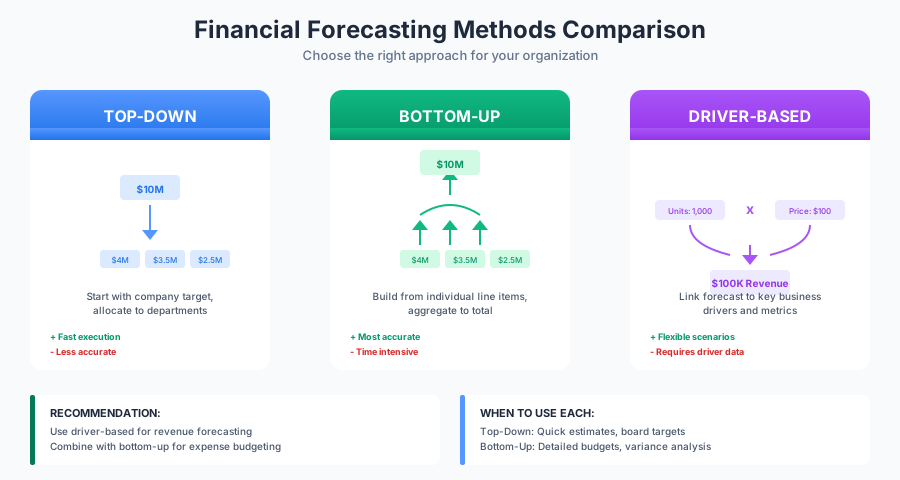
Top-Down Forecasting
How It Works: Start with a high-level target (company revenue goal, market share objective) and allocate down to business units, product lines, and departments.
Process:
- Set company-level targets based on strategic goals
- Allocate targets to divisions/regions based on historical mix or capacity
- Divisions further allocate to departments and products
- Roll up to validate against original target
Example:
| Level | Target | Allocation Basis |
|---|---|---|
| Company | $50M revenue | Board-approved target |
| North America | $30M (60%) | Historical regional mix |
| EMEA | $15M (30%) | Growth market adjustment |
| APAC | $5M (10%) | Emerging market |
Best For:
- Strategic planning and goal-setting
- Board-level targets
- Quick, directional estimates
- Companies with stable historical patterns
Limitations:
- May not reflect operational reality
- Can create unrealistic expectations
- Less accurate for volatile businesses
Bottom-Up Forecasting
How It Works: Build forecasts from granular operational data, then aggregate upward to create total company projections.
Process:
- Individual departments/products create detailed forecasts
- Based on customer contracts, pipeline, historical trends
- Finance aggregates and validates assumptions
- Identify gaps between bottom-up and strategic targets
Example:
| Business Unit | Q1 | Q2 | Q3 | Q4 | Annual |
|---|---|---|---|---|---|
| Product A | $2.5M | $2.7M | $2.9M | $3.1M | $11.2M |
| Product B | $1.8M | $1.9M | $2.0M | $2.1M | $7.8M |
| Product C | $0.8M | $0.9M | $1.0M | $1.1M | $3.8M |
| Services | $1.5M | $1.6M | $1.7M | $1.8M | $6.6M |
| TOTAL | $6.6M | $7.1M | $7.6M | $8.1M | $29.4M |
Best For:
- Detailed budget planning
- Variance analysis
- Operational forecasts
- Companies with diverse product lines
Limitations:
- Time-intensive to prepare
- May be overly conservative (sandbagging)
- Can miss strategic opportunities
Driver-Based Forecasting
How It Works: Link financial outcomes to key business drivers and operational metrics. Changes in drivers automatically flow through to financial projections.
Common Business Drivers:
| Driver Category | Examples | Financial Impact |
|---|---|---|
| Volume | Units sold, customers, transactions | Revenue, COGS |
| Pricing | Average selling price, discounts | Revenue, margin |
| Efficiency | Headcount per $1M revenue, utilization | Operating expenses |
| Investment | Customer acquisition cost, R&D spend | Growth rate, expenses |
Driver-Based Revenue Example:
Revenue = Units Sold x Average Price

Units Sold = Website Visitors x Conversion Rate x Avg Order Size

If:
- Website Visitors: 100,000/month
- Conversion Rate: 3%
- Avg Order Size: 2.5 units
- Average Price: $50/unit

Then:
- Monthly Units: 100,000 x 3% x 2.5 = 7,500 units
- Monthly Revenue: 7,500 x $50 = $375,000
- Annual Revenue: $375,000 x 12 = $4.5M
Scenario Planning with Drivers:
| Scenario | Website Traffic | Conversion Rate | Annual Revenue |
|---|---|---|---|
| Base Case | 100K/month | 3.0% | $4.5M |
| Optimistic | 120K/month | 3.5% | $6.3M |
| Pessimistic | 80K/month | 2.5% | $3.0M |
Best For:
- Scenario planning and sensitivity analysis
- SaaS and subscription businesses
- High-growth companies
- Strategic what-if modeling
Limitations:
- Requires accurate driver data
- Model complexity can grow quickly
- Driver relationships may change over time
Rolling Forecasts: The Modern Approach
Traditional annual budgets become stale within months. Rolling forecasts maintain a continuous planning horizon that adapts to changing conditions.
Traditional vs. Rolling Forecasts
| Aspect | Traditional Annual Budget | Rolling Forecast |
|---|---|---|
| Horizon | Fixed 12 months (Jan-Dec) | Continuous 12-18 months |
| Updates | Once per year | Monthly or quarterly |
| Effort | Massive annual exercise | Smaller, ongoing updates |
| Accuracy | Degrades over time | Maintained throughout year |
| Flexibility | Locked in for year | Adapts to new information |
Implementing Rolling Forecasts
Quarterly Rolling Forecast Example (as of March 2025):
| Quarter | Type | Forecast | Key Assumptions |
|---|---|---|---|
| Q1 2025 | Actual | $8.2M | Complete |
| Q2 2025 | Forecast | $8.5M | Pipeline at 85% |
| Q3 2025 | Forecast | $9.0M | New product launch |
| Q4 2025 | Forecast | $9.5M | Holiday seasonality |
| Q1 2026 | Forecast | $9.8M | Carry-forward growth |
Each Quarter:
- Replace oldest quarter with actuals
- Add new quarter at the end
- Refresh assumptions for all forecast periods
- Compare to prior forecast (forecast vs. forecast variance)
Rolling Forecast Best Practices
1. Focus on Material Line Items
- Top 80% of revenue by product/customer
- Major expense categories
- Do not forecast immaterial items monthly
2. Use Driver-Based Models
- Changes flow automatically through model
- Scenarios require only driver adjustments
- Reduces manual rework
3. Separate Committed vs. Uncommitted
| Category | Committed | Uncommitted | Total |
|---|---|---|---|
| Revenue | $6M (contracts signed) | $2M (pipeline) | $8M |
| Expenses | $4M (payroll, rent) | $500K (discretionary) | $4.5M |
4. Forecast Ranges, Not Point Estimates
- Provide low/mid/high scenarios
- Helps stakeholders understand uncertainty
- Improves decision-making
Income Statement Forecasting
The income statement (P&L) forecast projects revenue, expenses, and profitability over the planning horizon.
Revenue Forecasting Framework
Step 1: Segment Revenue Streams
| Revenue Type | Forecasting Method | Key Drivers |
|---|---|---|
| Recurring/Subscription | Cohort analysis | Retention rate, ARPU, new customers |
| Transactional | Volume x Price | Transaction count, average order value |
| Project-Based | Pipeline analysis | Backlog, win rate, project timing |
| Usage-Based | Consumption trends | User count, usage per user |
Step 2: Build Revenue Waterfall
Beginning ARR (Annual Recurring Revenue)     $10.0M
+ New Customer Revenue                       +$2.5M
+ Expansion Revenue (upsells)                +$1.5M
- Contraction Revenue (downgrades)           -$0.3M
- Churn (lost customers)                     -$1.2M
= Ending ARR                                 $12.5M
Step 3: Monthly Revenue Schedule
| Month | New | Expansion | Churn | Net Change | MRR |
|---|---|---|---|---|---|
| Jan | $40K | $15K | ($20K) | $35K | $835K |
| Feb | $45K | $18K | ($22K) | $41K | $876K |
| Mar | $50K | $20K | ($18K) | $52K | $928K |
| Q1 | $135K | $53K | ($60K) | $128K |
Expense Forecasting Framework
Fixed vs. Variable Expenses:
| Category | Type | Forecasting Approach |
|---|---|---|
| Salaries & Benefits | Semi-fixed | Headcount plan x loaded cost |
| Rent & Facilities | Fixed | Lease terms, escalation clauses |
| COGS/Cost of Revenue | Variable | % of revenue or per-unit |
| Marketing | Discretionary | Budget allocation |
| R&D | Semi-fixed | Project-based + maintenance |
Expense Build Example:
| Expense Category | Q1 | Q2 | Q3 | Q4 | Annual |
|---|---|---|---|---|---|
| Salaries | $1.2M | $1.3M | $1.4M | $1.4M | $5.3M |
| Benefits (25%) | $300K | $325K | $350K | $350K | $1.3M |
| Rent | $100K | $100K | $100K | $100K | $400K |
| COGS (30% rev) | $750K | $800K | $850K | $900K | $3.3M |
| Marketing | $200K | $250K | $300K | $350K | $1.1M |
| Other OpEx | $150K | $160K | $170K | $180K | $660K |
| TOTAL | $2.7M | $2.9M | $3.2M | $3.3M | $12.1M |
Complete Income Statement Forecast
| Line Item | Q1 | Q2 | Q3 | Q4 | Annual |
|---|---|---|---|---|---|
| Revenue | $2.5M | $2.7M | $2.9M | $3.1M | $11.2M |
| COGS | ($750K) | ($810K) | ($870K) | ($930K) | ($3.4M) |
| Gross Profit | $1.75M | $1.89M | $2.03M | $2.17M | $7.8M |
| Gross Margin | 70% | 70% | 70% | 70% | 70% |
| Operating Expenses | ($1.95M) | ($2.09M) | ($2.33M) | ($2.37M) | ($8.7M) |
| Operating Income | ($200K) | ($200K) | ($300K) | ($200K) | ($900K) |
| Operating Margin | -8% | -7% | -10% | -6% | -8% |
Cash Flow Forecasting
Cash flow forecasting ensures your business can meet its obligations and capitalize on opportunities. Even profitable companies can fail due to cash flow issues.
Direct Method Cash Flow Forecast
13-Week Cash Flow Forecast:
| Week | Beginning Cash | Receipts | Disbursements | Net Change | Ending Cash |
|---|---|---|---|---|---|
| 1 | $500K | $180K | $150K | $30K | $530K |
| 2 | $530K | $120K | $140K | ($20K) | $510K |
| 3 | $510K | $200K | $160K | $40K | $550K |
| 4 | $550K | $150K | $180K | ($30K) | $520K |
| ... | ... | ... | ... | ... | ... |
| 13 | $480K | $175K | $155K | $20K | $500K |
Cash Receipts Detail:
| Source | Week 1 | Week 2 | Week 3 | Week 4 |
|---|---|---|---|---|
| Customer Collections | $150K | $100K | $170K | $130K |
| New Sales (cash) | $20K | $15K | $25K | $15K |
| Other Income | $10K | $5K | $5K | $5K |
| TOTAL | $180K | $120K | $200K | $150K |
Cash Disbursements Detail:
| Category | Week 1 | Week 2 | Week 3 | Week 4 |
|---|---|---|---|---|
| Payroll | - | $80K | - | $80K |
| Rent/Lease | $25K | - | - | - |
| Vendors/Suppliers | $50K | $40K | $60K | $45K |
| Utilities/Insurance | $10K | $5K | $10K | $5K |
| Capital Expenditures | - | - | $50K | - |
| Taxes | $50K | - | - | $35K |
| Other | $15K | $15K | $40K | $15K |
| TOTAL | $150K | $140K | $160K | $180K |
Indirect Method Cash Flow Forecast
Monthly Cash Flow from Operations:
| Item | Jan | Feb | Mar | Q1 Total |
|---|---|---|---|---|
| Net Income | $50K | $60K | $70K | $180K |
| Add: Depreciation | $25K | $25K | $25K | $75K |
| Add: Amortization | $5K | $5K | $5K | $15K |
| Change in AR | ($40K) | ($30K) | ($20K) | ($90K) |
| Change in Inventory | ($10K) | ($5K) | $5K | ($10K) |
| Change in AP | $15K | $10K | $5K | $30K |
| Change in Accruals | $5K | ($5K) | $10K | $10K |
| Cash from Operations | $50K | $60K | $100K | $210K |
Days Sales Outstanding (DSO) Impact
DSO directly impacts your cash conversion cycle and working capital needs.
DSO Scenario Analysis:
| Metric | Current (45 days) | Improved (35 days) | Worsened (55 days) |
|---|---|---|---|
| Annual Revenue | $12M | $12M | $12M |
| AR Balance | $1.48M | $1.15M | $1.81M |
| Cash Impact | - | +$330K | -$330K |
DSO Formula:
DSO = (Accounts Receivable / Revenue) x Days in Period
AR = (Annual Revenue / 365) x DSO
Balance Sheet Forecasting
Balance sheet forecasting ensures your financial model is complete and internally consistent. Assets must equal liabilities plus equity.
Working Capital Forecasting
Key Working Capital Components:
| Item | Forecasting Method | Example |
|---|---|---|
| Accounts Receivable | Revenue x (DSO / 365) | $12M x (45/365) = $1.48M |
| Inventory | COGS x (DIO / 365) | $8M x (60/365) = $1.32M |
| Prepaid Expenses | Fixed or % of OpEx | $300K |
| Accounts Payable | Purchases x (DPO / 365) | $6M x (30/365) = $493K |
| Accrued Expenses | Payroll + Other accruals | $450K |
Working Capital Schedule:
| Quarter | AR | Inventory | Prepaid | AP | Accrued | Net WC |
|---|---|---|---|---|---|---|
| Q1 | $1.4M | $1.2M | $300K | ($450K) | ($400K) | $2.05M |
| Q2 | $1.5M | $1.3M | $310K | ($480K) | ($420K) | $2.21M |
| Q3 | $1.6M | $1.4M | $320K | ($510K) | ($440K) | $2.37M |
| Q4 | $1.7M | $1.5M | $330K | ($540K) | ($460K) | $2.53M |
Fixed Asset Forecasting
Capital Expenditure (CapEx) Schedule:
| Asset Category | Q1 | Q2 | Q3 | Q4 | Annual |
|---|---|---|---|---|---|
| Equipment | $50K | $25K | $75K | $30K | $180K |
| Technology | $30K | $40K | $35K | $45K | $150K |
| Leasehold Improvements | - | $100K | - | - | $100K |
| Vehicles | - | - | $40K | - | $40K |
| TOTAL CapEx | $80K | $165K | $150K | $75K | $470K |
Depreciation Schedule:
| Asset | Cost | Life | Annual Depr | Monthly Depr |
|---|---|---|---|---|
| Existing Assets | $2.0M | - | $400K | $33.3K |
| Q1 Additions | $80K | 5 yrs | $16K | $1.3K (starts Q2) |
| Q2 Additions | $165K | 5 yrs | $33K | $2.75K (starts Q3) |
| TOTAL | $449K |
Complete Balance Sheet Forecast
| Item | Q1 | Q2 | Q3 | Q4 |
|---|---|---|---|---|
| ASSETS | ||||
| Cash | $500K | $450K | $520K | $600K |
| Accounts Receivable | $1.4M | $1.5M | $1.6M | $1.7M |
| Inventory | $1.2M | $1.3M | $1.4M | $1.5M |
| Prepaid | $300K | $310K | $320K | $330K |
| Current Assets | $3.4M | $3.56M | $3.84M | $4.13M |
| Fixed Assets (net) | $2.0M | $2.06M | $2.1M | $2.08M |
| TOTAL ASSETS | $5.4M | $5.62M | $5.94M | $6.21M |
| LIABILITIES | ||||
| Accounts Payable | $450K | $480K | $510K | $540K |
| Accrued Expenses | $400K | $420K | $440K | $460K |
| Deferred Revenue | $200K | $220K | $240K | $260K |
| Current Liabilities | $1.05M | $1.12M | $1.19M | $1.26M |
| Long-term Debt | $1.5M | $1.45M | $1.4M | $1.35M |
| TOTAL LIABILITIES | $2.55M | $2.57M | $2.59M | $2.61M |
| EQUITY | ||||
| Common Stock | $2.0M | $2.0M | $2.0M | $2.0M |
| Retained Earnings | $850K | $1.05M | $1.35M | $1.6M |
| TOTAL EQUITY | $2.85M | $3.05M | $3.35M | $3.6M |
| TOTAL L&E | $5.4M | $5.62M | $5.94M | $6.21M |
Scenario Planning and Sensitivity Analysis
Effective forecasts include multiple scenarios that help leadership understand risks and opportunities.
Building Scenario Models
Three-Scenario Framework:
| Assumption | Pessimistic | Base Case | Optimistic |
|---|---|---|---|
| Revenue Growth | 5% | 15% | 25% |
| Gross Margin | 65% | 70% | 73% |
| Customer Churn | 15% | 10% | 7% |
| New Customer Growth | 10% | 20% | 30% |
| OpEx Growth | 12% | 10% | 8% |
Scenario Results:
| Metric | Pessimistic | Base Case | Optimistic |
|---|---|---|---|
| Revenue | $10.5M | $11.5M | $12.5M |
| Gross Profit | $6.8M | $8.1M | $9.1M |
| Operating Income | ($500K) | $400K | $1.2M |
| Cash Position (YE) | $200K | $600K | $950K |
Sensitivity Analysis
Revenue Sensitivity to Price and Volume:
| Volume -10% | Volume Base | Volume +10% | |
|---|---|---|---|
| Price -5% | $8.6M | $9.5M | $10.5M |
| Price Base | $9.0M | $10.0M | $11.0M |
| Price +5% | $9.5M | $10.5M | $11.6M |
Key Sensitivities to Model:
- Revenue: Volume, price, mix changes
- Gross margin: COGS inflation, efficiency gains
- Operating expenses: Headcount, vendor costs
- Working capital: DSO, DIO, DPO changes
- Cash: All of the above combined
Forecast Accuracy and Continuous Improvement
Measuring Forecast Accuracy
Monthly Forecast vs. Actual Analysis:
| Month | Forecast | Actual | Variance | Variance % |
|---|---|---|---|---|
| Jan | $850K | $820K | ($30K) | -3.5% |
| Feb | $900K | $875K | ($25K) | -2.8% |
| Mar | $950K | $980K | $30K | +3.2% |
| Q1 | $2.7M | $2.675M | ($25K) | -0.9% |
Forecast Accuracy Metrics:
| Metric | Formula | Target |
|---|---|---|
| MAPE | Mean Absolute Percentage Error | < 10% |
| Bias | Systematic over/under forecasting | Within 5% |
| Tracking Signal | Cumulative error / MAD | Between -4 and +4 |
Root Cause Analysis
When Forecasts Miss, Ask:
-
Was the driver assumption wrong?
- Example: Assumed 3% conversion rate, actual was 2.5%
-
Was there an unforeseen event?
- Example: Major customer delayed project
-
Was the model structure flawed?
- Example: Did not account for seasonality
-
Was data quality the issue?
- Example: Pipeline data was outdated
Document and Improve:
- Track reasons for each significant variance
- Update model assumptions based on learnings
- Improve data collection processes
- Refine driver relationships
Financial Forecast Template Components
Essential Worksheets for Your Forecast Model
1. Assumptions Dashboard
- Key business drivers
- Growth rates and trends
- Scenario toggle (Base/Optimistic/Pessimistic)
- Global parameters (tax rate, discount rate)
2. Revenue Build
- Revenue by product/service
- Revenue by customer segment
- Revenue by geography
- Monthly/quarterly phasing
3. Expense Build
- Headcount and compensation
- Operating expenses by category
- Variable vs. fixed expense classification
- Departmental roll-up
4. Income Statement
- Monthly and annual views
- Gross profit and margins
- Operating income
- Net income
5. Cash Flow Statement
- Operating cash flow
- Investing cash flow
- Financing cash flow
- Cash reconciliation
6. Balance Sheet
- Working capital items
- Fixed assets and depreciation
- Debt schedules
- Equity roll-forward
7. KPI Dashboard
- Revenue metrics (ARR, MRR, growth rate)
- Profitability metrics (gross margin, EBITDA)
- Efficiency metrics (CAC, LTV, payback)
- Liquidity metrics (cash, quick ratio)
Common Forecasting Mistakes to Avoid
1. Hockey Stick Projections
- Problem: Unrealistic growth acceleration in future periods
- Solution: Ground projections in historical trends and capacity constraints
2. Ignoring Seasonality
- Problem: Even monthly distribution when business is seasonal
- Solution: Analyze historical patterns, apply seasonal factors
3. Forecasting in a Vacuum
- Problem: Finance builds forecast without operational input
- Solution: Collaborative process with sales, operations, HR
4. Single-Point Estimates
- Problem: No ranges or scenarios
- Solution: Always include multiple scenarios and sensitivity analysis
5. Set It and Forget It
- Problem: Annual budget never updated
- Solution: Implement rolling forecasts with regular updates
6. Over-Engineering the Model
- Problem: Complex model that nobody understands
- Solution: Keep it simple, focus on material items
Key Takeaways
- Choose the right methodology for your business (driver-based for SaaS, bottom-up for detailed budgets)
- Implement rolling forecasts to maintain accuracy throughout the year
- Forecast all three statements (income, cash flow, balance sheet) for completeness
- Build multiple scenarios to prepare for different outcomes
- Measure and improve forecast accuracy continuously
- Collaborate across functions for realistic, achievable projections
Resources
Free Templates:
- Financial Planning Templates - Budget, forecast, and analysis tools
- Cash Flow Forecast Template - 13-week rolling cash forecast
Related Guides:
- Financial Planning Templates - Complete overview
- IT Budget Planning Masterclass - Detailed budgeting process
- TCO vs ROI Analysis - Investment decision frameworks
Tools:
- IT Budget Calculator - Quick budget estimates
- ROI Calculator - Investment return analysis
Budget Forecasting vs Revenue Forecasting
Understanding the difference between budget forecasting and revenue forecasting is critical — they serve different audiences and use different methodologies.
Key Differences
| Dimension | Budget Forecasting | Revenue Forecasting |
|---|---|---|
| Purpose | Plan and control spending | Predict future income |
| Primary audience | Department managers, CFO, board | Sales leadership, CFO, investors |
| Time horizon | Annual with monthly/quarterly detail | Quarterly with monthly rolling updates |
| Data sources | Historical spending, vendor contracts, headcount plans | Pipeline data, historical sales, market trends |
| Update frequency | Quarterly reforecast | Monthly or weekly |
| Key output | Expense budget with variance tracking | Revenue projection with confidence ranges |
| Methodology | Zero-based, incremental, or activity-based | Pipeline-weighted, historical trending, driver-based |
When to Use Each
Budget forecasting template — Use when you need to:
- Plan departmental or company-wide spending for the next fiscal year
- Build operating expense (OpEx) and capital expense (CapEx) budgets
- Create headcount plans with fully loaded cost projections
- Prepare board-level financial plans with cost controls
- Track actual vs. planned spending with variance analysis
Revenue forecasting template — Use when you need to:
- Project sales pipeline conversion into bookings
- Model SaaS MRR/ARR growth trajectories
- Create investor-ready revenue projections
- Set quota and territory plans for sales teams
- Build cash flow forecasts from revenue timing
Forecasting Methodology Comparison
| Method | Best For | Accuracy | Complexity | Data Needed |
|---|---|---|---|---|
| Top-down | Strategic planning, board targets | Medium | Low | Market data, historical growth |
| Bottom-up | Operational budgets, detailed plans | High | High | Line-item data, vendor quotes, headcount |
| Driver-based | SaaS, subscription, recurring models | High | Medium | Business drivers (leads, conversion, ARPU) |
| Zero-based | Cost optimization, new departments | High | Very high | Every expense justified from zero |
| Incremental | Stable businesses, annual budgets | Medium | Low | Prior year actuals + adjustment % |
| Rolling forecast | Fast-changing environments | High | Medium | Continuous 12-18 month forward view |
For department-level budget forecasting, see our Department Budget Template. For revenue-specific forecasting, see our Revenue Forecast Template.
Conclusion
Financial forecasting is both art and science. The best forecasts combine rigorous methodology with practical business judgment. Start with the right approach for your business, build a model that is sophisticated enough to be useful but simple enough to maintain, and commit to continuous improvement.
Your next steps:
- Assess your current forecasting capabilities and gaps
- Choose the appropriate methodology (or combination)
- Build or enhance your forecast model
- Implement a regular update cadence
- Track accuracy and refine over time
With disciplined forecasting, you will make better decisions, allocate resources effectively, and build stakeholder confidence in your financial leadership.
Ready to improve your financial forecasting? Explore our Financial Planning Hub for comprehensive resources, or browse our Financial Planning Template Collection used by Fortune 500 companies.