Recruitment Pipeline Dashboard: Hiring Funnel KPIs & Metrics Template

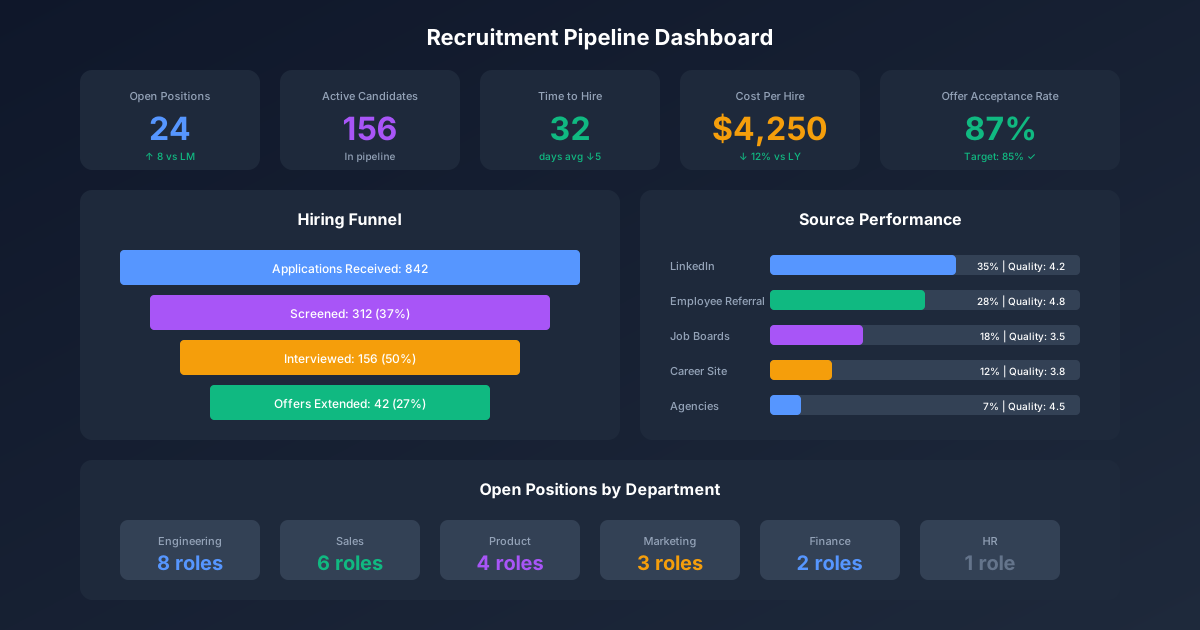
A well-designed recruitment pipeline dashboard transforms hiring from reactive firefighting into a data-driven strategic function. Without visibility into your hiring funnel, you cannot identify bottlenecks, optimize source effectiveness, or forecast hiring capacity. This comprehensive guide covers everything you need to build a recruitment pipeline dashboard that drives better hiring decisions and demonstrates recruiting ROI. For additional HR resources, visit our HR Policy & Compliance Center and explore our HR Management templates.
Quick Start: Download our HR Management Templates to implement the frameworks in this guide immediately.
Why Recruitment Pipeline Tracking Matters
The Business Case for Recruiting Analytics
Organizations with mature recruiting analytics significantly outperform those flying blind:
Efficiency Gains:
- Companies using recruiting analytics reduce time-to-fill by 20-30%
- Data-driven sourcing reduces cost-per-hire by 25-40%
- Pipeline visibility enables proactive hiring vs reactive scrambling
- Bottleneck identification accelerates candidate flow
Quality Improvements:
- Source effectiveness tracking improves quality-of-hire
- Structured pipeline stages reduce mis-hires
- Interview-to-offer ratios reveal process problems
- New hire retention correlates to recruiting rigor
Strategic Value:
- Forecasting enables workforce planning alignment
- Hiring capacity planning prevents talent gaps
- ROI demonstration justifies recruiting investment
- Competitive benchmarking identifies improvement opportunities
The Cost of Flying Blind
RECRUITMENT VISIBILITY IMPACT ANALYSIS

WITHOUT PIPELINE TRACKING:
├── Time-to-fill: 60+ days average
├── Cost-per-hire: $4,500+ (no optimization)
├── Source effectiveness: Unknown (wasted spend)
├── Bottlenecks: Hidden until critical
├── Forecast accuracy: Poor (reactive hiring)
├── Quality-of-hire: Inconsistent
└── Stakeholder confidence: Low

WITH PIPELINE DASHBOARD:
├── Time-to-fill: 40-45 days (25% improvement)
├── Cost-per-hire: $3,000-3,500 (25% savings)
├── Source effectiveness: Optimized allocation
├── Bottlenecks: Identified and resolved quickly
├── Forecast accuracy: High (proactive planning)
├── Quality-of-hire: Consistent and improving
└── Stakeholder confidence: High

EXAMPLE IMPACT (50-person company, 15 annual hires):
- Time savings: 15 hires × 15 days = 225 days faster fills
- Cost savings: 15 hires × $1,000 = $15,000 annually
- Quality improvement: 20% fewer mis-hires = 3 avoided
- Mis-hire cost avoided: 3 × $50,000 = $150,000
- TOTAL ANNUAL VALUE: $165,000+
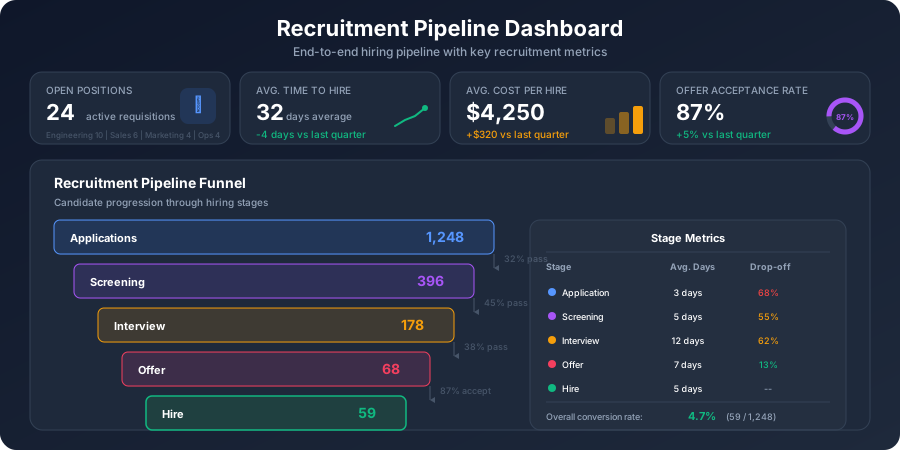
Understanding the Recruitment Funnel
The Five-Stage Hiring Pipeline
Every effective recruitment process follows a logical progression from candidate sourcing to successful hire.
RECRUITMENT PIPELINE STAGES

STAGE 1: SOURCED
├── Definition: Candidates identified and added to pipeline
├── Activities: Job posting, sourcing, referrals, inbound applications
├── Exit Criteria: Basic qualifications met, contact information captured
└── Typical Volume: 100 candidates per role

STAGE 2: SCREENED
├── Definition: Initial qualification completed
├── Activities: Resume review, phone screen, skills assessment
├── Exit Criteria: Meets minimum requirements, interested in role
└── Typical Volume: 20-30 candidates per role (20-30% pass rate)

STAGE 3: INTERVIEW
├── Definition: Actively interviewing with hiring team
├── Activities: Technical interviews, culture interviews, panel discussions
├── Exit Criteria: Interview rounds complete, positive feedback
└── Typical Volume: 5-10 candidates per role (25-50% of screened)

STAGE 4: OFFER
├── Definition: Selected candidate, offer extended
├── Activities: Offer preparation, negotiation, reference checks
├── Exit Criteria: Offer accepted, start date confirmed
└── Typical Volume: 1-2 candidates per role (10-20% of interviewed)

STAGE 5: HIRED
├── Definition: Candidate accepted, onboarding initiated
├── Activities: Background check, paperwork, onboarding preparation
├── Exit Criteria: First day completed
└── Typical Volume: 1 candidate per role
Stage Definitions and Exit Criteria
Stage 1: Sourced
Candidates enter the pipeline through various channels—job boards, referrals, direct sourcing, career fairs, or inbound applications.
| Entry Criteria | Exit Criteria | Key Activities |
|---|---|---|
| Resume/application received | Basic qualifications verified | Source tracking |
| Contact information captured | Location/visa requirements met | Duplicate check |
| Role interest indicated | Salary expectations aligned | Initial categorization |
Stage 2: Screened
Initial qualification separates viable candidates from those who don't meet requirements.
| Entry Criteria | Exit Criteria | Key Activities |
|---|---|---|
| Passed Stage 1 criteria | Phone screen completed | Resume deep-dive |
| Recruiter review complete | Skills assessment passed | Phone/video screen |
| No disqualifying factors | Confirmed interest/availability | Skills testing |
Stage 3: Interview
Qualified candidates meet with hiring managers and team members for comprehensive evaluation.
| Entry Criteria | Exit Criteria | Key Activities |
|---|---|---|
| Passed screening stage | All interview rounds complete | Technical interviews |
| Hiring manager approved | Positive interview feedback | Culture/values interviews |
| Interview scheduled | References provided | Panel discussions |
Stage 4: Offer
Top candidates receive formal offers and negotiate terms.
| Entry Criteria | Exit Criteria | Key Activities |
|---|---|---|
| Interview feedback positive | Offer verbally accepted | Offer preparation |
| Hiring decision made | Written acceptance received | Negotiation |
| Compensation approved | Start date confirmed | Reference checks |
Stage 5: Hired
Accepted candidates complete pre-boarding and begin employment.
| Entry Criteria | Exit Criteria | Key Activities |
|---|---|---|
| Offer accepted | Background check cleared | Background verification |
| Start date confirmed | First day completed | Onboarding prep |
| Paperwork initiated | Onboarding underway | IT provisioning |
Essential Recruiting KPIs
Track these metrics to measure recruiting effectiveness and identify improvement opportunities.
Volume Metrics
Applications Per Opening:
Applications Per Opening = Total Applications / Open Positions

Purpose: Measures job posting effectiveness and employer brand strength
Target: 50-250 applications per role (varies by level/function)
Action: Low volume → improve sourcing; High volume → improve screening
Pipeline Coverage:
Pipeline Coverage = Candidates in Pipeline / Positions to Fill

Purpose: Indicates whether you have enough candidates to fill open roles
Target: 3:1 minimum (3 candidates per position)
Action: Below target → increase sourcing; Above target → may be inefficient
Sourced to Screen Ratio:
Sourced to Screen = Candidates Screened / Candidates Sourced × 100

Purpose: Measures initial screening efficiency
Target: 20-30%
Action: Low → sourcing quality issue; High → screening may be too lenient
Conversion Metrics
Stage Conversion Rates:
| Stage Transition | Calculation | Industry Benchmark |
|---|---|---|
| Sourced → Screened | Screened / Sourced | 20-30% |
| Screened → Interview | Interview / Screened | 25-50% |
| Interview → Offer | Offer / Interview | 15-25% |
| Offer → Hired | Hired / Offer | 80-95% |
| Overall: Sourced → Hired | Hired / Sourced | 1-3% |
Funnel Conversion Example:
RECRUITMENT FUNNEL ANALYSIS

Role: Senior Software Engineer
Pipeline Period: Q1 2025

STAGE PROGRESSION:
Sourced:     200 candidates  │████████████████████│ 100%
Screened:     48 candidates  │████                │  24%
Interview:    12 candidates  │██                  │   6%
Offer:         2 candidates  │                    │   1%
Hired:         1 candidate   │                    │ 0.5%

CONVERSION ANALYSIS:
Sourced → Screened:   24% (target: 25%) ✓ On track
Screened → Interview: 25% (target: 35%) ✗ Below target
Interview → Offer:    17% (target: 20%) ✗ Below target
Offer → Hired:        50% (target: 85%) ✗ Critical issue

INSIGHTS:
- Screening efficiency is acceptable
- Interview pass rate suggests misalignment on requirements
- Offer acceptance rate indicates compensation or experience issues
- Focus improvement on interview-to-offer and offer-to-hire stages
Time Metrics
Time-to-Fill:
Time-to-Fill = Date Position Filled - Date Position Opened

Purpose: Measures overall hiring cycle length
Industry Benchmark: 30-45 days (varies significantly by role)
Target: Depends on role complexity and market conditions
Time-to-Hire:
Time-to-Hire = Offer Accept Date - Application Date

Purpose: Measures candidate experience and process efficiency
Industry Benchmark: 20-30 days
Target: As short as possible without sacrificing quality
Time-in-Stage:
| Stage | Benchmark | Alert Threshold |
|---|---|---|
| Sourced | 5-7 days | > 10 days |
| Screened | 3-5 days | > 7 days |
| Interview | 7-14 days | > 21 days |
| Offer | 3-7 days | > 10 days |
| Hired (pre-boarding) | 7-14 days | > 21 days |
Time Metric Calculations:
TIME METRICS FORMULAS

Average Time-to-Fill:
=AVERAGE(FillDate - OpenDate) for all filled positions

Average Time-to-Hire:
=AVERAGE(OfferAcceptDate - ApplicationDate) for all hires

Time-in-Stage:
=StageExitDate - StageEntryDate

Stage Velocity:
=COUNT(Candidates Moved to Next Stage) / Time Period

Days Until Expected Fill:
=TargetFillDate - TODAY()
Quality Metrics
Quality-of-Hire:
Quality-of-Hire = Weighted Average of:
- New hire performance rating (30%)
- Time-to-productivity (30%)
- 90-day retention (20%)
- Hiring manager satisfaction (20%)

Purpose: Measures whether recruiting delivers successful employees
Target: > 4.0 on 5-point scale
Hiring Manager Satisfaction:
Hiring Manager Satisfaction = Survey Score (1-5)

Survey Questions:
- Quality of candidates presented
- Timeliness of the hiring process
- Communication and updates
- Understanding of role requirements
- Overall satisfaction with recruiting support

Target: > 4.0 average
New Hire Retention:
| Period | Calculation | Target |
|---|---|---|
| 30-day retention | Still employed at 30 days / Hires | > 98% |
| 90-day retention | Still employed at 90 days / Hires | > 95% |
| 1-year retention | Still employed at 1 year / Hires | > 85% |
Cost Metrics
Cost-Per-Hire:
Cost-Per-Hire = Total Recruiting Costs / Number of Hires

Total Recruiting Costs Include:
├── Job advertising spend
├── Recruiter salaries (allocated)
├── Agency fees
├── ATS/technology costs
├── Background checks
├── Interview travel
├── Signing bonuses (sometimes excluded)
└── Relocation costs (sometimes excluded)

Industry Benchmark: $3,000-$5,000 (non-executive)
Executive roles: $15,000-$30,000+
Cost-Per-Applicant:
Cost-Per-Applicant = Advertising Spend / Applications Received

Purpose: Measures sourcing channel efficiency
Target: Varies by channel ($2-50 depending on source)
Recruiting Cost Ratio:
Recruiting Cost Ratio = Total Recruiting Costs / Total Compensation of Hires

Purpose: Measures recruiting investment relative to hire value
Benchmark: 10-15% of first-year compensation
Source Effectiveness Analysis
Understanding which sourcing channels deliver the best candidates enables budget optimization.
Source Tracking Framework
SOURCE EFFECTIVENESS DASHBOARD

                    │ Apps │ Screens │ Offers │ Hires │ Conv % │ CPH    │ Quality│
────────────────────┼──────┼─────────┼────────┼───────┼────────┼────────┼────────│
Job Boards          │ 450  │   68    │   4    │   3   │ 0.7%   │ $4,200 │  3.8   │
Employee Referrals  │  35  │   28    │   6    │   5   │ 14.3%  │ $2,400 │  4.5   │
LinkedIn            │ 180  │   42    │   3    │   2   │ 1.1%   │ $5,800 │  4.0   │
Career Site         │ 220  │   38    │   3    │   2   │ 0.9%   │ $1,800 │  3.9   │
Campus Recruiting   │  60  │   24    │   2    │   2   │ 3.3%   │ $6,500 │  3.7   │
Agencies            │  25  │   18    │   3    │   2   │ 8.0%   │$18,000 │  4.2   │
────────────────────┼──────┼─────────┼────────┼───────┼────────┼────────┼────────│
TOTAL               │ 970  │  218    │  21    │  16   │ 1.6%   │ $4,850 │  4.0   │

KEY INSIGHTS:
✓ Referrals: Highest conversion (14.3%), best quality (4.5), lowest cost ($2,400)
  → Action: Increase referral program investment and incentives

✓ Career Site: Low cost ($1,800), decent quality (3.9), moderate volume
  → Action: Improve SEO and candidate experience

✗ Agencies: Highest cost ($18,000), good quality but low volume efficiency
  → Action: Reserve for hard-to-fill specialized roles only

✗ Campus: High cost per hire ($6,500), lower quality scores
  → Action: Better pre-screening and targeted school selection
Source ROI Calculation
Return on Sourcing Investment:
SOURCE ROI ANALYSIS

For each source, calculate:
Total Investment = Advertising + Tools + Time (recruiter hours × rate)
Total Value = Hires × Average First-Year Compensation
ROI = (Total Value - Total Investment) / Total Investment × 100

EXAMPLE: Employee Referrals
├── Investment:
│   ├── Referral bonuses: $5,000 × 5 hires = $25,000
│   ├── Program administration: $2,000
│   └── Total: $27,000
├── Value:
│   ├── 5 hires × $100,000 avg salary = $500,000
│   ├── Quality multiplier (4.5/4.0): 1.125
│   └── Adjusted value: $562,500
├── ROI: ($562,500 - $27,000) / $27,000 = 1,983%
└── Verdict: Highest ROI source - MAXIMIZE

EXAMPLE: Agency Recruiting
├── Investment:
│   ├── Agency fees (20% of salary): $40,000
│   ├── Time coordinating: $1,000
│   └── Total: $41,000
├── Value:
│   ├── 2 hires × $100,000 avg salary = $200,000
│   ├── Quality multiplier (4.2/4.0): 1.05
│   └── Adjusted value: $210,000
├── ROI: ($210,000 - $41,000) / $41,000 = 412%
└── Verdict: Lower ROI - USE SELECTIVELY
Source Optimization Recommendations
| Source | When to Invest More | When to Reduce |
|---|---|---|
| Referrals | Always (highest ROI) | Never (best source) |
| Career Site | SEO improvements, UX | Never (lowest cost) |
| Specialized/senior roles | High-volume junior roles | |
| Job Boards | Volume hiring, entry-level | Specialized roles |
| Agencies | Hard-to-fill, urgent roles | Standard roles with pipeline |
| Campus | Entry-level engineering, rotational | Experienced hires |
Building the Recruitment Dashboard
Dashboard Layout Design
RECRUITMENT PIPELINE DASHBOARD LAYOUT

┌─────────────────────────────────────────────────────────────────────────┐
│                    RECRUITING EXECUTIVE SUMMARY                         │
├─────────────────────┬─────────────────────┬─────────────────────────────┤
│ Open Positions: 12  │ Active Candidates:  │ Hires This Month: 4         │
│ Target Fills: 8     │ 156 total           │ Target: 6                   │
│ Status: ON TRACK    │ 23 in interview     │ Status: BEHIND              │
└─────────────────────┴─────────────────────┴─────────────────────────────┘

┌─────────────────────────────────────────────────────────────────────────┐
│                        PIPELINE FUNNEL                                   │
│  Sourced    Screened    Interview    Offer    Hired                     │
│    156   →    48    →     23     →    6   →    4                        │
│   100%       31%         15%         4%       3%                        │
└─────────────────────────────────────────────────────────────────────────┘

┌─────────────────────────────────┬───────────────────────────────────────┐
│     TIME METRICS                │     COST METRICS                      │
│ Avg Time-to-Fill: 38 days       │ Cost-Per-Hire: $4,250                │
│ Avg Time-to-Hire: 24 days       │ YTD Recruiting Spend: $68,000        │
│ Positions > 60 days: 2          │ Budget Remaining: $47,000            │
└─────────────────────────────────┴───────────────────────────────────────┘

┌─────────────────────────────────┬───────────────────────────────────────┐
│     SOURCE BREAKDOWN            │     CONVERSION TRENDS                 │
│ ████████ Referrals: 35%         │ Screen Rate:  ▲ 31% (+5%)            │
│ ██████   Job Boards: 28%        │ Interview:    ▼ 48% (-8%)            │
│ ████     LinkedIn: 22%          │ Offer Rate:   ▬ 26% (flat)           │
│ ██       Career Site: 15%       │ Accept Rate:  ▲ 85% (+10%)           │
└─────────────────────────────────┴───────────────────────────────────────┘

┌─────────────────────────────────────────────────────────────────────────┐
│                    POSITIONS REQUIRING ATTENTION                        │
│ ⚠ Senior Engineer (ENG-042): 72 days open, 2 candidates in pipeline    │
│ ⚠ Product Manager (PM-018): Interview bottleneck, 8 awaiting feedback  │
│ ⚠ Sales Rep (SALES-091): Low application volume, 12 total sourced      │
└─────────────────────────────────────────────────────────────────────────┘
Excel Dashboard Template Structure
Tab 1: Candidate Tracker
| Column | Description | Example |
|---|---|---|
| Candidate ID | Unique identifier | CAN-2025-0142 |
| Name | Full name | Sarah Johnson |
| Contact email | sarah@email.com | |
| Position | Job title applying for | Senior Engineer |
| Requisition ID | Linked position | REQ-2025-042 |
| Source | Where candidate came from | Referral |
| Source Detail | Specific source info | John Smith referral |
| Stage | Current pipeline stage | Interview |
| Stage Entry Date | When entered current stage | 2025-01-28 |
| Days in Stage | Calculated field | 6 |
| Recruiter | Assigned recruiter | Maria Garcia |
| Hiring Manager | Position hiring manager | David Park |
| Notes | Latest activity notes | Completed tech screen |
| Next Action | Required follow-up | Schedule panel interview |
| Next Action Date | Deadline | 2025-02-05 |
Tab 2: Position Tracker
| Column | Description | Example |
|---|---|---|
| Requisition ID | Unique identifier | REQ-2025-042 |
| Job Title | Position name | Senior Software Engineer |
| Department | Hiring department | Engineering |
| Hiring Manager | Requestor | David Park |
| Priority | Urgency level | High |
| Status | Open/Filled/On Hold | Open |
| Open Date | When approved | 2025-01-05 |
| Target Fill Date | Expected close | 2025-02-28 |
| Actual Fill Date | When filled | - |
| Days Open | Calculated | 29 |
| Candidates Sourced | Pipeline count | 45 |
| Candidates in Interview | Active interviews | 3 |
| Offers Extended | Offers made | 0 |
| Offers Accepted | Accepted | 0 |
| Salary Range Min | Budget minimum | $140,000 |
| Salary Range Max | Budget maximum | $170,000 |
Tab 3: Source Analytics
| Column | Description | Calculation |
|---|---|---|
| Source | Channel name | Job Board - Indeed |
| Period | Time frame | Q1 2025 |
| Spend | Investment | $5,000 |
| Applications | Volume | 120 |
| Cost Per Application | Efficiency | $41.67 |
| Screens | Qualified | 28 |
| Screen Rate | Conversion | 23.3% |
| Interviews | Advanced | 8 |
| Interview Rate | Conversion | 28.6% |
| Offers | Extended | 2 |
| Offer Rate | Conversion | 25.0% |
| Hires | Completed | 2 |
| Hire Rate | Conversion | 100% |
| Cost Per Hire | Efficiency | $2,500 |
| Quality Score | Avg rating | 3.8 |
Tab 4: Dashboard Summary
Create a visual summary using Excel charts and conditional formatting:
DASHBOARD FORMULAS

Total Open Positions:
=COUNTIF(PositionTracker[Status],"Open")

Total Active Candidates:
=COUNTIF(CandidateTracker[Stage],"<>Hired")-COUNTIF(CandidateTracker[Stage],"Rejected")

Avg Time-to-Fill (Filled Positions):
=AVERAGEIF(PositionTracker[Status],"Filled",PositionTracker[Days Open])

Cost-Per-Hire:
=SUM(SourceAnalytics[Spend])/SUM(SourceAnalytics[Hires])

Pipeline Coverage:
=COUNTIF(CandidateTracker[Stage],"<>Rejected")/COUNTIF(PositionTracker[Status],"Open")

Stage Conversion (Screen to Interview):
=COUNTIF(CandidateTracker[Stage],"Interview")/COUNTIF(CandidateTracker[Stage],"Screened")

Positions Over 60 Days:
=COUNTIFS(PositionTracker[Status],"Open",PositionTracker[Days Open],">60")

Source Effectiveness (Conversion Rate):
=SUMIF(SourceAnalytics[Source],"Referral",SourceAnalytics[Hires])/
 SUMIF(SourceAnalytics[Source],"Referral",SourceAnalytics[Applications])
Conditional Formatting Rules
Apply visual indicators for quick status assessment:
Time-to-Fill Alerts:
| Days Open | Color | Meaning |
|---|---|---|
| 0-30 days | Green | On track |
| 31-45 days | Yellow | Monitor |
| 46-60 days | Orange | Needs attention |
| 60+ days | Red | Critical |
Pipeline Coverage Alerts:
| Coverage Ratio | Color | Meaning |
|---|---|---|
| > 5:1 | Green | Strong pipeline |
| 3:1 - 5:1 | Yellow | Adequate |
| 2:1 - 3:1 | Orange | Low coverage |
| < 2:1 | Red | Critical shortage |
Conversion Rate Alerts:
| Stage Conversion | Green | Yellow | Red |
|---|---|---|---|
| Sourced → Screened | > 25% | 15-25% | < 15% |
| Screened → Interview | > 40% | 25-40% | < 25% |
| Interview → Offer | > 20% | 10-20% | < 10% |
| Offer → Hired | > 85% | 70-85% | < 70% |
Recruiter Performance Metrics
Track individual and team recruiter effectiveness.
Recruiter Scorecard
RECRUITER PERFORMANCE SCORECARD

Recruiter: Maria Garcia
Period: Q1 2025

PRODUCTIVITY METRICS:
├── Requisitions Assigned: 8
├── Positions Filled: 6
├── Fill Rate: 75%
├── Avg Time-to-Fill: 34 days (target: 40)
├── Candidates Sourced: 180
├── Screens Completed: 52
└── Screen Rate: 28.9%

QUALITY METRICS:
├── Hiring Manager Satisfaction: 4.6/5.0
├── Candidate Experience Score: 4.4/5.0
├── Offer Acceptance Rate: 85%
├── 90-Day Retention of Hires: 100%
└── Quality-of-Hire Score: 4.3/5.0

EFFICIENCY METRICS:
├── Cost-Per-Hire: $3,200 (target: $4,000)
├── Interviews Per Hire: 4.2 (target: 5.0)
├── Source Mix Optimization: A (referrals prioritized)
└── Pipeline Velocity: High (5.2 days avg stage time)

OVERALL RATING: ★★★★☆ EXCEEDS EXPECTATIONS

DEVELOPMENT AREAS:
- Sourcing for specialized technical roles
- Reducing interview-to-offer cycle time
Team Capacity Planning
RECRUITING TEAM CAPACITY MODEL

Team Size: 4 recruiters
Monthly Hiring Target: 12 positions

CAPACITY CALCULATION:
├── Avg positions per recruiter per month: 3-4
├── Team capacity: 4 recruiters × 3.5 avg = 14 positions
├── Target: 12 positions
├── Buffer: 2 positions (17% capacity reserve)
└── Status: ADEQUATE CAPACITY

WORKLOAD DISTRIBUTION:
┌────────────┬─────────┬────────┬──────────┬─────────┐
│ Recruiter  │ Assigned│ Filled │ Pipeline │ Capacity│
├────────────┼─────────┼────────┼──────────┼─────────┤
│ Maria G.   │    3    │   2    │    28    │  OK     │
│ James T.   │    4    │   1    │    15    │  HIGH   │
│ Priya S.   │    3    │   2    │    32    │  OK     │
│ Alex K.    │    2    │   1    │    18    │  LOW    │
├────────────┼─────────┼────────┼──────────┼─────────┤
│ TOTAL      │   12    │   6    │    93    │         │
└────────────┴─────────┴────────┴──────────┴─────────┘

ACTIONS:
- James T.: Reassign 1 req to Alex K. (balance workload)
- Alex K.: Additional sourcing support for pipeline building
- Team: Focus on interview-stage bottleneck resolution
Hiring Manager Reporting
Provide stakeholders with relevant, actionable recruiting updates.
Hiring Manager Dashboard View
HIRING MANAGER RECRUITING SUMMARY

Manager: David Park
Department: Engineering
Report Period: Week of Feb 3, 2025

YOUR OPEN POSITIONS:
┌─────────────────────────────┬────────┬──────────┬──────────────┐
│ Position                    │ Days   │ Pipeline │ Status       │
│                             │ Open   │ Count    │              │
├─────────────────────────────┼────────┼──────────┼──────────────┤
│ Senior Software Engineer    │   29   │    8     │ On Track     │
│ Staff Engineer              │   45   │    3     │ Needs Focus  │
│ Engineering Manager         │   12   │   12     │ On Track     │
└─────────────────────────────┴────────┴──────────┴──────────────┘

CANDIDATE STATUS:
├── Awaiting Your Feedback: 3 candidates
│   - John D. (Sr Eng): Interview completed 2/1, feedback due
│   - Sarah M. (Staff): Tech screen complete, interview scheduling
│   - Mike R. (Eng Mgr): Phone screen complete, advance decision needed
│
├── Scheduled Interviews This Week: 4
│   - Tuesday 2/4: Panel interview - Lisa K. (Sr Eng)
│   - Wednesday 2/5: Final round - James P. (Staff)
│   - Thursday 2/6: Phone screen - David W. (Eng Mgr)
│   - Friday 2/7: Technical interview - Anna S. (Sr Eng)
│
└── Offers Pending: 1
    - James P. (Staff): Offer extended $185K, awaiting response

ACTION ITEMS FOR YOU:
⚠ Submit feedback for John D. interview (overdue 2 days)
⚠ Confirm interview availability for next week
⚠ Review compensation approval for Staff Engineer offer

YOUR RECRUITING STATS:
- Avg Time-to-Fill (Your Roles): 38 days
- Department Average: 42 days
- Interview-to-Offer Rate: 22%
- Your Candidate Quality Score: 4.1/5.0
Weekly Status Report Template
WEEKLY RECRUITING STATUS REPORT

Report Date: February 3, 2025
Prepared by: Recruiting Team

EXECUTIVE SUMMARY:
- 12 open positions (2 new this week)
- 4 hires completed MTD (target: 6)
- 156 active candidates in pipeline
- 2 positions flagged as at-risk (>60 days)

PIPELINE HEALTH:
Stage         Count    Week Change    Trend
─────────────────────────────────────────────
Sourced        89       +24          ▲ Strong
Screened       38       +12          ▲ Strong
Interview      23        -2          ▼ Bottleneck
Offer           6        +2          ▲ Improving
Hired           4        +4          ▲ On Target

KEY METRICS THIS WEEK:
                    Actual    Target    Status
─────────────────────────────────────────────
Time-to-Fill        38 days   40 days   ✓
Cost-Per-Hire       $4,100    $4,500    ✓
Screen-to-Interview  48%       50%      ✓
Offer Acceptance     85%       80%      ✓

AT-RISK POSITIONS:
1. Staff Engineer (ENG-041) - 65 days open
   Issue: Limited senior talent in market
   Action: Engaged agency sourcing, expanded location

2. Product Manager (PM-018) - 58 days open
   Issue: Hiring manager feedback delays
   Action: Escalated to VP, blocked calendar for interviews

WINS THIS WEEK:
- Accepted offer: Senior Engineer (Maria L.) starts 2/17
- Strong referral pipeline: 8 new referrals submitted
- Reduced agency dependency: 60% hires from internal sources

NEXT WEEK PRIORITIES:
1. Close Staff Engineer search (2 finalists)
2. Launch campus recruiting for summer internships
3. Process improvement: Interview feedback SLA enforcement
Advanced Analytics and Forecasting
Hiring Forecast Model
HIRING CAPACITY FORECAST MODEL

Current State (February):
├── Open Positions: 12
├── Active Pipeline: 156 candidates
├── Recruiting Team: 4 FTEs
├── Avg Fill Rate: 3 positions/month
└── Expected Fills This Month: 4-5

Forecast Model:
Month     │ Open │ New Reqs │ Fills │ End Open │ Capacity
──────────┼──────┼──────────┼───────┼──────────┼──────────
February  │  12  │    3     │   5   │    10    │ Adequate
March     │  10  │    5     │   5   │    10    │ Adequate
April     │  10  │    8     │   5   │    13    │ Stretched
May       │  13  │    6     │   5   │    14    │ Over Capacity
June      │  14  │    4     │   6   │    12    │ Over Capacity

CAPACITY TRIGGERS:
⚠ April: Consider contractor recruiter support
⚠ May: Hiring pause or team expansion required
⚠ June: Agency partnership for overflow

ASSUMPTIONS:
- Fill rate: 5 positions/month (4 recruiters × 1.25 fills)
- New reqs based on headcount plan
- Seasonal adjustment: Q2 hiring surge typical
Predictive Analytics
Time-to-Fill Prediction:
TIME-TO-FILL PREDICTION MODEL

Factors influencing time-to-fill:
├── Role Level: Entry (+0 days), Mid (+10), Senior (+20), Exec (+40)
├── Department: Eng (+15), Sales (+5), Ops (+0), Finance (+10)
├── Location: Major hub (+0), Secondary (+10), Remote-only (-5)
├── Compensation: Below market (+20), At market (+0), Above (+10 faster)
├── Req Age: Every 30 days over target (+10 days expected)
└── Pipeline Health: <2:1 coverage (+15 days)

EXAMPLE CALCULATION:
Position: Senior Engineer, Engineering, SF, At Market

Base time-to-fill: 30 days
+ Senior level adjustment: +20 days
+ Engineering department: +15 days
+ SF location: +0 days
+ At market comp: +0 days
────────────────────────────────────
PREDICTED TIME-TO-FILL: 65 days

Current days open: 29
Expected remaining: 36 days
Predicted fill date: March 11, 2025
Offer Acceptance Prediction:
| Factor | Impact on Acceptance | Weight |
|---|---|---|
| Comp vs market | +/- 20% per 10% delta | 35% |
| Interview experience | +/- 15% per point (1-5) | 20% |
| Time from interview to offer | -5% per week delay | 15% |
| Competing offers | -30% if yes | 20% |
| Referral source | +15% if referred | 10% |
Common Recruiting Bottlenecks and Solutions
Bottleneck Diagnosis Framework
RECRUITMENT BOTTLENECK DIAGNOSIS

SYMPTOM: Low application volume
├── Root Causes:
│   ├── Poor job posting visibility
│   ├── Uncompetitive compensation displayed
│   ├── Weak employer brand
│   └── Targeting wrong channels
└── Solutions:
    ├── Optimize job titles for search
    ├── Add salary ranges to postings
    ├── Invest in employer branding content
    └── Reallocate budget to high-ROI sources

SYMPTOM: High screen-to-interview drop-off
├── Root Causes:
│   ├── Screening criteria too strict
│   ├── Long time between screen and interview
│   ├── Poor candidate communication
│   └── Candidates accepting other offers
└── Solutions:
    ├── Review screening criteria with hiring manager
    ├── Implement 48-hour interview scheduling SLA
    ├── Automate status update communications
    └── Speed up overall process

SYMPTOM: Low interview-to-offer rate
├── Root Causes:
│   ├── Misalignment on candidate requirements
│   ├── Interview process too long/complex
│   ├── Interviewers not calibrated
│   └── Better candidates rejecting earlier
└── Solutions:
    ├── Calibration session with interview panel
    ├── Reduce interview rounds (max 4)
    ├── Implement structured interview scoring
    └── Prioritize top candidates in scheduling

SYMPTOM: Low offer acceptance rate
├── Root Causes:
│   ├── Uncompetitive compensation
│   ├── Slow offer process (candidates lose interest)
│   ├── Poor candidate experience during interviews
│   └── Counter-offers from current employer
└── Solutions:
    ├── Benchmark comp against market data
    ├── Implement same-day verbal offer after decision
    ├── Gather interview experience feedback
    └── Understand candidate motivations earlier
Process Improvement Priorities
| Bottleneck | Impact | Effort | Priority |
|---|---|---|---|
| Slow interview feedback | High | Low | P1 |
| Uncompetitive compensation | High | High | P2 |
| Long interview process | Medium | Medium | P2 |
| Low referral volume | High | Medium | P2 |
| Poor job posting reach | Medium | Low | P3 |
| Manual candidate tracking | Medium | High | P3 |
Implementation Checklist
Building Your Recruitment Dashboard
Phase 1: Foundation (Week 1-2)
- Define key metrics and KPIs for your organization
- Create candidate tracker spreadsheet with required fields
- Create position tracker with status and timeline fields
- Set up source tracking categorization
- Document current baseline metrics
Phase 2: Analytics (Week 3-4)
- Build funnel conversion calculations
- Create time-to-fill tracking
- Implement cost-per-hire formulas
- Add source effectiveness analysis
- Configure conditional formatting alerts
Phase 3: Visualization (Week 5-6)
- Design executive summary dashboard
- Create hiring manager view
- Build recruiter performance scorecard
- Add trend charts and visualizations
- Test with stakeholders and iterate
Phase 4: Process Integration (Week 7-8)
- Train team on data entry requirements
- Establish weekly reporting cadence
- Create automated report distribution
- Set up monthly metric review meetings
- Document processes and ownership
Ongoing Maintenance
Daily:
- Update candidate stage changes
- Log new applications and sources
- Record interview feedback
Weekly:
- Generate hiring manager status reports
- Review positions at risk
- Update pipeline forecasts
Monthly:
- Calculate and report all KPIs
- Analyze source effectiveness
- Review recruiter performance
- Identify process improvements
Quarterly:
- Deep-dive analytics review
- Benchmark against industry
- Strategy and budget planning
- Technology evaluation
Related Resources
HR Management Templates
Explore our complete HR Management Templates for additional recruiting and HR resources.
Related Guides:
- Employee Onboarding Checklist Guide - Post-hire onboarding
- Headcount Planning Template - Workforce planning
- HR Compliance Templates - Audit-ready documentation
- Where to Post Remote Jobs for Free - Sourcing channels
HR Hub:
- HR Policy & Compliance Center - Complete HR resources
- HR Management Section - Recruitment resources
Conclusion
A well-designed recruitment pipeline dashboard transforms hiring from reactive firefighting into a strategic, data-driven function. By tracking the right metrics, analyzing source effectiveness, and maintaining visibility into your hiring funnel, you can reduce time-to-fill, optimize cost-per-hire, and consistently deliver quality hires.
Key Takeaways:
- Track the full funnel: Monitor conversion rates at every stage to identify bottlenecks
- Measure what matters: Focus on time-to-fill, cost-per-hire, source effectiveness, and quality-of-hire
- Optimize sources: Invest in channels that deliver the best conversion and quality
- Enable stakeholders: Provide hiring managers with visibility and accountability
- Forecast capacity: Predict hiring needs and match recruiting resources
- Improve continuously: Use data to identify and resolve process issues
Implementation Priority:
- Build your candidate and position trackers
- Implement source tracking from day one
- Calculate baseline metrics
- Create stakeholder-specific views
- Establish regular reporting cadence
Advanced Development:
- Implement predictive analytics for time-to-fill
- Build quality-of-hire correlation models
- Automate reporting and alerts
- Integrate with ATS for real-time data
- Develop recruiter performance optimization
Recruiting analytics is a journey, not a destination. Start with the fundamentals in this guide, prove value with early wins, and progressively build sophistication as your organization's analytical maturity develops. The investment in visibility pays dividends through faster, cheaper, and better hiring outcomes.