Employee Onboarding Checklist: Complete Template Guide for HR Teams

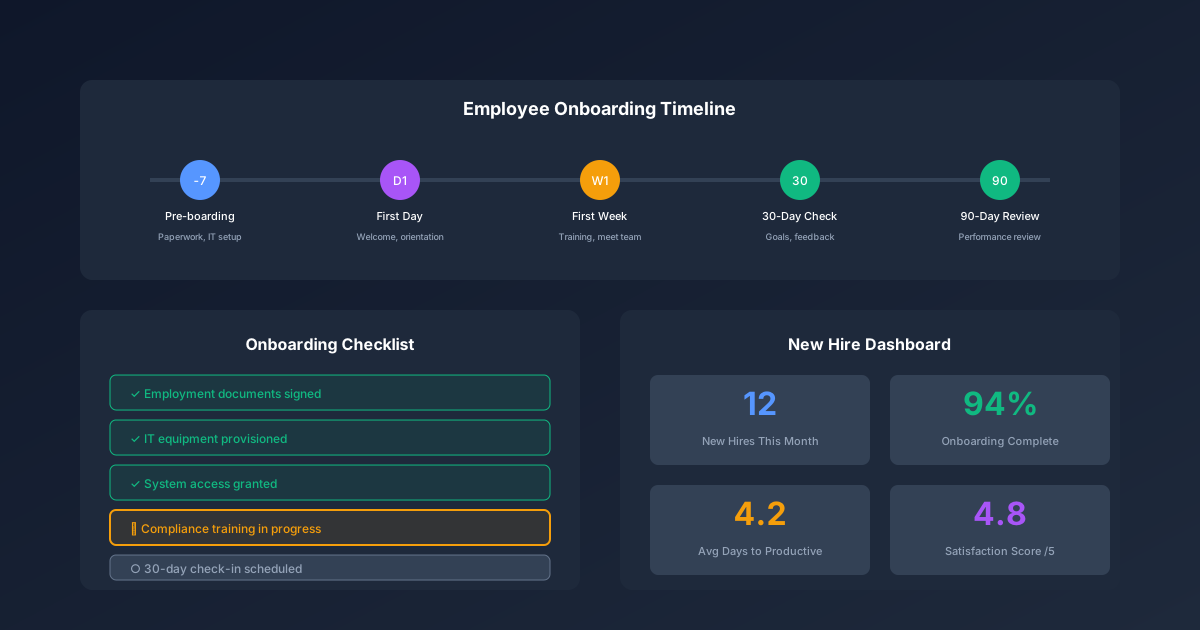
Employee onboarding is one of the most critical—and most often neglected—HR processes. Research consistently shows that organizations with structured onboarding programs achieve 50% greater new hire productivity and 82% higher retention rates. Yet most companies still rely on informal, inconsistent onboarding that leaves new employees confused, unproductive, and more likely to leave within the first year. This comprehensive guide provides the frameworks, checklists, and templates you need to build an onboarding program that transforms new hires into engaged, productive team members. For additional HR resources, visit our HR Policy & Compliance Center and explore our complete HR Management templates.
Quick Start: Download our free Employee Onboarding Checklist to implement the frameworks in this guide immediately.
Why Employee Onboarding Matters
The Business Case for Structured Onboarding
Onboarding is far more than paperwork and orientation—it's the foundation for employee success and retention.
Retention Impact:
- 69% of employees are more likely to stay 3+ years with great onboarding
- 20% of employee turnover occurs in the first 45 days
- Replacing an employee costs 50-200% of their annual salary
- Poor onboarding is cited as a top reason for early departures
Productivity Impact:
- New hires take 8-12 months to reach full productivity without structured onboarding
- Effective onboarding reduces time-to-productivity by 50-70%
- Well-onboarded employees contribute sooner and with fewer errors
- Clear expectations and training accelerate ramp-up significantly
Engagement Impact:
- First impressions shape long-term engagement
- New hires who feel welcomed and supported are more committed
- Onboarding sets the tone for company culture
- Early relationship-building creates lasting connections
The Cost of Poor Onboarding
POOR ONBOARDING IMPACT ANALYSIS

Direct Costs:
├── Extended time-to-productivity: $15,000-$50,000 per hire
├── Early turnover replacement: $30,000-$150,000 per departure
├── Recruiting costs for backfills: $5,000-$20,000 per hire
├── Training waste on departing employees: $2,000-$10,000
└── Manager time managing struggling new hires: $5,000-$15,000

Indirect Costs:
├── Team productivity impact from vacancies
├── Customer experience degradation
├── Knowledge loss from early departures
├── Cultural impact of revolving door
└── Employer brand damage

Example: 100-Person Company with 20% Annual Hiring
- New hires per year: 20
- Poor onboarding turnover rate: 25% in year 1 (5 departures)
- Replacement cost per departure: $50,000
- Direct turnover cost: $250,000/year
- Productivity loss: $100,000/year
- TOTAL ANNUAL COST: $350,000+
The Onboarding Framework
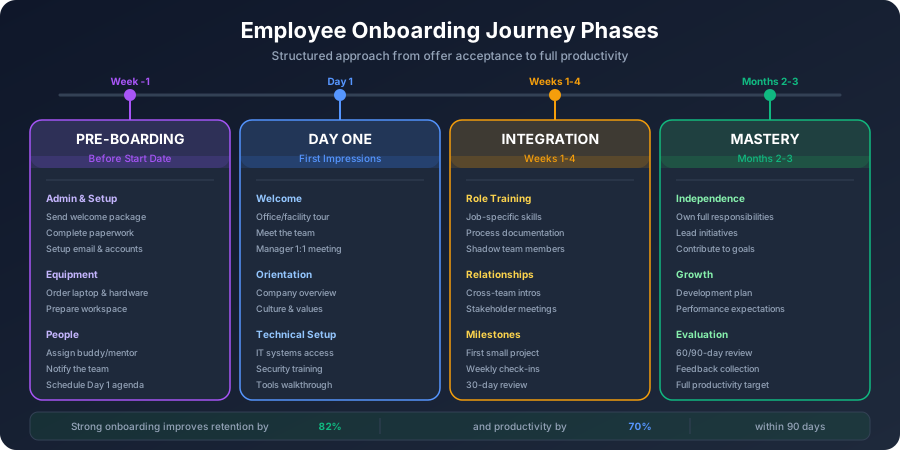
Effective onboarding follows a structured framework that spans from offer acceptance through the first year.
The Four Phases of Onboarding
Phase 1: Pre-boarding (Offer to Day 1) The period between offer acceptance and first day—often overlooked but critical for setting expectations and reducing new hire anxiety.
Phase 2: Orientation (Days 1-7) The first week focused on logistics, introductions, and foundational knowledge. This is when first impressions are formed.
Phase 3: Integration (Days 8-90) The critical period for skill development, relationship building, and role immersion. Where new hires become contributing team members.
Phase 4: Acceleration (Days 91-365) Continued development, performance optimization, and full integration into the organization.
Onboarding Stakeholders and Responsibilities
| Stakeholder | Primary Responsibilities | Time Investment |
|---|---|---|
| HR | Process coordination, compliance, culture introduction | 8-12 hours |
| Hiring Manager | Role clarity, goal setting, performance coaching | 15-25 hours |
| IT | Equipment, access provisioning, technical setup | 2-4 hours |
| Onboarding Buddy | Cultural guidance, informal support, questions | 10-15 hours |
| Team Members | Relationship building, knowledge sharing | 5-10 hours |
| Executive/Leader | Vision, values, welcome message | 1-2 hours |
Phase 1: Pre-boarding Checklist
Pre-boarding begins the moment an offer is accepted. This phase sets the tone and reduces day-one anxiety.
Administrative Preparation
HR Tasks (1-2 Weeks Before Start):
PRE-BOARDING CHECKLIST - HR

DOCUMENTATION:
☐ Send offer letter and employment agreement
☐ Provide benefits enrollment information
☐ Send new hire paperwork packet (W-4, I-9, direct deposit)
☐ Share employee handbook and policy acknowledgments
☐ Collect signed documents via DocuSign/e-signature
☐ Process background check (if applicable)

SYSTEM SETUP:
☐ Create employee record in HRIS
☐ Set up payroll profile
☐ Enroll in benefits (effective date communication)
☐ Add to org chart
☐ Create employee ID/badge

COMMUNICATION:
☐ Send welcome email with first-day logistics
☐ Provide parking/building access instructions
☐ Share dress code expectations
☐ Include emergency contact information
☐ Introduce onboarding buddy via email

SCHEDULING:
☐ Block calendar for orientation sessions
☐ Schedule HR check-ins (Day 1, Week 1, Day 30, Day 60, Day 90)
☐ Coordinate with hiring manager on first-week schedule
☐ Book conference rooms for training sessions
Manager Tasks (1-2 Weeks Before Start):
PRE-BOARDING CHECKLIST - HIRING MANAGER

WORKSPACE PREPARATION:
☐ Assign workspace/desk (or confirm remote setup)
☐ Order any department-specific equipment
☐ Prepare welcome gift/swag (optional)
☐ Post welcome sign or decoration (creates warmth)

PLANNING:
☐ Create 30-60-90 day plan with specific goals
☐ Identify initial projects for skill demonstration
☐ List key stakeholders for introductions
☐ Define success metrics for first 90 days
☐ Prepare role-specific training schedule

TEAM PREPARATION:
☐ Announce new hire to team with background
☐ Assign onboarding buddy from team
☐ Schedule team lunch/welcome event
☐ Distribute first-week introduction meetings
☐ Prepare knowledge transfer sessions with relevant team members

DOCUMENTATION:
☐ Gather role-specific resources and documentation
☐ Create shared folder with key documents
☐ Prepare org chart and team overview
☐ List key systems and how to access them
IT Tasks (1 Week Before Start):
PRE-BOARDING CHECKLIST - IT

EQUIPMENT:
☐ Order laptop/computer (configure to company standards)
☐ Order monitors, keyboard, mouse
☐ Order phone (desk or mobile, if applicable)
☐ Prepare headset for video calls
☐ Stage equipment for day-one delivery

ACCESS PROVISIONING:
☐ Create network account (Active Directory/identity provider)
☐ Create email account
☐ Configure single sign-on (SSO)
☐ Provision required software licenses
☐ Set up VPN access (if remote/hybrid)

APPLICATION ACCESS:
☐ HRIS system
☐ Communication tools (Slack, Teams, email)
☐ Productivity suite (Microsoft 365, Google Workspace)
☐ Department-specific applications
☐ Password manager account

DOCUMENTATION:
☐ Prepare IT setup guide for new hire
☐ Include WiFi credentials and network info
☐ Create list of key IT contacts for support
☐ Provide security policy acknowledgment forms
Pre-boarding Communication Timeline
| Day | Action | Owner | Channel |
|---|---|---|---|
| Offer +1 | Congratulations email with next steps | HR | |
| Offer +3 | Welcome from hiring manager | Manager | |
| Offer +5 | Onboarding buddy introduction | HR | |
| -7 days | First-day logistics and schedule | HR | |
| -3 days | Equipment shipping confirmation (remote) | IT | |
| -1 day | Reminder email with key details | HR |
Pre-boarding Engagement Activities
Keep new hires excited and engaged before they start:
Low-Touch Options:
- Share company newsletter or blog posts
- Invite to company all-hands (as observer)
- Send welcome video from CEO or team
- Provide reading materials about the industry
High-Touch Options:
- Team virtual coffee chat before start
- Lunch with hiring manager (pre-start)
- Company swag delivered to home
- Personalized welcome card signed by team
Phase 2: Orientation (Days 1-7)
The first week establishes the foundation for everything that follows.
Day One Checklist
Morning Activities:
DAY ONE SCHEDULE - MORNING

8:30 AM - ARRIVAL AND WELCOME
☐ Greet new hire at entrance
☐ Provide building tour (or virtual office tour)
☐ Introduce to workspace/equipment
☐ Help with initial login and password setup
☐ Provide physical access (badge, keys)

9:30 AM - HR ORIENTATION SESSION
☐ Welcome and introductions
☐ Review first-week schedule
☐ Complete remaining paperwork (I-9 verification)
☐ Benefits overview and enrollment walkthrough
☐ Review employee handbook highlights
☐ Explain time-off policies and procedures
☐ Q&A session

11:00 AM - IT SETUP AND TRAINING
☐ Laptop/workstation configuration
☐ Email setup and configuration
☐ Password manager setup
☐ VPN and remote access testing
☐ Communication tools introduction (Slack/Teams)
☐ IT support procedures overview
Afternoon Activities:
DAY ONE SCHEDULE - AFTERNOON

12:00 PM - WELCOME LUNCH
☐ Lunch with manager and/or team
☐ Informal conversation, relationship building
☐ Answer initial questions

1:30 PM - MANAGER ONE-ON-ONE
☐ Role expectations discussion
☐ 30-60-90 day plan review
☐ Team structure and dynamics
☐ Communication preferences
☐ Initial project overview
☐ Questions and concerns

3:00 PM - TEAM INTRODUCTIONS
☐ Meet immediate team members
☐ Understand each person's role
☐ Learn about current projects
☐ Identify collaboration points

4:00 PM - ONBOARDING BUDDY TIME
☐ Introduce onboarding buddy formally
☐ Casual conversation about company culture
☐ Tour of informal spaces (kitchen, break room)
☐ Answer "how things really work" questions

4:30 PM - WRAP UP
☐ Review tomorrow's schedule
☐ Confirm any remaining setup needs
☐ Provide after-hours support contact
☐ Encourage questions
Day One Checklist Summary:
| Activity | Owner | Duration | Status |
|---|---|---|---|
| Building tour/access | HR/Facilities | 30 min | ☐ |
| Workspace setup | Manager/IT | 30 min | ☐ |
| HR orientation | HR | 90 min | ☐ |
| IT setup | IT | 60 min | ☐ |
| Welcome lunch | Manager/Team | 90 min | ☐ |
| Manager 1:1 | Manager | 90 min | ☐ |
| Team introductions | Manager | 60 min | ☐ |
| Buddy meeting | Buddy | 30 min | ☐ |
Week One Schedule Template
Day 2: Dive Deeper
| Time | Activity | Owner |
|---|---|---|
| 9:00 AM | Company overview presentation | HR/Executive |
| 10:30 AM | Department orientation | Manager |
| 12:00 PM | Lunch with onboarding cohort (if applicable) | HR |
| 1:30 PM | Systems training (core applications) | IT/Trainer |
| 3:30 PM | Role-specific reading and exploration | Self-directed |
Day 3: Start Contributing
| Time | Activity | Owner |
|---|---|---|
| 9:00 AM | Team meeting observation | Manager |
| 10:00 AM | Key stakeholder introduction (#1) | Manager |
| 11:00 AM | Initial project kickoff | Manager |
| 12:00 PM | Lunch (self-directed or with buddy) | Buddy |
| 1:30 PM | Project work time | Self-directed |
| 3:30 PM | Manager check-in (15 min) | Manager |
Day 4: Expand Network
| Time | Activity | Owner |
|---|---|---|
| 9:00 AM | Cross-functional introduction (#2-3) | Manager |
| 10:30 AM | Product/service deep-dive training | Subject Expert |
| 12:00 PM | Lunch with different team members | Team |
| 1:30 PM | Project work time | Self-directed |
| 3:30 PM | Process/workflow training | Team Member |
Day 5: Reflect and Plan
| Time | Activity | Owner |
|---|---|---|
| 9:00 AM | Project work continuation | Self-directed |
| 11:00 AM | Week 1 manager check-in | Manager |
| 12:00 PM | Team lunch or social activity | Team |
| 2:00 PM | HR week-1 check-in | HR |
| 3:30 PM | Self-assessment and questions compilation | Self-directed |
First-Week Compliance Requirements
Mandatory Documentation (Due by End of Week 1):
| Document | Legal Requirement | Deadline |
|---|---|---|
| I-9 Employment Eligibility | Section 1: Day 1; Section 2: Day 3 | Federal requirement |
| W-4 Tax Withholding | Before first payroll | IRS requirement |
| State Tax Forms | Before first payroll | State requirement |
| Direct Deposit Authorization | Before first payroll | Company policy |
| Benefits Enrollment | Within enrollment window | Plan requirement |
| Emergency Contact Form | Day 1 | Company policy |
| Employee Handbook Acknowledgment | Week 1 | Company policy |
| IT Security Policy Acknowledgment | Before system access | Company policy |
| Confidentiality Agreement | Week 1 | Company policy |
I-9 Compliance Details:
I-9 VERIFICATION TIMELINE

SECTION 1 (Employee):
- Must be completed no later than first day of work
- Employee completes personal information
- Employee signs and dates

SECTION 2 (Employer):
- Must be completed within 3 business days of hire
- Employer examines original documents
- Records document information
- Signs and dates

ACCEPTABLE DOCUMENTS:
List A (Identity + Work Authorization):
- U.S. Passport
- Permanent Resident Card
- Employment Authorization Document

OR

List B (Identity) + List C (Work Authorization):
- List B: Driver's license, state ID, school ID with photo
- List C: Social Security card, birth certificate,
         employment authorization document

RETENTION:
- Keep I-9 for 3 years after hire OR 1 year after termination
  (whichever is later)
Phase 3: Integration (Days 8-90)
The integration phase is where real learning happens and new hires become productive team members.
30-60-90 Day Framework
The 30-60-90 Day Plan Structure:
30-60-90 DAY PLAN TEMPLATE

DAYS 1-30: LEARN
Focus: Absorb knowledge, build relationships, understand context
├── Complete all onboarding training modules
├── Shadow team members on key processes
├── Attend all team and department meetings
├── Complete first small project/task
├── Build relationships with key stakeholders
├── Document questions and observations
└── Milestone: Basic competency in role fundamentals

DAYS 31-60: CONTRIBUTE
Focus: Apply learning, take on responsibility, deliver results
├── Own specific tasks or project components
├── Participate actively in team discussions
├── Identify process improvement opportunities
├── Complete intermediate training
├── Expand stakeholder relationships
├── Begin working independently on routine tasks
└── Milestone: Productive contribution to team goals

DAYS 61-90: LEAD
Focus: Drive outcomes, demonstrate expertise, plan growth
├── Take ownership of significant projects
├── Mentor newer team members (if applicable)
├── Propose and implement improvements
├── Demonstrate core competencies independently
├── Build relationships across the organization
├── Create personal development plan
└── Milestone: Full productivity and clear career path
Example 30-60-90 Day Plan: Software Engineer
| Phase | Learning Goals | Deliverables | Success Metrics |
|---|---|---|---|
| Days 1-30 | Codebase orientation; dev environment setup; team processes | First bug fix merged; code review participation | Environment working; completed training |
| Days 31-60 | Feature development; testing practices; deployment process | Feature component delivered; tests written | PR approval rate; code quality metrics |
| Days 61-90 | Architecture understanding; cross-team collaboration | Full feature ownership; design contribution | Story points completed; sprint delivery |
Example 30-60-90 Day Plan: Sales Representative
| Phase | Learning Goals | Deliverables | Success Metrics |
|---|---|---|---|
| Days 1-30 | Product knowledge; sales process; CRM mastery | Shadow 10+ sales calls; pass product certification | Certification score; shadowing completion |
| Days 31-60 | Independent prospecting; demo delivery; objection handling | Lead 20+ discovery calls; deliver 10+ demos | Call quality scores; demo-to-meeting rate |
| Days 61-90 | Full sales cycle management; pipeline building | Close first deals; build $X pipeline | Revenue quota attainment; pipeline value |
Weekly Check-in Cadence
Manager Check-in Schedule:
| Week | Duration | Focus | Questions to Ask |
|---|---|---|---|
| Week 1 | 30 min | Orientation feedback | "What's unclear? What do you need?" |
| Week 2 | 30 min | Early progress | "What's working? Where are you stuck?" |
| Week 3 | 30 min | Relationship building | "Who else should you meet? How's the team?" |
| Week 4 | 45 min | 30-day review | "What have you learned? What's next?" |
| Week 6 | 30 min | Project progress | "How's the project going? Support needed?" |
| Week 8 | 45 min | 60-day review | "What's your contribution been? Growth areas?" |
| Week 10 | 30 min | Independence check | "Where are you fully independent now?" |
| Week 12 | 60 min | 90-day review | "What have you accomplished? Career plan?" |
HR Check-in Schedule:
| Timing | Duration | Focus |
|---|---|---|
| Day 1 | 15 min | Paperwork completion, immediate concerns |
| Week 1 | 30 min | First-week experience, orientation feedback |
| Day 30 | 30 min | Onboarding experience, manager relationship, culture fit |
| Day 60 | 30 min | Integration progress, engagement, any concerns |
| Day 90 | 30 min | Onboarding completion, feedback survey, next steps |
Milestone Assessments
30-Day Assessment Template:
30-DAY NEW HIRE ASSESSMENT

Employee: _______________ Manager: _______________
Date: _______________ Department: _______________

KNOWLEDGE ACQUISITION (Rate 1-5):
☐ Understanding of company mission/values: ___
☐ Knowledge of team structure and roles: ___
☐ Familiarity with core processes: ___
☐ Proficiency with required tools/systems: ___
☐ Understanding of role expectations: ___

BEHAVIOR AND ENGAGEMENT:
☐ Asks appropriate questions: ___
☐ Takes initiative to learn: ___
☐ Builds relationships proactively: ___
☐ Demonstrates cultural fit: ___
☐ Shows enthusiasm and engagement: ___

EARLY DELIVERABLES:
☐ Training completion: ___% complete
☐ First project/task: ☐ On track ☐ Delayed ☐ Complete
☐ Quality of initial work: ___

CONCERNS OR FLAGS:
_________________________________________________
_________________________________________________

SUPPORT NEEDED:
_________________________________________________

OVERALL STATUS: ☐ Exceeding ☐ Meeting ☐ Below Expectations

Manager Signature: _______________ Date: ___
90-Day Assessment Template:
90-DAY NEW HIRE ASSESSMENT

Employee: _______________ Manager: _______________
Date: _______________ Department: _______________

COMPETENCY ASSESSMENT (Rate 1-5):
Technical/Role Skills:
☐ Core job function proficiency: ___
☐ Tool and system mastery: ___
☐ Process adherence: ___
☐ Quality of work output: ___

Soft Skills:
☐ Communication effectiveness: ___
☐ Collaboration with team: ___
☐ Problem-solving ability: ___
☐ Adaptability and learning: ___

Cultural Fit:
☐ Alignment with company values: ___
☐ Team integration: ___
☐ Professional conduct: ___

GOAL ACHIEVEMENT:
| Goal | Target | Actual | Status |
|------|--------|--------|--------|
| [Goal 1] | | | ☐ Met ☐ Partially ☐ Missed |
| [Goal 2] | | | ☐ Met ☐ Partially ☐ Missed |
| [Goal 3] | | | ☐ Met ☐ Partially ☐ Missed |

STRENGTHS DEMONSTRATED:
_________________________________________________

AREAS FOR DEVELOPMENT:
_________________________________________________

CAREER DEVELOPMENT PLAN:
Short-term (6 months): _____________________________
Long-term (12+ months): ____________________________

RETENTION RISK ASSESSMENT:
☐ Low ☐ Medium ☐ High
Factors: ________________________________________

RECOMMENDATION:
☐ Continue employment - Meeting/exceeding expectations
☐ Extend probation - Development plan required
☐ Separate employment - Not meeting expectations

NEXT STEPS:
_________________________________________________

Manager Signature: _______________ Date: ___
Employee Signature: _______________ Date: ___
HR Signature: _______________ Date: ___
Role-Specific Onboarding Tracks
Different roles require tailored onboarding approaches.
Technical Roles (Engineering, IT, Data)
TECHNICAL ONBOARDING TRACK

WEEK 1: FOUNDATION
├── Development environment setup
├── Codebase tour and architecture overview
├── Access to repositories, CI/CD, monitoring
├── Coding standards and review process
├── Security training and compliance
└── First "good first issue" assigned

WEEK 2-3: IMMERSION
├── Pair programming with team members
├── Code review participation
├── Sprint/standup meeting integration
├── On-call rotation overview (if applicable)
├── Complete first code contribution
└── Technical documentation review

WEEK 4-6: CONTRIBUTION
├── Own a small feature or improvement
├── Write tests and documentation
├── Participate in technical discussions
├── Shadow incident response (if applicable)
└── Architectural deep-dive sessions

WEEK 7-12: OWNERSHIP
├── Lead feature development
├── Code review for others
├── Technical debt identification
├── Cross-team collaboration projects
└── Mentoring setup (give or receive)

TECHNICAL TRAINING CHECKLIST:
☐ Version control workflows
☐ Code review best practices
☐ Testing frameworks and expectations
☐ Deployment and release process
☐ Monitoring and alerting systems
☐ Security practices and compliance
☐ Architecture and design patterns
☐ Technical documentation standards
Customer-Facing Roles (Sales, Support, Success)
CUSTOMER-FACING ONBOARDING TRACK

WEEK 1: FOUNDATION
├── Product/service deep-dive training
├── Customer personas and use cases
├── CRM and tools training
├── Company messaging and positioning
├── Competition overview
└── Call/communication shadowing begins

WEEK 2-3: SKILL BUILDING
├── Role-play exercises (objection handling, discovery)
├── Product certification
├── Call observation with feedback
├── Customer journey mapping
├── Process and escalation training
└── Begin handling simple inquiries (supervised)

WEEK 4-6: SUPERVISED PRACTICE
├── Handle customer interactions with backup
├── Lead discovery calls (sales) / tickets (support)
├── Receive structured feedback on performance
├── Build personal best practices
└── Meet key internal stakeholders (product, engineering)

WEEK 7-12: INDEPENDENT OPERATION
├── Full customer interaction ownership
├── Pipeline/queue management (full load)
├── Cross-sell/upsell training
├── Complex case handling
└── Performance goal tracking

CUSTOMER-FACING TRAINING CHECKLIST:
☐ Product certification exam
☐ CRM proficiency certification
☐ Discovery/qualification methodology
☐ Objection handling framework
☐ Pricing and packaging mastery
☐ Escalation procedures
☐ Customer success metrics
☐ Communication best practices
Management Roles
MANAGEMENT ONBOARDING TRACK

WEEK 1: ORGANIZATIONAL CONTEXT
├── Executive leadership introductions
├── Strategy and goals overview
├── Organizational structure deep-dive
├── Budget and resource overview
├── Current team status and challenges
└── HR policies and manager responsibilities

WEEK 2-3: TEAM INTEGRATION
├── Individual meetings with each team member
├── Understand current projects and priorities
├── Review performance history of team
├── Identify quick wins and immediate needs
├── Shadow key processes and meetings
└── Begin building trust with team

WEEK 4-6: STRATEGIC PLANNING
├── Assess team strengths and gaps
├── Develop initial team strategy
├── Set quarterly goals with team
├── Identify process improvements
├── Cross-functional relationship building
└── First team meeting as leader

WEEK 7-12: EXECUTION AND DEVELOPMENT
├── Implement initial changes
├── Conduct first performance conversations
├── Build leadership team relationships
├── Develop talent strategy
└── First quarterly review/planning cycle

MANAGEMENT TRAINING CHECKLIST:
☐ HR policies and compliance
☐ Performance management system
☐ Budget and financial processes
☐ Hiring and onboarding procedures
☐ Company values and culture
☐ Leadership development resources
☐ Manager support and coaching available
☐ Legal and compliance training
Remote Employee Onboarding
REMOTE ONBOARDING ADAPTATIONS

PRE-BOARDING:
├── Ship equipment well in advance (5-7 days)
├── Include detailed setup instructions
├── Schedule IT support call for day 1
├── Send welcome package/swag to home
├── Provide virtual tour video of office
└── Set up all digital access before start

DAY 1 ADJUSTMENTS:
├── Begin with video call check-in (not email)
├── Help with equipment setup via screen share
├── Virtual tour of digital workspace (Slack channels, drives)
├── Schedule video lunch with manager
├── Assign remote-experienced buddy
└── End day with check-in call

WEEK 1 REMOTE TACTICS:
├── Daily video check-ins (brief)
├── Multiple video coffee chats with team
├── Clear written instructions for all tasks
├── Screen sharing for training sessions
├── Virtual team introduction meeting
└── Recorded training for self-paced review

ONGOING REMOTE SUPPORT:
├── Regular video 1:1s (camera on)
├── Virtual social activities
├── Clear communication norms established
├── Over-communicate availability and support
├── Regular pulse checks on isolation/engagement
└── Quarterly in-person meetings (if possible)

REMOTE ONBOARDING CHECKLIST ADDITIONS:
☐ Home office setup verification
☐ Video conferencing proficiency
☐ VPN and remote access confirmed
☐ Communication tool training (Slack etiquette)
☐ Time zone coordination (if distributed team)
☐ Documentation of all processes (written reference)
☐ Virtual team-building activities scheduled
☐ Clear response time expectations set
Onboarding Technology and Systems
Essential Onboarding Systems
| System | Purpose | Examples |
|---|---|---|
| HRIS | Employee records, workflow automation | Workday, BambooHR, Rippling |
| Document Management | Digital paperwork, e-signatures | DocuSign, HelloSign, PandaDoc |
| LMS | Training delivery and tracking | Lessonly, Lattice, Docebo |
| Communication | Team chat and announcements | Slack, Microsoft Teams |
| Knowledge Base | Documentation and self-service | Notion, Confluence, SharePoint |
| IT Service Desk | Access requests, technical support | ServiceNow, Jira Service Desk |
Onboarding Automation Opportunities
AUTOMATABLE ONBOARDING TASKS

DOCUMENTATION:
├── Offer letter generation
├── New hire paperwork distribution
├── E-signature collection
├── Document storage and organization
└── Compliance tracking (I-9 deadlines)

PROVISIONING:
├── Account creation triggers (HRIS → IT systems)
├── Equipment ordering workflows
├── Access provisioning based on role
├── Software license assignment
└── Badge/building access requests

SCHEDULING:
├── Orientation session bookings
├── 1:1 calendar invites
├── Training session enrollments
├── Check-in reminders
└── Milestone assessment scheduling

COMMUNICATION:
├── Welcome email sequences
├── Training reminder notifications
├── Milestone congratulations
├── Survey distribution
└── Manager notification of tasks

TRACKING:
├── Onboarding task completion
├── Training progress monitoring
├── Compliance status dashboards
├── Time-to-productivity metrics
└── Survey response collection
Onboarding Metrics Dashboard
Track these key metrics to measure onboarding effectiveness:
Time-Based Metrics:
| Metric | Calculation | Target |
|---|---|---|
| Time-to-Productivity | Days until full productivity | < 90 days |
| Time-to-First-Contribution | Days until first deliverable | < 14 days |
| Training Completion Time | Days to complete required training | < 30 days |
| Onboarding NPS Submission | Days until survey completed | < 7 days after 90 days |
Quality Metrics:
| Metric | Calculation | Target |
|---|---|---|
| 90-Day Retention Rate | New hires still employed at 90 days | > 95% |
| 1-Year Retention Rate | New hires still employed at 1 year | > 85% |
| Onboarding Satisfaction (NPS) | Survey score (1-10 scale) | > 8.0 |
| Manager Satisfaction | Manager survey score | > 8.0 |
| Training Assessment Scores | Average training quiz scores | > 85% |
Process Metrics:
| Metric | Calculation | Target |
|---|---|---|
| Paperwork Completion Rate | % completing all docs on time | > 95% |
| IT Setup Completion Rate | % with full access by day 1 | > 90% |
| 30-Day Check-in Completion | % of check-ins completed | 100% |
| Compliance Training Completion | % completing required training | 100% |
Common Onboarding Challenges and Solutions
Challenge 1: Information Overload
Problem: New hires receive too much information too quickly, leading to overwhelm and poor retention.
Solutions:
- Prioritize essential day-1 information only
- Spread training over multiple weeks
- Provide written references for self-paced review
- Use spaced repetition for critical knowledge
- Create "just-in-time" learning resources
Challenge 2: Manager Disengagement
Problem: Hiring managers delegate onboarding entirely to HR, leaving new hires without role-specific guidance.
Solutions:
- Define mandatory manager activities in onboarding process
- Provide managers with checklists and templates
- Track manager engagement metrics
- Include manager effectiveness in onboarding surveys
- Offer manager training on onboarding best practices
Challenge 3: Remote Isolation
Problem: Remote new hires feel disconnected and struggle to build relationships.
Solutions:
- Assign dedicated onboarding buddies
- Schedule multiple video coffee chats
- Include remote hires in virtual social events
- Over-communicate availability
- Plan quarterly in-person meetups when possible
Challenge 4: Unclear Expectations
Problem: New hires don't understand what success looks like in their role.
Solutions:
- Create detailed 30-60-90 day plans
- Define specific, measurable goals
- Provide regular performance feedback
- Share examples of successful work
- Conduct frequent check-ins on progress
Challenge 5: Slow Access Provisioning
Problem: New hires wait days or weeks for necessary system access, delaying productivity.
Solutions:
- Automate provisioning workflows
- Start provisioning upon offer acceptance
- Create role-based access templates
- Stage equipment before start date
- Have IT support available on day 1
Challenge 6: One-Size-Fits-All Approach
Problem: Same onboarding for all roles regardless of level, function, or experience.
Solutions:
- Create role-specific onboarding tracks
- Adjust depth based on experience level
- Allow self-paced progression for experienced hires
- Customize content to function-specific needs
- Gather feedback and iterate on tracks
Onboarding Program Measurement and Improvement
New Hire Survey Template
Deploy at 30 and 90 days:
NEW HIRE ONBOARDING SURVEY

SECTION 1: OVERALL EXPERIENCE (Scale 1-10)
1. How would you rate your overall onboarding experience? ___
2. How prepared did you feel to do your job after onboarding? ___
3. How welcomed did you feel by your team? ___
4. How well did onboarding match your expectations? ___

SECTION 2: SPECIFIC ELEMENTS (Scale 1-5)
Pre-boarding Communication: ___
Day 1 Experience: ___
HR Orientation: ___
IT Setup and Support: ___
Manager Support: ___
Training Quality: ___
Onboarding Buddy: ___
Role Clarity: ___

SECTION 3: OPEN FEEDBACK
What was the best part of your onboarding experience?
_________________________________________________

What could be improved about onboarding?
_________________________________________________

What information or training was missing?
_________________________________________________

Would you recommend [Company] as a great place to work? (1-10) ___

SECTION 4: SUGGESTIONS
If you could change one thing about onboarding, what would it be?
_________________________________________________

Additional comments:
_________________________________________________
Calculating Onboarding ROI
Onboarding Investment:
ONBOARDING COST CALCULATION

DIRECT COSTS:
├── HR time (8 hours @ $50/hr): $400
├── Manager time (20 hours @ $75/hr): $1,500
├── IT time (3 hours @ $60/hr): $180
├── Buddy time (12 hours @ $50/hr): $600
├── Training materials/systems: $200
├── Welcome materials/swag: $100
└── Total Direct Cost per New Hire: $2,980

OPPORTUNITY COST:
├── New hire salary during ramp (3 months at 50% productivity)
├── Example: $120,000 salary = $30,000/quarter
├── Productivity loss: $15,000
└── Total Opportunity Cost: $15,000

TOTAL ONBOARDING INVESTMENT: ~$18,000 per new hire
Onboarding Returns:
ONBOARDING ROI CALCULATION

WITHOUT STRUCTURED ONBOARDING:
├── Time-to-productivity: 12 months
├── First-year turnover rate: 35%
├── Cost of first-year turnover (50% salary): $60,000
├── Extended ramp productivity loss: $30,000
└── Total Cost: $90,000 per departing new hire

WITH STRUCTURED ONBOARDING:
├── Time-to-productivity: 6 months
├── First-year turnover rate: 15%
├── Reduced turnover savings: $60,000 × 0.20 = $12,000
├── Faster productivity gains: $15,000
├── Onboarding investment: $18,000
└── Net Benefit: $9,000 per new hire

ROI CALCULATION:
├── Benefit: $27,000 (turnover savings + productivity)
├── Cost: $18,000 (onboarding investment)
├── Net Benefit: $9,000
└── ROI: 50% return on onboarding investment
Continuous Improvement Process
Quarterly Review Cycle:
| Quarter | Activity | Output |
|---|---|---|
| Q1 | Analyze prior year metrics | Improvement priorities |
| Q2 | Survey analysis and stakeholder feedback | Updated program design |
| Q3 | Implement changes and train facilitators | Revised materials |
| Q4 | Year-end assessment and planning | Next year roadmap |
Improvement Sources:
- New hire survey feedback (30-day, 90-day)
- Manager feedback surveys
- HR facilitator observations
- Exit interview data (early departures)
- Industry benchmarking
- New hire focus groups
- Process efficiency analysis
Implementation Checklist
Use this checklist to implement or improve your onboarding program:
Foundation:
- Define onboarding program objectives and success metrics
- Identify stakeholder responsibilities (HR, managers, IT, buddies)
- Create core onboarding checklist and timeline
- Develop 30-60-90 day plan templates
- Design new hire survey instruments
Content Development:
- Create company orientation presentation
- Develop role-specific training materials
- Build knowledge base/documentation repository
- Record training videos for scalability
- Compile policy acknowledgment documents
Process Implementation:
- Design pre-boarding workflow
- Create day-one schedule template
- Establish check-in cadence and templates
- Develop milestone assessment forms
- Build feedback collection process
Technology Setup:
- Configure HRIS onboarding workflows
- Set up e-signature for paperwork
- Create IT provisioning automation
- Implement LMS for training tracking
- Build onboarding metrics dashboard
Stakeholder Enablement:
- Train managers on onboarding responsibilities
- Develop onboarding buddy guidelines and training
- Create HR facilitator guide
- Establish IT support procedures
- Communicate program to organization
Measurement:
- Define key metrics and targets
- Create reporting dashboards
- Schedule regular review cadence
- Establish continuous improvement process
- Plan for program iteration
Related Resources
HR Management Templates
Employee Onboarding Checklist: Complete checklist implementing the frameworks in this guide, including pre-boarding, day-one, and 90-day milestone tracking.
Additional Resources:
- HR Policy & Compliance Center - Complete HR resource hub
- Headcount Planning Template - Strategic workforce planning
- HR Compliance Templates - Audit-ready documentation
- HR Management Templates - All HR templates
Conclusion
Employee onboarding is an investment that pays dividends through improved retention, faster productivity, and stronger engagement. By implementing structured pre-boarding, comprehensive orientation, and thoughtful integration processes, you transform the new hire experience from administrative paperwork into a foundation for long-term success.
Key Takeaways:
- Pre-boarding matters: The experience begins at offer acceptance, not day one
- Structure drives consistency: Checklists and templates ensure nothing falls through the cracks
- 30-60-90 plans create clarity: Clear goals and milestones accelerate time-to-productivity
- Managers are critical: The hiring manager relationship determines onboarding success
- Customize by role: Different functions need different onboarding tracks
- Measure and improve: Track metrics and gather feedback to continuously refine the program
- Remote requires more: Distributed teams need intentional connection-building
Implementation Priority:
- Download the Employee Onboarding Checklist
- Define stakeholder responsibilities
- Create your 30-60-90 day plan template
- Design the new hire survey
- Train managers on their onboarding role
Long-term Development:
- Automate administrative workflows
- Build role-specific onboarding tracks
- Create onboarding metrics dashboard
- Develop continuous improvement process
- Expand to include career development integration
A well-designed onboarding program is one of the highest-ROI investments an organization can make. Start with the fundamentals, gather feedback, and continuously improve. Your new hires—and your retention metrics—will thank you.