OPEX vs CAPEX Budgeting: Complete Framework & Decision Guide

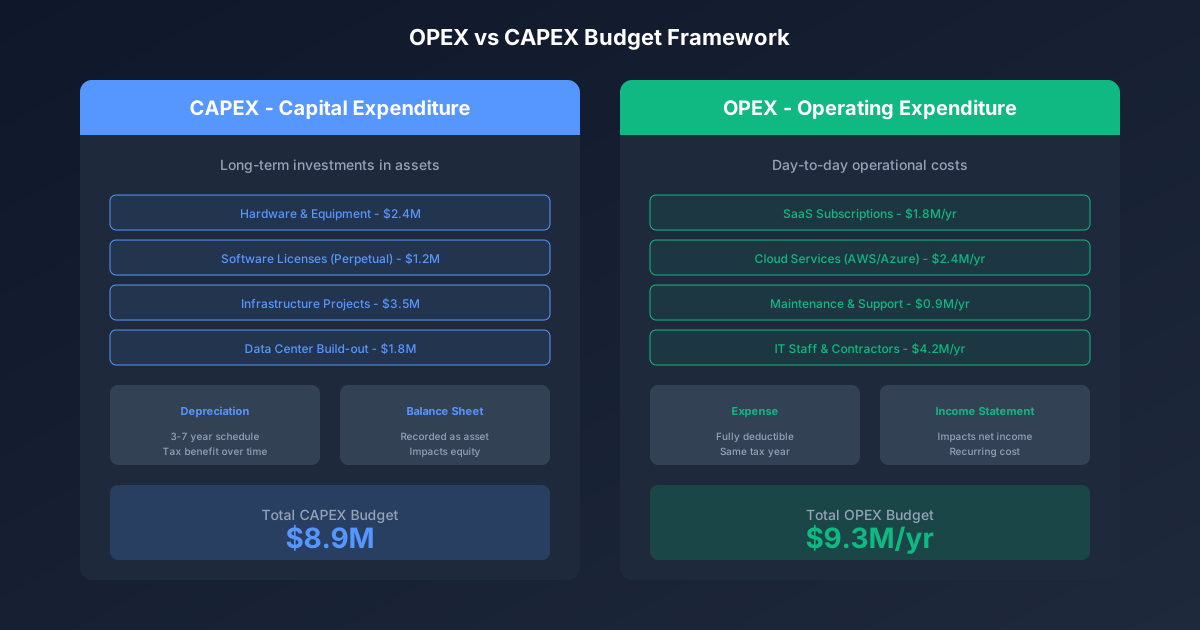
Understanding the distinction between operating expenses (OPEX) and capital expenditures (CAPEX) is fundamental to sound financial management. This classification decision impacts everything from tax treatment and cash flow timing to financial ratios and budget approval processes. Yet many organizations lack clear frameworks for consistent OPEX vs CAPEX classification, leading to accounting errors, audit issues, and suboptimal financial decisions. This comprehensive guide provides the frameworks, decision criteria, and templates to master OPEX vs CAPEX budgeting. For additional financial planning resources, visit our Financial Planning Hub and explore our Investment Analysis Template.
Quick Start: Access our CapEx Planning Templates to implement the frameworks in this guide immediately.
Understanding OPEX vs CAPEX
Definitions and Core Differences
Operating Expenses (OPEX): Day-to-day expenses required to run the business. These costs are fully expensed in the period incurred and appear on the income statement.
Capital Expenditures (CAPEX): Investments in long-term assets that provide benefits over multiple years. These costs are capitalized on the balance sheet and depreciated or amortized over their useful life.
Fundamental Distinction:
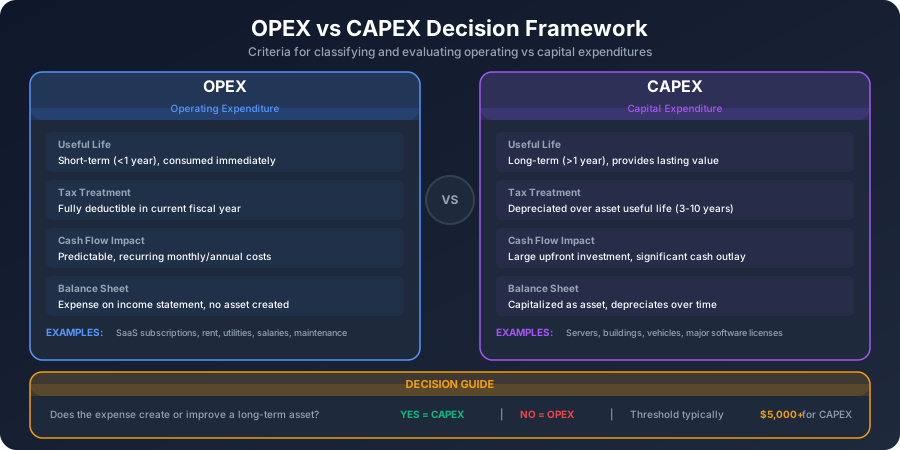
OPEX vs CAPEX CLASSIFICATION

OPERATING EXPENSES (OPEX):
├── Time Horizon: Benefits consumed within 1 year
├── Accounting: Fully expensed in current period
├── Financial Statement: Income statement (reduces profit)
├── Tax Treatment: Immediate deduction
├── Cash Flow: Operating cash flow
└── Examples: Rent, salaries, utilities, maintenance, subscriptions

CAPITAL EXPENDITURES (CAPEX):
├── Time Horizon: Benefits extend beyond 1 year
├── Accounting: Capitalized, then depreciated/amortized
├── Financial Statement: Balance sheet (increases assets)
├── Tax Treatment: Depreciation deduction over time
├── Cash Flow: Investing cash flow
└── Examples: Equipment, buildings, software, vehicles, patents
Why Classification Matters
Financial Reporting Impact:
| Factor | OPEX Treatment | CAPEX Treatment |
|---|---|---|
| Current Period Profit | Lower (full expense) | Higher (only depreciation) |
| Future Period Profit | No impact | Lower (depreciation expense) |
| Balance Sheet Assets | No change | Increased |
| Cash Flow Statement | Operating activities | Investing activities |
| Financial Ratios | Affects operating margin | Affects asset turnover |
Tax Implications:
| Factor | OPEX | CAPEX |
|---|---|---|
| Deduction Timing | Immediate (current year) | Over useful life |
| Tax Benefit Timing | Immediate tax reduction | Deferred tax benefit |
| Section 179/Bonus Depreciation | N/A | May allow accelerated deduction |
| Cash Flow Timing | Better immediate cash position | Tax benefit spread over years |
Stakeholder Perspectives:
STAKEHOLDER IMPACT ANALYSIS

MANAGEMENT:
├── OPEX: Reduces current profitability, harder to hit profit targets
├── CAPEX: Protects current profitability, shows investment in growth
└── Consideration: Incentive structure may favor one over other

INVESTORS:
├── OPEX: Higher quality earnings (no capitalization games)
├── CAPEX: May mask true profitability, review capex intensity
└── Consideration: Adjusted EBITDA and free cash flow metrics

LENDERS:
├── OPEX: Impacts debt covenants tied to profitability
├── CAPEX: Monitors capital intensity and debt/EBITDA ratios
└── Consideration: Covenant compliance implications

TAX AUTHORITIES:
├── OPEX: Immediate deduction must be legitimate operating expense
├── CAPEX: Depreciation schedule must follow tax rules
└── Consideration: Audit risk for aggressive classification
Classification Criteria
The Three-Part Test
Use this framework to determine proper classification:
Test 1: Useful Life Does the expenditure provide benefits for more than one year?
USEFUL LIFE ASSESSMENT

QUESTION: How long will this expenditure provide value?

< 1 YEAR → OPEX
├── Consumable supplies
├── Short-term licenses
├── Temporary repairs
├── One-time services
└── Routine maintenance

> 1 YEAR → Likely CAPEX (continue to Test 2)
├── Equipment with multi-year life
├── Software with perpetual license
├── Building improvements
├── Vehicles
└── Major renovations
Test 2: Materiality Does the expenditure exceed the capitalization threshold?
MATERIALITY THRESHOLD

Most organizations establish minimum capitalization thresholds:

SMALL BUSINESS: $500 - $1,000
├── Items below threshold → OPEX (regardless of useful life)
├── Items above threshold → Apply full CAPEX criteria
└── Rationale: Administrative simplicity

MID-SIZE COMPANY: $2,500 - $5,000
├── De minimis rule under tax regulations
├── Balance between accuracy and efficiency
└── Common threshold for most organizations

ENTERPRISE: $5,000 - $10,000+
├── Higher threshold appropriate for large operations
├── Reduces administrative burden
└── Immaterial items expensed for efficiency
Test 3: Nature of Expenditure Does the expenditure create or extend the life of an asset?
NATURE ASSESSMENT

CREATES NEW CAPABILITY → CAPEX
├── Adds new functionality not previously available
├── Extends useful life significantly
├── Improves capacity or efficiency materially
└── Represents a betterment or improvement

MAINTAINS EXISTING CAPABILITY → OPEX
├── Restores asset to original condition
├── Routine maintenance and repairs
├── Does not extend useful life
└── Does not add new functionality
Classification Decision Tree
OPEX vs CAPEX DECISION TREE

START: New Expenditure

QUESTION 1: Does the item have a useful life > 1 year?
│
├── NO → OPEX (expense immediately)
│
└── YES → Continue to Question 2

QUESTION 2: Does the cost exceed the capitalization threshold?
│
├── NO → OPEX (de minimis expense)
│
└── YES → Continue to Question 3

QUESTION 3: Does the expenditure create, improve, or extend an asset?
│
├── NO (maintenance/repair) → OPEX
│
└── YES → Continue to Question 4

QUESTION 4: Is this a lease or purchase?
│
├── LEASE → Evaluate under ASC 842/IFRS 16
│   ├── Finance lease → CAPEX treatment
│   └── Operating lease → OPEX treatment
│
└── PURCHASE → CAPEX (capitalize and depreciate)
Common Classification Examples
Clear OPEX Examples:
| Expenditure | Rationale | Accounting Treatment |
|---|---|---|
| Office rent | Monthly payment, no asset acquired | Expense monthly |
| Employee salaries | Ongoing operational cost | Expense as incurred |
| Utilities | Consumed in current period | Expense monthly |
| Office supplies | Low value, short life | Expense as purchased |
| Software subscription (SaaS) | No asset ownership | Expense monthly/annually |
| Routine maintenance | Maintains, doesn't improve | Expense as incurred |
| Insurance premiums | Annual coverage | Expense over coverage period |
| Marketing campaigns | Benefits primarily current period | Expense as incurred |
Clear CAPEX Examples:
| Expenditure | Rationale | Accounting Treatment |
|---|---|---|
| Manufacturing equipment | Multi-year useful life | Capitalize, depreciate 5-10 years |
| Company vehicles | Multi-year asset | Capitalize, depreciate 3-5 years |
| Building purchase | Long-term asset | Capitalize, depreciate 39 years |
| Perpetual software license | Multi-year use rights | Capitalize, amortize 3-5 years |
| Leasehold improvements | Benefits over lease term | Capitalize, amortize over lease |
| Patents acquired | Multi-year legal protection | Capitalize, amortize over life |
| Server infrastructure | Multi-year useful life | Capitalize, depreciate 3-5 years |
Gray Area Examples:
| Expenditure | Considerations | Typical Treatment |
|---|---|---|
| Major repairs | Does it extend useful life materially? | Often CAPEX if significant |
| Software customization | One-time or ongoing? Owned or hosted? | Depends on specifics |
| Website development | Phase determines treatment | Planning: OPEX; Development: CAPEX |
| Training costs | Even if for new equipment | Generally OPEX |
| Moving costs | For equipment relocation | Generally OPEX |
| Interest during construction | Qualifying assets only | CAPEX (capitalized interest) |
Accounting Treatment Deep Dive
OPEX Accounting
Journal Entry:
OPERATING EXPENSE RECOGNITION

Entry at time of expense:
  Debit:  Expense Account (Income Statement)    $XX,XXX
  Credit: Cash or Accounts Payable              $XX,XXX

Example - Monthly SaaS subscription ($1,200/month):
  Debit:  Software Expense                      $1,200
  Credit: Cash                                  $1,200

INCOME STATEMENT IMPACT:
├── Revenue                                    $500,000
├── Less: Operating Expenses
│   ├── Salaries                              $200,000
│   ├── Rent                                   $48,000
│   ├── Software subscriptions                 $14,400
│   ├── Utilities                              $12,000
│   └── Other operating                        $25,600
├── Total Operating Expenses                  $300,000
└── Operating Income                          $200,000

Full expense reduces profit in current period.
CAPEX Accounting
Journal Entries:
CAPITAL EXPENDITURE RECOGNITION

Entry at purchase:
  Debit:  Fixed Asset (Balance Sheet)           $XX,XXX
  Credit: Cash or Accounts Payable              $XX,XXX

Example - Server purchase ($50,000, 5-year life):
  Debit:  Computer Equipment                    $50,000
  Credit: Cash                                  $50,000

Monthly depreciation entry (straight-line):
  Debit:  Depreciation Expense (I/S)            $833
  Credit: Accumulated Depreciation (B/S)        $833

Calculation: $50,000 / 60 months = $833/month

BALANCE SHEET IMPACT:
├── Fixed Assets
│   ├── Computer Equipment (gross)             $50,000
│   ├── Less: Accumulated Depreciation         ($5,000)
│   └── Net Book Value                         $45,000

INCOME STATEMENT IMPACT (Year 1):
├── Revenue                                    $500,000
├── Less: Depreciation Expense                  $10,000
└── Operating Income                          $490,000

Only depreciation expense reduces profit, not full purchase.
Depreciation Methods
Straight-Line Depreciation:
Annual Depreciation = (Cost - Salvage Value) / Useful Life

Example:
Cost: $100,000
Salvage Value: $10,000
Useful Life: 5 years
Annual Depreciation: ($100,000 - $10,000) / 5 = $18,000

Year    Beginning     Depreciation    Ending
        Book Value    Expense         Book Value
─────────────────────────────────────────────────
1       $100,000      $18,000         $82,000
2        $82,000      $18,000         $64,000
3        $64,000      $18,000         $46,000
4        $46,000      $18,000         $28,000
5        $28,000      $18,000         $10,000
Accelerated Depreciation (Double Declining Balance):
Annual Depreciation = 2 × (1 / Useful Life) × Book Value

Example:
Cost: $100,000
Useful Life: 5 years
Rate: 2 × (1/5) = 40%

Year    Beginning     Depreciation    Ending
        Book Value    Expense         Book Value
─────────────────────────────────────────────────
1       $100,000      $40,000         $60,000
2        $60,000      $24,000         $36,000
3        $36,000      $14,400         $21,600
4        $21,600       $8,640         $12,960
5        $12,960       $2,960*        $10,000

*Adjusted to reach salvage value
Useful Life Guidelines:
| Asset Category | Book Depreciation | Tax Depreciation (MACRS) |
|---|---|---|
| Buildings (commercial) | 30-40 years | 39 years |
| Buildings (residential) | 27.5 years | 27.5 years |
| Leasehold improvements | Lease term | 15 years |
| Vehicles | 3-5 years | 5 years |
| Computer equipment | 3-5 years | 5 years |
| Office furniture | 5-7 years | 7 years |
| Manufacturing equipment | 5-10 years | 5-7 years |
| Software (purchased) | 3-5 years | 3 years |
Tax Considerations
Tax Treatment Comparison
OPEX Tax Treatment:
- Full deduction in the year incurred
- Reduces taxable income immediately
- Immediate tax savings
- No depreciation tracking required
CAPEX Tax Treatment:
- Depreciation deduction over useful life
- Tax benefit spread across multiple years
- Requires asset tracking and depreciation schedules
- Special provisions may allow acceleration
Special Tax Provisions
Section 179 Deduction:
SECTION 179 EXPENSING (2024/2025)

Allows immediate expensing of qualifying property:
├── Maximum deduction: $1,160,000 (adjusted annually)
├── Phase-out threshold: $2,890,000 total property placed in service
├── Qualifying property: Equipment, machinery, software, vehicles
└── Election: Made on tax return, property must be used >50% for business

EXAMPLE:
Purchase: $500,000 manufacturing equipment
Normal depreciation: $100,000/year for 5 years
With Section 179: $500,000 deduction in Year 1

Tax savings at 25% rate:
Normal: $25,000 Year 1 tax savings
Section 179: $125,000 Year 1 tax savings
Bonus Depreciation:
BONUS DEPRECIATION (Current Rules)

Allows first-year deduction of percentage of qualified property:
├── 2023: 80% bonus depreciation
├── 2024: 60% bonus depreciation
├── 2025: 40% bonus depreciation
├── 2026: 20% bonus depreciation
├── 2027+: 0% (scheduled to expire)
└── Qualifying: New and used property with <20 year recovery period

EXAMPLE (60% bonus depreciation):
Purchase: $100,000 equipment
Bonus depreciation: $60,000 (60%)
Remaining basis: $40,000
Regular depreciation: $8,000/year (5-year life)
Year 1 total deduction: $60,000 + $8,000 = $68,000
De Minimis Safe Harbor:
DE MINIMIS EXPENSING

IRS allows immediate expensing of low-cost items:
├── With audited financial statements: $5,000 per item
├── Without audited statements: $2,500 per item
├── Election: Annual written accounting policy required
└── Application: Per invoice or per item, consistently applied

BENEFIT:
Simplifies accounting for items that would otherwise require
capitalization and depreciation tracking.
Tax Planning Strategies
OPEX vs CAPEX TAX PLANNING

FAVOR OPEX WHEN:
├── Need immediate tax deduction
├── Current year taxable income is high
├── Expect lower tax rates in future years
├── Cash flow pressure (need tax savings now)
└── Subscription/rental options available

FAVOR CAPEX WHEN:
├── Can use Section 179 or bonus depreciation
├── Current year taxable income is low
├── Expect higher tax rates in future years
├── Asset ownership provides other benefits
└── Long-term cost is lower than rental

EXAMPLE ANALYSIS:
$100,000 server purchase vs $25,000/year cloud rental

Assuming 25% tax rate, 5-year horizon:

PURCHASE (CAPEX with Section 179):
├── Year 1 cost: $100,000
├── Year 1 tax savings: $25,000 (100% Section 179)
├── Net cost: $75,000
└── Years 2-5: $0 additional cost

CLOUD RENTAL (OPEX):
├── Annual cost: $25,000 × 5 = $125,000 total
├── Annual tax savings: $6,250/year = $31,250 total
├── Net cost: $93,750
└── But: No upfront capital required, always current tech

Decision depends on cash availability, tech refresh needs, and business factors.
Modern Considerations: Cloud and SaaS
Cloud Computing Classification
The shift to cloud computing has complicated OPEX vs CAPEX decisions:
CLOUD SERVICE MODEL CLASSIFICATION

INFRASTRUCTURE AS A SERVICE (IaaS):
├── Example: AWS EC2, Azure VMs
├── Classification: Generally OPEX
├── Rationale: Subscription model, no asset ownership
├── Treatment: Expense as incurred
└── Exception: Reserved instances (may have CAPEX elements)

PLATFORM AS A SERVICE (PaaS):
├── Example: Heroku, Google App Engine
├── Classification: Generally OPEX
├── Rationale: Service consumption model
├── Treatment: Expense as incurred
└── Note: Custom development on platform may be CAPEX

SOFTWARE AS A SERVICE (SaaS):
├── Example: Salesforce, Microsoft 365, Workday
├── Classification: Generally OPEX
├── Rationale: No software ownership, subscription access
├── Treatment: Expense monthly/annually
└── Note: Implementation costs may be CAPEX

PRIVATE CLOUD (On-Premises):
├── Example: VMware infrastructure, OpenStack
├── Classification: Generally CAPEX
├── Rationale: Hardware ownership, multi-year use
├── Treatment: Capitalize hardware, depreciate
└── Note: Software licenses may be separate
Cloud vs On-Premise Decision Framework
CLOUD vs ON-PREMISE FINANCIAL COMPARISON

SCENARIO: 100-user enterprise application
Timeline: 5 years

ON-PREMISE (CAPEX):
┌────────────────────────────────────────────────────────────┐
│ Initial Investment (Year 0):                               │
│ ├── Server hardware                    $50,000            │
│ ├── Software licenses (perpetual)      $75,000            │
│ ├── Implementation services            $25,000            │
│ └── Total Initial CapEx               $150,000            │
│                                                            │
│ Annual Operating Costs (Years 1-5):                       │
│ ├── Maintenance contracts               $15,000/year      │
│ ├── IT staff allocation                 $20,000/year      │
│ ├── Power/cooling                        $5,000/year      │
│ └── Total Annual OpEx                   $40,000/year      │
│                                                            │
│ 5-Year Total Cost:                                        │
│ ├── Initial CapEx                      $150,000           │
│ ├── 5 years OpEx                       $200,000           │
│ └── Total                              $350,000           │
└────────────────────────────────────────────────────────────┘

CLOUD/SaaS (OPEX):
┌────────────────────────────────────────────────────────────┐
│ Initial Investment (Year 0):                               │
│ ├── Implementation services            $15,000            │
│ ├── Data migration                      $5,000            │
│ └── Total Initial Cost                 $20,000            │
│                                                            │
│ Annual Operating Costs (Years 1-5):                       │
│ ├── SaaS subscription (100 users)      $60,000/year      │
│ ├── IT staff allocation (reduced)      $10,000/year      │
│ └── Total Annual OpEx                  $70,000/year      │
│                                                            │
│ 5-Year Total Cost:                                        │
│ ├── Initial cost                        $20,000           │
│ ├── 5 years OpEx                       $350,000           │
│ └── Total                              $370,000           │
└────────────────────────────────────────────────────────────┘

COMPARISON ANALYSIS:
┌────────────────────────┬────────────┬────────────┐
│ Factor                 │ On-Premise │ Cloud/SaaS │
├────────────────────────┼────────────┼────────────┤
│ 5-Year Total Cost      │ $350,000   │ $370,000   │
│ Year 1 Cash Required   │ $190,000   │ $90,000    │
│ Upfront Capital        │ $150,000   │ $20,000    │
│ Annual Cash Flow       │ $40,000    │ $70,000    │
│ P&L Impact Year 1      │ $70,000*   │ $90,000    │
│ Balance Sheet Impact   │ +$120,000  │ $0         │
└────────────────────────┴────────────┴────────────┘
*Depreciation + OpEx

NON-FINANCIAL CONSIDERATIONS:
├── Scalability: Cloud advantage (scale up/down easily)
├── Updates: Cloud advantage (automatic, always current)
├── Customization: On-prem advantage (full control)
├── Security: Depends on requirements and capabilities
├── Data sovereignty: On-prem may be required
└── Exit strategy: On-prem has asset value; cloud has none
Software Development Costs
SOFTWARE DEVELOPMENT CAPITALIZATION (ASC 350-40)

PROJECT PHASES:

1. PRELIMINARY PROJECT STAGE → OPEX
   ├── Conceptual design
   ├── Vendor evaluation
   ├── Technology selection
   ├── Feasibility assessment
   └── Business case development

2. APPLICATION DEVELOPMENT STAGE → CAPEX
   ├── Software design and configuration
   ├── Coding and programming
   ├── Testing and quality assurance
   ├── Installation on hardware
   └── Data conversion for new system

3. POST-IMPLEMENTATION STAGE → OPEX
   ├── Training costs
   ├── Maintenance and support
   ├── Minor upgrades/enhancements
   └── Ongoing hosting fees

CAPITALIZATION CRITERIA:
├── Project must be probable of completion
├── Management must authorize and commit resources
├── Software must be for internal use or sale
└── Technology feasibility must be established

EXAMPLE:
$500,000 custom software development project

Phase 1 (Planning): $50,000 → OPEX
Phase 2 (Development): $380,000 → CAPEX
Phase 3 (Training): $70,000 → OPEX

Capitalize $380,000, amortize over 3-5 years
Budgeting Process
OPEX Budgeting
OPERATING EXPENSE BUDGET TEMPLATE

DEPARTMENT: IT Operations
FISCAL YEAR: 2025

CATEGORY                      BUDGET      MONTHLY     NOTES
────────────────────────────────────────────────────────────
PERSONNEL:
  Salaries & Wages           $850,000     $70,833     12 FTEs
  Benefits (28%)             $238,000     $19,833
  Contractors                $120,000     $10,000     2 contractors
  Training                    $24,000      $2,000     $2K per FTE
Subtotal Personnel         $1,232,000    $102,667

SOFTWARE & SUBSCRIPTIONS:
  SaaS applications          $180,000     $15,000     Listed below
  Cloud infrastructure       $144,000     $12,000     AWS/Azure
  Security tools              $48,000      $4,000
  Dev tools & licenses        $36,000      $3,000
Subtotal Software           $408,000     $34,000

FACILITIES & UTILITIES:
  Data center allocation      $60,000      $5,000
  Telecommunications          $36,000      $3,000
Subtotal Facilities          $96,000      $8,000

SERVICES & MAINTENANCE:
  Hardware maintenance        $48,000      $4,000
  Consulting services         $60,000      $5,000
  Managed services            $72,000      $6,000
Subtotal Services           $180,000     $15,000

OTHER OPERATING:
  Travel & expenses           $24,000      $2,000
  Supplies                    $12,000      $1,000
  Contingency (5%)            $97,600      $8,133
Subtotal Other              $133,600     $11,133

════════════════════════════════════════════════════════════
TOTAL OPEX BUDGET          $2,049,600    $170,800
════════════════════════════════════════════════════════════
CAPEX Budgeting
CAPITAL EXPENDITURE BUDGET TEMPLATE

DEPARTMENT: IT Infrastructure
FISCAL YEAR: 2025

PROJECT/ASSET              BUDGET     TIMING    USEFUL    ANNUAL
                                                 LIFE     DEPREC.
────────────────────────────────────────────────────────────────
INFRASTRUCTURE:
  Server refresh           $150,000    Q1       5 years   $30,000
  Network upgrade           $80,000    Q2       5 years   $16,000
  Storage expansion         $60,000    Q2       5 years   $12,000
Subtotal Infrastructure    $290,000                       $58,000

SOFTWARE:
  ERP upgrade              $200,000    Q1       5 years   $40,000
  Security platform         $75,000    Q3       3 years   $25,000
Subtotal Software          $275,000                       $65,000

END-USER EQUIPMENT:
  Laptop refresh (100)     $120,000    Q1-Q4    3 years   $40,000
  Monitors (50)             $25,000    Q2       5 years    $5,000
Subtotal Equipment         $145,000                       $45,000

FACILITIES:
  Data center upgrades      $50,000    Q3       10 years   $5,000

════════════════════════════════════════════════════════════════
TOTAL CAPEX BUDGET         $760,000                      $173,000
════════════════════════════════════════════════════════════════

CASH FLOW TIMING:
Q1: $470,000 (Server, ERP, laptops start)
Q2: $165,000 (Network, storage, monitors)
Q3: $125,000 (Security platform, DC upgrades)
Q4: $0 (Laptop refresh completion only)

P&L IMPACT (DEPRECIATION):
2025: $130,000 (partial year for new assets)
2026: $173,000 (full year)
2027: $173,000 (full year)
Approval Workflow
CAPEX APPROVAL MATRIX

APPROVAL THRESHOLDS:
┌─────────────────────┬─────────────────────────────────────────┐
│ Amount              │ Approval Authority                      │
├─────────────────────┼─────────────────────────────────────────┤
│ Under $5,000        │ Department Manager                      │
│ $5,000 - $25,000    │ Director + Finance Review               │
│ $25,000 - $100,000  │ VP + CFO Approval                       │
│ $100,000 - $500,000 │ Executive Committee                     │
│ Over $500,000       │ Board of Directors                      │
└─────────────────────┴─────────────────────────────────────────┘

CAPEX REQUEST REQUIREMENTS:

BASIC REQUEST ($5K-$25K):
├── Business justification
├── Cost estimate with quotes
├── Budget availability confirmation
└── Expected useful life

STANDARD REQUEST ($25K-$100K):
├── All basic requirements plus:
├── ROI or payback analysis
├── Alternative options considered
├── Implementation timeline
└── Operating cost impact

MAJOR REQUEST ($100K+):
├── All standard requirements plus:
├── Full business case document
├── NPV and IRR analysis
├── Risk assessment
├── Post-implementation review plan
└── Board presentation (if required)

APPROVAL TIMELINE:
├── Under $25K: 1-2 weeks
├── $25K-$100K: 2-4 weeks
├── $100K-$500K: 4-6 weeks
└── Over $500K: 6-8 weeks (board meeting schedule)
Financial Analysis and Reporting
OPEX vs CAPEX Impact Analysis
FINANCIAL STATEMENT IMPACT COMPARISON

SCENARIO: $500,000 Investment
Option A: Treat as OPEX (expense immediately)
Option B: Treat as CAPEX (capitalize, 5-year life)

INCOME STATEMENT IMPACT:
                            OPEX         CAPEX
                            Treatment    Treatment
────────────────────────────────────────────────────
Year 1:
  Revenue                   $2,000,000   $2,000,000
  Operating Expenses          $500,000     $100,000
  EBITDA                    $1,500,000   $1,900,000
  Depreciation                      $0     $100,000
  Operating Income          $1,500,000   $1,800,000

Year 2-5 (each):
  Operating Expenses                $0           $0
  Depreciation                      $0     $100,000
  Operating Income impact           $0    -$100,000

5-YEAR TOTAL IMPACT:
  Total P&L expense           $500,000     $500,000
  (Same total, different timing)

BALANCE SHEET IMPACT:
                            OPEX         CAPEX
────────────────────────────────────────────────────
Year 1:
  Fixed Assets (net)              $0      $400,000
  Retained Earnings         -$375,000    -$285,000
  (assumes 25% tax rate)

KEY RATIOS IMPACT (Year 1):
                            OPEX         CAPEX
────────────────────────────────────────────────────
Operating Margin            75.0%        90.0%
EBITDA Margin               75.0%        95.0%
Return on Assets            Lower        Higher
Asset Turnover              Higher       Lower
Dashboard Metrics
CAPEX TRACKING DASHBOARD

CAPITAL BUDGET STATUS:
┌─────────────────────────────────────────────────────────────┐
│ Annual CapEx Budget: $760,000                               │
│ YTD Approved: $580,000 (76%)                                │
│ YTD Spent: $420,000 (55%)                                   │
│ Committed/In Progress: $160,000 (21%)                       │
│ Remaining Budget: $180,000 (24%)                            │
└─────────────────────────────────────────────────────────────┘

PROJECT STATUS:
┌───────────────────┬──────────┬──────────┬──────────┬────────┐
│ Project           │ Budget   │ Spent    │ Variance │ Status │
├───────────────────┼──────────┼──────────┼──────────┼────────┤
│ Server refresh    │ $150,000 │ $148,500 │ +$1,500  │ ✓ Done │
│ ERP upgrade       │ $200,000 │ $185,000 │ +$15,000 │ 90%    │
│ Network upgrade   │ $80,000  │ $45,000  │ +$35,000 │ 60%    │
│ Laptop refresh    │ $120,000 │ $41,500  │ +$78,500 │ 35%    │
└───────────────────┴──────────┴──────────┴──────────┴────────┘

DEPRECIATION FORECAST:
┌─────────────────────────────────────────────────────────────┐
│ Current Year Depreciation: $650,000                         │
│ New Asset Depreciation (partial year): $130,000             │
│ Total Projected Depreciation: $780,000                      │
│                                                             │
│ 2025: $780,000                                              │
│ 2026: $823,000 (full year new assets)                       │
│ 2027: $756,000 (older assets rolling off)                   │
└─────────────────────────────────────────────────────────────┘

ASSET INVENTORY SUMMARY:
┌─────────────────┬──────────┬──────────┬──────────┬──────────┐
│ Category        │ Gross    │ Accum    │ Net      │ Avg Age  │
│                 │ Value    │ Deprec   │ Value    │ (years)  │
├─────────────────┼──────────┼──────────┼──────────┼──────────┤
│ Buildings       │ $2.5M    │ $800K    │ $1.7M    │ 12       │
│ Equipment       │ $1.8M    │ $1.1M    │ $700K    │ 4        │
│ Software        │ $600K    │ $350K    │ $250K    │ 3        │
│ Vehicles        │ $400K    │ $280K    │ $120K    │ 4        │
├─────────────────┼──────────┼──────────┼──────────┼──────────┤
│ TOTAL           │ $5.3M    │ $2.53M   │ $2.77M   │ --       │
└─────────────────┴──────────┴──────────┴──────────┴──────────┘
Implementation Checklist
Policy Development
- Define capitalization threshold appropriate for organization size
- Document OPEX vs CAPEX classification criteria
- Establish useful life guidelines by asset category
- Create depreciation method policy
- Define approval authority matrix
- Document tax treatment procedures
- Establish asset tracking requirements
Process Implementation
- Create OPEX budget templates by department
- Develop CAPEX request forms and workflows
- Build approval routing based on thresholds
- Implement asset tracking system
- Create depreciation schedules
- Establish monthly close procedures
- Design management reporting
Training and Communication
- Train budget owners on classification criteria
- Educate approvers on evaluation standards
- Communicate policy changes to organization
- Provide job aids and quick reference guides
- Establish finance support process for questions
Ongoing Maintenance
- Review capitalization threshold annually
- Update useful life estimates as needed
- Reconcile fixed asset register quarterly
- Audit classification decisions periodically
- Monitor tax law changes affecting treatment
- Assess impairment indicators for assets
Related Resources
Financial Planning Templates
Explore our CapEx Planning Templates and additional resources:
Related Guides:
- Investment Analysis Report Template - NPV/IRR analysis
- ROI Calculator Template - Return calculations
- Department Budget Template - Budget planning
- Financial Modeling Templates - Advanced analysis
Financial Planning Hub:
- Financial Planning Hub - Complete resources
- Budgeting Section - Budget resources
Conclusion
Proper OPEX vs CAPEX classification is fundamental to accurate financial reporting, tax optimization, and sound business decision-making. By applying consistent classification criteria, understanding the accounting and tax implications, and implementing robust budgeting processes, finance teams can ensure compliance while maximizing financial flexibility.
Key Takeaways:
- Apply the three-part test: Useful life, materiality threshold, and nature of expenditure
- Understand the trade-offs: OPEX impacts current profit; CAPEX protects it but commits capital
- Consider tax implications: Section 179 and bonus depreciation can make CAPEX tax-efficient
- Modernize for cloud: SaaS and cloud services are typically OPEX, changing traditional patterns
- Establish clear policies: Documented thresholds and criteria ensure consistency
- Track and report: Maintain asset registers and depreciation schedules for accuracy
Implementation Priority:
- Define and document capitalization threshold
- Create classification decision guide
- Build OPEX and CAPEX budget templates
- Establish approval workflows
- Implement asset tracking
Strategic Considerations:
The shift from CAPEX to OPEX (driven by cloud adoption) fundamentally changes financial dynamics:
- Lower upfront capital requirements
- More predictable ongoing costs
- Reduced balance sheet assets
- Different ratio impacts
- Changed tax timing
Organizations should evaluate OPEX vs CAPEX decisions not just on accounting rules, but on strategic factors including cash flow, flexibility, technology refresh needs, and total cost of ownership.