FP&A KPI Dashboard Guide: Executive Financial Reporting Template

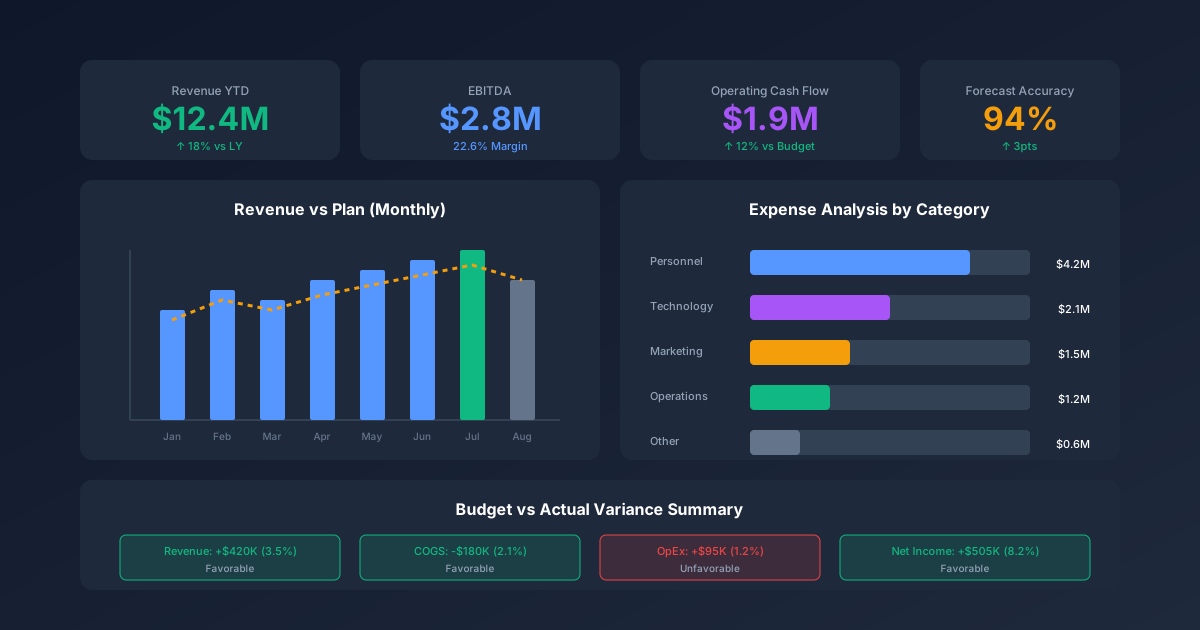
A well-designed FP&A dashboard transforms financial data into strategic intelligence for executive decision-making. Without centralized financial visibility, leadership relies on outdated spreadsheets, conflicting reports, and gut instinct. This comprehensive guide provides the frameworks, metrics, and templates to build an FP&A dashboard that drives confident business decisions and earns finance a seat at the strategic table. For additional financial planning resources, visit our Financial Planning Hub and explore our SaaS Metrics Dashboard for subscription-specific KPIs.
Quick Start: Access our FP&A Dashboard Templates to implement the frameworks in this guide immediately.
The Role of FP&A Dashboards
Why Executive Dashboards Matter
FP&A dashboards serve as the central nervous system for business performance management:
Strategic Decision Support:
- Real-time visibility enables faster, better-informed decisions
- Trend identification highlights opportunities and risks early
- Scenario modeling supports strategic planning
- Performance benchmarking drives accountability
Operational Efficiency:
- Automated reporting reduces manual effort by 60-80%
- Single source of truth eliminates conflicting numbers
- Self-service analytics empowers business partners
- Standardized metrics ensure consistent communication
Stakeholder Confidence:
- Board-ready reporting demonstrates financial rigor
- Investor-grade metrics support funding conversations
- Executive alignment on key performance indicators
- Credible forecasting builds organizational trust
The FP&A Maturity Journey
FP&A ANALYTICS MATURITY MODEL

LEVEL 1: REACTIVE (Spreadsheet Hell)
├── Manual data consolidation from multiple sources
├── Month-end reporting only (15+ day close)
├── Historical focus ("what happened")
├── Error-prone, inconsistent metrics
└── Finance as scorekeeper

LEVEL 2: STANDARDIZED (Reporting Foundation)
├── Defined KPIs and calculation methodology
├── Faster close (10-day target)
├── Monthly dashboard distribution
├── Variance analysis established
└── Finance as reporter

LEVEL 3: PROACTIVE (Business Partnership)
├── Automated data pipelines
├── Weekly/daily operational metrics
├── Rolling forecasts integrated
├── Predictive indicators tracked
└── Finance as advisor

LEVEL 4: STRATEGIC (Decision Engine)
├── Real-time dashboards
├── Scenario modeling capabilities
├── Prescriptive analytics
├── AI/ML-enhanced forecasting
└── Finance as strategist

TARGET: Move up one level every 12-18 months
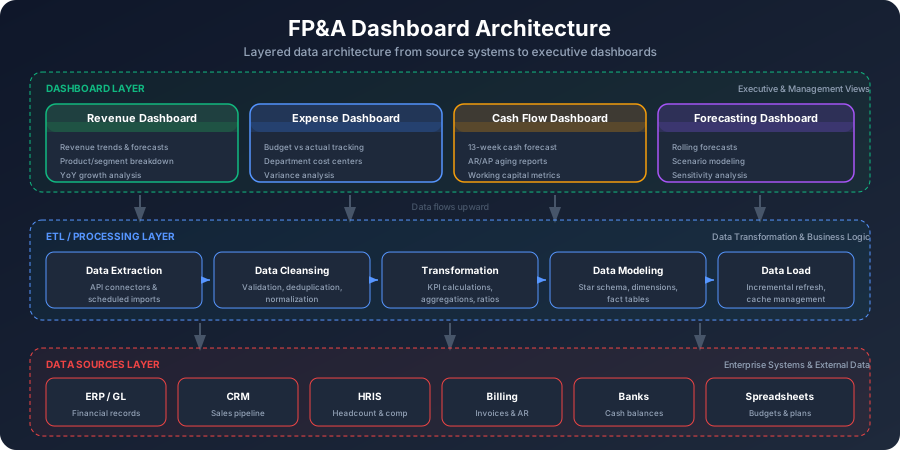
Core FP&A KPI Categories
Effective FP&A dashboards organize metrics into logical categories that tell a complete financial story.
Category 1: Revenue and Growth Metrics
Revenue metrics measure top-line performance and growth trajectory.
Revenue KPIs:
| Metric | Formula | Target/Benchmark | Frequency |
|---|---|---|---|
| Total Revenue | Sum of all revenue sources | vs Budget/Prior Year | Daily/Weekly |
| Revenue Growth Rate | (Current - Prior) / Prior × 100 | Industry-dependent | Monthly |
| Revenue by Segment | Revenue breakdown by business unit | % of total | Monthly |
| Revenue per Employee | Total Revenue / FTE Count | $150K-$500K+ | Quarterly |
| Recurring vs Non-Recurring | Recurring / Total Revenue | Higher = better | Monthly |
| New vs Existing Customer | Revenue by customer type | Balance growth + retention | Monthly |
Revenue Dashboard Components:
REVENUE PERFORMANCE DASHBOARD

HEADLINE METRICS:
┌─────────────────────┬─────────────────────┬─────────────────────┐
│ Revenue MTD         │ Revenue QTD         │ Revenue YTD         │
│ $4.2M               │ $11.8M              │ $42.5M              │
│ ▲ 8% vs Budget      │ ▲ 5% vs Budget      │ ▲ 12% vs PY         │
└─────────────────────┴─────────────────────┴─────────────────────┘

REVENUE WATERFALL (YTD):
├── Beginning: $0
├── + Product Revenue: $32.0M
├── + Services Revenue: $8.5M
├── + Recurring Revenue: $2.0M
└── = Total Revenue: $42.5M

REVENUE BY SEGMENT:
┌───────────────┬──────────┬──────────┬──────────┬──────────┐
│ Segment       │ Actual   │ Budget   │ Var $    │ Var %    │
├───────────────┼──────────┼──────────┼──────────┼──────────┤
│ Enterprise    │ $24.2M   │ $22.0M   │ +$2.2M   │ +10%     │
│ Mid-Market    │ $12.8M   │ $13.5M   │ -$0.7M   │ -5%      │
│ SMB           │ $5.5M    │ $5.0M    │ +$0.5M   │ +10%     │
├───────────────┼──────────┼──────────┼──────────┼──────────┤
│ TOTAL         │ $42.5M   │ $40.5M   │ +$2.0M   │ +5%      │
└───────────────┴──────────┴──────────┴──────────┴──────────┘

REVENUE TREND (12-Month Rolling):
[Line chart showing monthly revenue with trend line]
Category 2: Profitability Metrics
Profitability metrics measure how efficiently revenue converts to profit.
Profitability KPIs:
| Metric | Formula | Target/Benchmark | Frequency |
|---|---|---|---|
| Gross Profit | Revenue - COGS | Positive growth | Monthly |
| Gross Margin % | Gross Profit / Revenue × 100 | 40-80% (varies) | Monthly |
| Operating Income | Gross Profit - OpEx | vs Budget | Monthly |
| Operating Margin % | Operating Income / Revenue × 100 | 10-25% | Monthly |
| EBITDA | Operating Income + D&A | vs Budget/Covenant | Monthly |
| EBITDA Margin % | EBITDA / Revenue × 100 | 15-30% | Monthly |
| Net Income | Revenue - All Expenses | vs Budget | Monthly |
| Net Margin % | Net Income / Revenue × 100 | 5-20% | Monthly |
Income Statement Dashboard:
INCOME STATEMENT SUMMARY

                          ACTUAL     BUDGET     VAR $      VAR %
────────────────────────────────────────────────────────────────
Revenue                   $42.5M     $40.5M     +$2.0M     +5%
Cost of Goods Sold        $17.0M     $16.2M     -$0.8M     -5%
────────────────────────────────────────────────────────────────
GROSS PROFIT              $25.5M     $24.3M     +$1.2M     +5%
Gross Margin %            60.0%      60.0%       0.0%      --

Operating Expenses:
  Sales & Marketing       $8.5M      $8.0M      -$0.5M     -6%
  Research & Development  $6.0M      $5.8M      -$0.2M     -3%
  General & Administrative$4.0M      $4.2M      +$0.2M     +5%
Total Operating Expenses  $18.5M     $18.0M     -$0.5M     -3%
────────────────────────────────────────────────────────────────
OPERATING INCOME          $7.0M      $6.3M      +$0.7M     +11%
Operating Margin %        16.5%      15.6%      +0.9%      --

Depreciation & Amort.     $1.5M      $1.5M      $0.0M      0%
────────────────────────────────────────────────────────────────
EBITDA                    $8.5M      $7.8M      +$0.7M     +9%
EBITDA Margin %           20.0%      19.3%      +0.7%      --

Interest Expense          $0.5M      $0.5M      $0.0M      0%
Taxes                     $1.6M      $1.5M      -$0.1M     -7%
────────────────────────────────────────────────────────────────
NET INCOME                $4.9M      $4.3M      +$0.6M     +14%
Net Margin %              11.5%      10.6%      +0.9%      --
Category 3: Cash and Liquidity Metrics
Cash metrics ensure the business can meet obligations and fund growth.
Cash Flow KPIs:
| Metric | Formula | Target/Benchmark | Frequency |
|---|---|---|---|
| Cash Balance | Current cash on hand | vs Minimum threshold | Daily |
| Operating Cash Flow | Cash from operations | Positive, growing | Monthly |
| Free Cash Flow | Operating CF - CapEx | Positive preferred | Monthly |
| Cash Burn Rate | Monthly cash decrease | Runway calculation | Weekly |
| Cash Runway | Cash Balance / Monthly Burn | 12+ months | Monthly |
| Days Cash on Hand | Cash / (Annual OpEx / 365) | 60-90+ days | Monthly |
| Cash Conversion Cycle | DSO + DIO - DPO | Lower = better | Monthly |
Working Capital KPIs:
| Metric | Formula | Target/Benchmark | Frequency |
|---|---|---|---|
| Days Sales Outstanding | (AR / Revenue) × Days | 30-45 days | Monthly |
| Days Inventory Outstanding | (Inventory / COGS) × Days | Industry-dependent | Monthly |
| Days Payable Outstanding | (AP / COGS) × Days | 30-60 days | Monthly |
| Current Ratio | Current Assets / Current Liabilities | 1.5-2.0+ | Monthly |
| Quick Ratio | (Cash + AR) / Current Liabilities | 1.0+ | Monthly |
Cash Flow Dashboard:
CASH FLOW DASHBOARD

CASH POSITION:
┌─────────────────────────────────────────────────────────────────┐
│ Current Cash Balance: $18.5M                                    │
│ Minimum Threshold: $5.0M                                        │
│ Buffer Above Minimum: $13.5M                                    │
│ Status: ✓ HEALTHY                                               │
└─────────────────────────────────────────────────────────────────┘

CASH FLOW SUMMARY (YTD):
Operating Cash Flow:                    $6.2M
  Net Income                 $4.9M
  + Depreciation            $1.5M
  + Working Capital Changes -$0.2M

Investing Cash Flow:                   -$2.5M
  Capital Expenditures      -$2.0M
  Acquisitions              -$0.5M

Financing Cash Flow:                   -$1.0M
  Debt Repayment            -$0.8M
  Dividends                 -$0.2M

NET CHANGE IN CASH:                    +$2.7M

FREE CASH FLOW:                        $4.2M
(Operating CF - CapEx)

WORKING CAPITAL METRICS:
┌─────────────────┬──────────┬──────────┬──────────┐
│ Metric          │ Current  │ Target   │ Status   │
├─────────────────┼──────────┼──────────┼──────────┤
│ DSO             │ 42 days  │ 45 days  │ ✓        │
│ DIO             │ 35 days  │ 40 days  │ ✓        │
│ DPO             │ 38 days  │ 35 days  │ ✓        │
│ Cash Cycle      │ 39 days  │ 50 days  │ ✓        │
│ Current Ratio   │ 1.8x     │ 1.5x     │ ✓        │
│ Quick Ratio     │ 1.4x     │ 1.0x     │ ✓        │
└─────────────────┴──────────┴──────────┴──────────┘

13-WEEK CASH FORECAST:
[Week-by-week cash projection chart with minimum threshold line]
Category 4: Operational Efficiency Metrics
Operational metrics connect financial outcomes to business activities.
Efficiency KPIs:
| Metric | Formula | Target/Benchmark | Frequency |
|---|---|---|---|
| Revenue per Employee | Revenue / FTE | $150K-$500K+ | Quarterly |
| OpEx per Employee | Operating Expenses / FTE | Industry benchmark | Quarterly |
| Profit per Employee | Net Income / FTE | $20K-$100K+ | Quarterly |
| Sales Efficiency | New ARR / S&M Spend | 0.5-1.0+ | Quarterly |
| R&D Efficiency | Revenue Growth / R&D Spend | Positive trend | Quarterly |
| G&A as % of Revenue | G&A Expenses / Revenue | 8-15% | Monthly |
Headcount and Productivity:
OPERATIONAL EFFICIENCY DASHBOARD

HEADCOUNT METRICS:
Total FTEs: 285
  - Sales: 65 (23%)
  - Marketing: 25 (9%)
  - R&D: 95 (33%)
  - G&A: 40 (14%)
  - Operations: 60 (21%)

PRODUCTIVITY METRICS:
┌─────────────────────┬──────────┬──────────┬──────────┐
│ Metric              │ Current  │ Prior Yr │ Change   │
├─────────────────────┼──────────┼──────────┼──────────┤
│ Revenue/Employee    │ $149K    │ $132K    │ +13%     │
│ Gross Profit/Emp    │ $89K     │ $78K     │ +14%     │
│ Net Income/Emp      │ $17K     │ $14K     │ +21%     │
└─────────────────────┴──────────┴──────────┴──────────┘

EXPENSE RATIOS:
┌─────────────────────┬──────────┬──────────┬──────────┐
│ Category            │ % of Rev │ Budget   │ Variance │
├─────────────────────┼──────────┼──────────┼──────────┤
│ COGS                │ 40.0%    │ 40.0%    │ --       │
│ Sales & Marketing   │ 20.0%    │ 19.8%    │ +0.2%    │
│ R&D                 │ 14.1%    │ 14.3%    │ -0.2%    │
│ G&A                 │ 9.4%     │ 10.4%    │ -1.0%    │
└─────────────────────┴──────────┴──────────┴──────────┘
Category 5: Financial Health Metrics
Balance sheet and leverage metrics measure financial stability.
Balance Sheet KPIs:
| Metric | Formula | Target/Benchmark | Frequency |
|---|---|---|---|
| Total Assets | Sum of all assets | Growth trend | Monthly |
| Total Debt | Short-term + Long-term debt | vs Covenants | Monthly |
| Debt-to-Equity | Total Debt / Shareholders' Equity | 0.5-2.0x | Quarterly |
| Debt-to-EBITDA | Total Debt / EBITDA | Under 3.0x | Quarterly |
| Interest Coverage | EBIT / Interest Expense | >3.0x | Quarterly |
| Return on Assets | Net Income / Total Assets | 5-15% | Quarterly |
| Return on Equity | Net Income / Shareholders' Equity | 15-25% | Quarterly |
Dashboard Design Framework
Executive Dashboard Layout
FP&A EXECUTIVE DASHBOARD LAYOUT

┌─────────────────────────────────────────────────────────────────────────┐
│                      FINANCIAL PERFORMANCE SUMMARY                      │
│                        Period: January 2025                             │
├─────────────────────┬─────────────────────┬─────────────────────────────┤
│ Revenue: $4.2M      │ EBITDA: $850K       │ Cash: $18.5M                │
│ ▲ 8% vs Budget      │ ▲ 12% vs Budget     │ Runway: 24 months           │
│ ▲ 15% vs PY         │ Margin: 20.2%       │ FCF: $420K                  │
└─────────────────────┴─────────────────────┴─────────────────────────────┘

┌─────────────────────────────────────────────────────────────────────────┐
│                          BUDGET VS ACTUAL                               │
│  Revenue    ████████████████████░░░░  $4.2M / $5.0M  (84%)             │
│  Gross Profit ██████████████████████  $2.5M / $2.4M  (104%)            │
│  EBITDA     ████████████████████████  $850K / $750K  (113%)            │
│  Net Income █████████████████████░░░  $490K / $520K  (94%)             │
└─────────────────────────────────────────────────────────────────────────┘

┌─────────────────────────────────┬───────────────────────────────────────┐
│     INCOME STATEMENT SUMMARY    │     REVENUE TREND (12-MONTH)          │
│                                 │                                       │
│ Revenue:        $4.2M  (+8%)    │     [Line chart with monthly revenue  │
│ Gross Margin:   60.0%  (--)     │      actual vs budget vs prior year]  │
│ Operating Exp:  $1.7M  (-3%)    │                                       │
│ EBITDA:         $850K  (+12%)   │                                       │
│ Net Income:     $490K  (+5%)    │                                       │
└─────────────────────────────────┴───────────────────────────────────────┘

┌─────────────────────────────────┬───────────────────────────────────────┐
│     CASH FLOW SUMMARY           │     KEY RATIOS                        │
│                                 │                                       │
│ Operating CF:   $620K           │ Gross Margin:      60.0%              │
│ Investing CF:   -$250K          │ EBITDA Margin:     20.2%              │
│ Financing CF:   -$100K          │ Net Margin:        11.7%              │
│ Net Change:     +$270K          │ Current Ratio:     1.8x               │
│ Ending Cash:    $18.5M          │ Debt/EBITDA:       2.1x               │
└─────────────────────────────────┴───────────────────────────────────────┘

┌─────────────────────────────────────────────────────────────────────────┐
│                          ALERTS & ACTIONS                               │
│ ✓ Revenue ahead of budget - Enterprise segment driving outperformance  │
│ ⚠ Mid-Market revenue behind - Sales pipeline coverage at 2.1x vs 3x    │
│ ⚠ S&M expense running hot - Review Q2 marketing spend allocation       │
│ ✓ Cash position strong - Excess cash available for strategic uses      │
└─────────────────────────────────────────────────────────────────────────┘
Visualization Best Practices
Chart Selection Guide:
| Data Type | Best Visualization | Example Use Case |
|---|---|---|
| Trend over time | Line chart | Monthly revenue trend |
| Comparison to target | Bullet chart / Progress bar | Budget vs actual |
| Part of whole | Donut / Pie chart | Revenue by segment |
| Composition changes | Stacked bar | Expense breakdown over time |
| Distribution | Histogram | Deal size distribution |
| Correlation | Scatter plot | Revenue vs headcount |
| Variance | Waterfall chart | P&L walk from budget to actual |
Color Coding Standards:
| Color | Usage | Examples |
|---|---|---|
| Green | Positive / On track | Above budget, positive variance |
| Yellow/Amber | Caution / Monitor | 90-99% of target |
| Red | Alert / Action needed | Below target, negative trend |
| Blue | Informational / Neutral | Headers, navigation, context |
| Gray | Historical / Comparison | Prior period data |
Design Principles:
- Executive summary at top - Key metrics visible without scrolling
- Traffic light indicators - Instant status recognition
- Trend context - Show current vs prior period vs budget
- Action orientation - Include alerts and recommended actions
- Drill-down capability - Summary to detail navigation
- Consistent formatting - Same layout, fonts, colors throughout
Board and Investor Reporting
Board Package Structure
MONTHLY BOARD FINANCIAL PACKAGE

1. EXECUTIVE SUMMARY (1 page)
   ├── Key financial highlights (3-5 bullets)
   ├── Performance vs plan summary
   ├── Strategic implications
   └── Items requiring board attention

2. FINANCIAL PERFORMANCE (2-3 pages)
   ├── Income statement summary (actual vs budget vs PY)
   ├── Revenue analysis by segment
   ├── Gross margin analysis
   ├── Operating expense analysis
   └── Profitability metrics (EBITDA, Net Income)

3. CASH AND LIQUIDITY (1-2 pages)
   ├── Cash flow summary
   ├── 13-week cash forecast
   ├── Working capital metrics
   ├── Covenant compliance
   └── Capital allocation update

4. KEY OPERATING METRICS (1-2 pages)
   ├── Customer metrics (if applicable)
   ├── Sales pipeline and bookings
   ├── Operational efficiency KPIs
   └── Headcount summary

5. FORECAST AND OUTLOOK (1-2 pages)
   ├── Updated full-year forecast
   ├── Key assumptions and risks
   ├── Scenario analysis (if material changes)
   └── Management commentary

6. APPENDIX (as needed)
   ├── Detailed financial statements
   ├── Segment detail
   ├── Variance explanations
   └── Supporting schedules
Board Dashboard Template
BOARD FINANCIAL DASHBOARD

═══════════════════════════════════════════════════════════════════════════
                          EXECUTIVE SUMMARY
                     Month Ending January 31, 2025
═══════════════════════════════════════════════════════════════════════════

KEY HIGHLIGHTS:
• Revenue of $4.2M exceeded budget by 8%, driven by Enterprise segment
• EBITDA margin expanded to 20.2% (target: 18.5%)
• Cash position strong at $18.5M with 24-month runway
• Updated full-year forecast: $52M revenue (+4% vs original plan)

═══════════════════════════════════════════════════════════════════════════
                         FINANCIAL SCORECARD
═══════════════════════════════════════════════════════════════════════════

                     MTD Actual   MTD Budget   Variance    YTD Actual
────────────────────────────────────────────────────────────────────────────
Revenue               $4.2M        $3.9M       +8%         $4.2M
Gross Profit          $2.5M        $2.3M       +9%         $2.5M
EBITDA                $850K        $720K       +18%        $850K
Net Income            $490K        $430K       +14%        $490K
Operating Cash Flow   $620K        $500K       +24%        $620K
────────────────────────────────────────────────────────────────────────────

                     Current      Target      Status
────────────────────────────────────────────────────────────────────────────
Gross Margin %        60.0%        58.0%       ✓ Above Target
EBITDA Margin %       20.2%        18.5%       ✓ Above Target
Cash Runway           24 months    18 months   ✓ Healthy
Debt/EBITDA           2.1x         <3.0x       ✓ Compliant
────────────────────────────────────────────────────────────────────────────

═══════════════════════════════════════════════════════════════════════════
                         ITEMS FOR DISCUSSION
═══════════════════════════════════════════════════════════════════════════

1. Capital Allocation: $5M excess cash available - recommend:
   a) Debt paydown ($2M) - reduce leverage to 1.8x
   b) R&D investment ($2M) - accelerate product roadmap
   c) Reserve ($1M) - strategic optionality

2. Mid-Market Performance: Segment 5% below plan
   - Root cause: Competitive pressure on pricing
   - Action plan: Product differentiation initiative underway
   - Expected recovery: Q3 2025

3. Forecast Update: Raising full-year guidance by $2M
   - Confidence: High (pipeline coverage 3.2x)
   - Key risks: Enterprise deal timing in Q4
Flash Report Template
Weekly or bi-weekly flash reports keep leadership informed between formal closes:
WEEKLY FLASH REPORT
Week Ending: February 7, 2025

HEADLINE METRICS:
┌─────────────────────┬─────────────────────┬─────────────────────┐
│ Bookings WTD        │ Cash Balance        │ Headcount           │
│ $1.2M               │ $18.2M              │ 287 FTEs            │
│ 92% of weekly target│ -$300K vs last week │ +2 vs last week     │
└─────────────────────┴─────────────────────┴─────────────────────┘

REVENUE TRACKING:
MTD Actual: $2.8M (67% of monthly target with 50% of month elapsed)
Run Rate: On track for $4.2M month (vs $3.9M budget)

KEY DEVELOPMENTS:
✓ Closed $450K Enterprise deal (Acme Corp) - ahead of schedule
✓ Renewed $180K annual contract with 15% expansion
⚠ $300K deal pushed from this week to next (procurement delay)
✗ Lost $75K competitive deal - post-mortem scheduled

CASH EVENTS THIS WEEK:
+ $1.8M customer collections received
- $920K payroll processed
- $250K vendor payments
= Net change: +$630K

LOOK-AHEAD (Next 2 Weeks):
• $800K Enterprise deal expected to close
• Annual audit fieldwork begins
• Q2 planning kickoff meetings
Rolling Forecast Integration
Rolling Forecast Dashboard
ROLLING FORECAST DASHBOARD

FORECAST SUMMARY (12-Month Rolling):
═══════════════════════════════════════════════════════════════════════════

Revenue Forecast:
                Feb    Mar    Apr    May    Jun    Jul    Aug    Sep    Oct    Nov    Dec    Jan
Forecast       $4.0M  $4.3M  $4.5M  $4.2M  $4.8M  $4.6M  $5.0M  $5.2M  $5.5M  $5.0M  $5.8M  $4.5M
vs Last Fcst   +2%    +1%    +3%    --     --     -1%    +2%    +3%    +5%    --     +2%    NEW
vs Budget      +3%    +5%    +8%    +2%    +6%    +2%    +4%    +6%    +10%   -2%    +5%    NEW

Full-Year Forecast:
                Original    Current     Change     Confidence
Revenue         $50.0M      $52.3M      +$2.3M     High
EBITDA          $9.0M       $10.5M      +$1.5M     Medium-High
Net Income      $5.2M       $6.1M       +$0.9M     Medium-High

FORECAST ACCURACY TRACKING:
┌─────────────────┬───────────┬───────────┬───────────┬───────────┐
│ Metric          │ 90-Day    │ 60-Day    │ 30-Day    │ Target    │
├─────────────────┼───────────┼───────────┼───────────┼───────────┤
│ Revenue MAPE    │ 8.2%      │ 5.1%      │ 2.3%      │ <5%       │
│ EBITDA MAPE     │ 12.5%     │ 7.8%      │ 3.5%      │ <10%      │
│ Cash Flow MAPE  │ 15.2%     │ 9.4%      │ 4.8%      │ <10%      │
└─────────────────┴───────────┴───────────┴───────────┴───────────┘

FORECAST DRIVERS AND ASSUMPTIONS:
┌─────────────────────────────────────────────────────────────────────────┐
│ Driver              │ Current Assumption │ Sensitivity           │ Risk │
├─────────────────────┼────────────────────┼───────────────────────┼──────┤
│ Enterprise pipeline │ 3.2x coverage      │ +/-10% = +/-$1.5M rev │ Low  │
│ Churn rate          │ 1.2% monthly       │ +0.5% = -$800K rev    │ Med  │
│ Average deal size   │ $45K               │ +/-$5K = +/-$600K     │ Low  │
│ Hiring pace         │ 5 FTEs/month       │ +2 = -$180K EBITDA    │ Med  │
│ COGS rate           │ 40% of revenue     │ +2% = -$1M GP         │ Low  │
└─────────────────────────────────────────────────────────────────────────┘
Scenario Analysis Framework
SCENARIO PLANNING DASHBOARD

BASE CASE (60% probability):
├── Revenue: $52.3M (+5% vs original)
├── EBITDA: $10.5M (20.1% margin)
├── Key Assumptions: Current trends continue, 1 major deal closes Q4
└── Cash Position EOY: $22M

UPSIDE CASE (25% probability):
├── Revenue: $56.0M (+12% vs original)
├── EBITDA: $12.5M (22.3% margin)
├── Key Assumptions: Win 2 additional Enterprise deals, lower churn
└── Cash Position EOY: $26M

DOWNSIDE CASE (15% probability):
├── Revenue: $47.0M (-6% vs original)
├── EBITDA: $7.0M (14.9% margin)
├── Key Assumptions: Major deal slips, competitive pricing pressure
└── Cash Position EOY: $16M

SCENARIO COMPARISON:
┌─────────────────┬───────────┬───────────┬───────────┐
│ Metric          │ Downside  │ Base      │ Upside    │
├─────────────────┼───────────┼───────────┼───────────┤
│ Revenue         │ $47.0M    │ $52.3M    │ $56.0M    │
│ Revenue Growth  │ +8%       │ +20%      │ +29%      │
│ EBITDA          │ $7.0M     │ $10.5M    │ $12.5M    │
│ EBITDA Margin   │ 14.9%     │ 20.1%     │ 22.3%     │
│ Cash EOY        │ $16.0M    │ $22.0M    │ $26.0M    │
│ Headcount EOY   │ 295       │ 310       │ 325       │
└─────────────────┴───────────┴───────────┴───────────┘

TRIGGERS TO REASSESS:
⚠ If Q1 bookings < $12M → Review hiring plan
⚠ If churn > 1.5% → Activate retention initiatives
⚠ If Enterprise pipeline < 2.5x → Pause expansion spending
✓ If Q1 revenue > $13.5M → Accelerate R&D investment
Excel Template Structure
FP&A Dashboard Workbook Layout
Tab 1: Data Input
| Section | Fields | Source |
|---|---|---|
| Revenue | By segment, product, region | ERP/Billing |
| Expenses | By department, account | ERP/GL |
| Headcount | By department, level | HRIS |
| Cash | Balance, receipts, disbursements | Treasury |
| Pipeline | Stage, value, probability | CRM |
| Actuals Date | Period end date | Manual |
Tab 2: Calculations
FP&A CALCULATION FORMULAS

REVENUE METRICS:
Revenue Growth Rate = (Current - Prior) / Prior
Revenue Run Rate = Current Month × 12
Revenue per Employee = Revenue / FTE Count

PROFITABILITY METRICS:
Gross Margin % = Gross Profit / Revenue
Operating Margin % = Operating Income / Revenue
EBITDA = Operating Income + Depreciation + Amortization
EBITDA Margin % = EBITDA / Revenue
Net Margin % = Net Income / Revenue

CASH METRICS:
Free Cash Flow = Operating Cash Flow - CapEx
Cash Runway = Cash Balance / Monthly Cash Burn
Days Cash on Hand = Cash / (Annual OpEx / 365)

WORKING CAPITAL:
DSO = (Accounts Receivable / Revenue) × Days in Period
DIO = (Inventory / COGS) × Days in Period
DPO = (Accounts Payable / COGS) × Days in Period
Cash Conversion Cycle = DSO + DIO - DPO

EFFICIENCY METRICS:
Revenue per Employee = Total Revenue / FTE
OpEx Ratio = Operating Expenses / Revenue
Rule of 40 = Revenue Growth % + EBITDA Margin %

VARIANCE ANALYSIS:
$ Variance = Actual - Budget
% Variance = (Actual - Budget) / ABS(Budget)
YoY Change = (Current Year - Prior Year) / Prior Year
Tab 3: Dashboard View
Key Excel features to implement:
- Conditional formatting for status indicators
- Sparklines for trend visualization
- Data validation for input controls
- Named ranges for formula readability
- Pivot tables for drill-down analysis
- Slicers for filtering by period/segment
Tab 4: Charts
Essential charts:
- Revenue trend (line chart with actual, budget, PY)
- P&L waterfall (variance from budget)
- Expense breakdown (stacked bar or donut)
- Cash forecast (line chart with minimum threshold)
- KPI scorecards (bullet charts)
Tab 5: Board Package
Print-ready layouts:
- Executive summary (1 page)
- Financial summary (1 page)
- Detailed P&L (1 page)
- Cash flow (1 page)
Key Formulas
Traffic Light Status:
=IF(Actual>=Budget,"✓ On Track",
  IF(Actual>=Budget*0.9,"⚠ Monitor",
    "✗ Below Target"))
Variance with Direction:
=IF(Actual-Budget>0,"+"&TEXT(Actual-Budget,"$#,##0"),
  TEXT(Actual-Budget,"$#,##0"))
Rolling 12-Month Sum:
=SUM(OFFSET(CurrentCell,-11,0,12,1))
Year-over-Year Comparison:
=IFERROR((CurrentYear-PriorYear)/ABS(PriorYear),"N/A")
Forecast Accuracy (MAPE):
=AVERAGE(ABS(Actual-Forecast)/ABS(Actual))
Conditional Color Formatting:
Use conditional formatting rules:
- Green: Value >= Target
- Yellow: Value >= Target * 0.9 AND Value < Target
- Red: Value < Target * 0.9
Implementation Roadmap
Phase 1: Foundation (Weeks 1-4)
Week 1-2: Requirements and Data
- Define key metrics with stakeholder input
- Document calculation methodologies
- Identify data sources and access
- Assess data quality and gaps
- Establish baseline measurements
Week 3-4: Infrastructure
- Create data input templates
- Build calculation layer
- Develop initial visualizations
- Test with sample data
- Document formulas and logic
Phase 2: Build (Weeks 5-8)
Week 5-6: Core Dashboard
- Build executive summary view
- Create P&L dashboard
- Develop cash flow dashboard
- Add variance analysis
- Implement conditional formatting
Week 7-8: Advanced Features
- Add rolling forecast integration
- Build scenario analysis capability
- Create drill-down views
- Develop board package layout
- Add flash report template
Phase 3: Deploy (Weeks 9-12)
Week 9-10: Testing and Validation
- Validate calculations against source systems
- Test with full month of data
- Review with finance team
- Incorporate feedback
- Document user guide
Week 11-12: Rollout
- Train stakeholders on dashboard use
- Establish update cadence
- Create distribution list
- Set up automated refresh (if applicable)
- Plan ongoing improvements
Ongoing Maintenance
Daily:
- Update cash position
- Monitor key alerts
Weekly:
- Refresh operational metrics
- Generate flash report
- Review forecast assumptions
Monthly:
- Full dashboard update
- Complete board package
- Variance analysis
- Rolling forecast update
Quarterly:
- Strategic review
- Dashboard enhancement
- Benchmark update
- Stakeholder feedback
Common Challenges and Solutions
Challenge 1: Data Quality Issues
Problem: Inconsistent or inaccurate source data undermines dashboard credibility.
Solutions:
- Implement data validation rules at input
- Create reconciliation checkpoints
- Document data sources and transformations
- Establish data ownership and accountability
- Build error alerts into dashboard
Challenge 2: Metric Proliferation
Problem: Too many metrics create confusion and dilute focus.
Solutions:
- Limit executive view to 10-15 key metrics
- Create hierarchy: Executive → Manager → Analyst views
- Apply "so what" test to each metric
- Archive metrics that don't drive decisions
- Regular metric review and pruning
Challenge 3: Stakeholder Adoption
Problem: Leadership doesn't use the dashboard.
Solutions:
- Involve stakeholders in design process
- Start with their most-asked questions
- Provide training and support
- Make dashboard the single source of truth
- Demonstrate wins from dashboard insights
Challenge 4: Manual Update Burden
Problem: Maintaining dashboards consumes too much FP&A time.
Solutions:
- Automate data connections where possible
- Create standardized input templates
- Build update checklists
- Phase automation investment over time
- Consider BI tools for complex requirements
Related Resources
Financial Planning Templates
Explore our FP&A Dashboard Templates and additional resources:
Related Guides:
- SaaS Metrics Dashboard - Subscription metrics
- Revenue Forecasting Template - Forecasting methods
- Financial Modeling Templates - Valuation models
- Budget vs Actual Variance Analysis - Variance methods
Financial Planning Hub:
- Financial Planning Hub - Complete resources
- Financial Modeling Section - Advanced analysis
Conclusion
A well-designed FP&A dashboard transforms the finance function from scorekeeper to strategic partner. By centralizing key metrics, automating reporting, and providing executive-ready insights, FP&A teams can drive better business decisions and demonstrate their value to the organization.
Key Takeaways:
- Organize by category: Revenue, profitability, cash, efficiency, and financial health metrics tell a complete story
- Design for audience: Executive summary for leadership, detailed views for analysis
- Integrate forecasting: Connect historical performance to forward-looking projections
- Enable action: Include alerts, variance explanations, and recommendations
- Maintain rigor: Document calculations, validate data, and ensure accuracy
- Evolve continuously: Regular enhancement based on stakeholder feedback
Implementation Priority:
- Define your 10-15 most critical KPIs
- Build executive summary view first
- Add variance analysis capability
- Integrate rolling forecast
- Create board package automation
Advanced Development:
- Automate data pipelines from source systems
- Build scenario modeling capabilities
- Implement real-time dashboarding
- Add predictive analytics
- Develop self-service business partner views
The investment in FP&A dashboard infrastructure pays dividends through faster decisions, better insights, and elevated finance credibility. Start with the fundamentals in this guide and progressively build sophistication as your analytical capabilities mature.