IT Program Management Template: Coordinate Multiple Projects Successfully


Organizations that implement mature program management practices achieve 35% higher success rates on complex initiatives compared to those managing projects in isolation. Yet many IT leaders struggle to coordinate multiple related projects, leading to duplicated efforts, conflicting priorities, and unrealized benefits. This comprehensive guide provides templates and frameworks for establishing effective IT program management that delivers strategic outcomes. For more resources, visit our IT Management Hub and Project Management section.
Understanding IT Program Management
What is Program Management?
Program management is the coordinated management of multiple related projects and activities to achieve strategic benefits that would not be attainable by managing them individually. Unlike project management, which focuses on delivering specific outputs, program management emphasizes realizing business outcomes and capabilities.
Key Characteristics of Programs:
- Multiple interdependent projects
- Strategic business objectives
- Benefits that extend beyond individual projects
- Longer duration (typically 1-5 years)
- Higher complexity and uncertainty
- Cross-functional stakeholder involvement
- Governance at executive level
Program Management vs Project Management
Understanding the distinction between program and project management is essential for IT leaders. While both disciplines share common foundations, they operate at different levels and with different objectives.
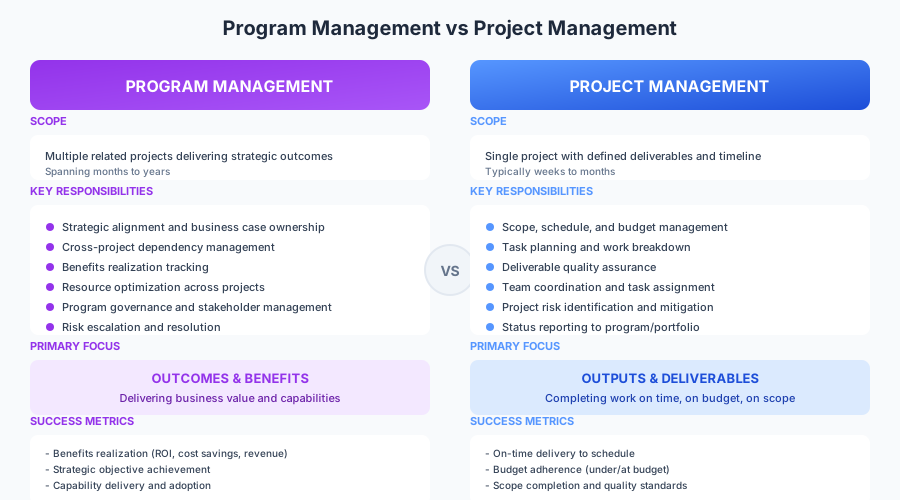
Program Manager Focus:
- Strategic alignment and business value
- Cross-project dependencies and risks
- Benefits realization and tracking
- Stakeholder management at executive level
- Resource optimization across projects
- Program governance and decision-making
Project Manager Focus:
- Deliverable completion within constraints
- Task scheduling and resource assignment
- Team coordination and motivation
- Risk management within project scope
- Status reporting to program level
- Quality assurance of outputs
The program manager operates as a strategic orchestrator, ensuring that the collective work of multiple project managers delivers the intended business benefits. Project managers remain focused on tactical execution within their defined scope.
Program Charter Template
The program charter is the foundational document that authorizes the program, defines its scope, and establishes the authority of the program manager. A well-crafted charter ensures alignment between program objectives and organizational strategy.
Complete Program Charter Template
PROGRAM CHARTER

═══════════════════════════════════════════════════════════
PROGRAM IDENTIFICATION
═══════════════════════════════════════════════════════════

Program Name: [Name]
Program ID: [Unique identifier]
Program Manager: [Name]
Program Sponsor: [Executive name]
Charter Date: [Date]
Version: [1.0]

═══════════════════════════════════════════════════════════
STRATEGIC CONTEXT
═══════════════════════════════════════════════════════════

Strategic Objective Alignment:
[Describe how this program supports organizational strategy]

Business Problem/Opportunity:
[What problem does this program solve or opportunity does it capture?]

Current State:
[Describe the current situation and pain points]

Desired Future State:
[Describe what success looks like upon program completion]

═══════════════════════════════════════════════════════════
PROGRAM SCOPE
═══════════════════════════════════════════════════════════

Program Vision:
[High-level vision statement for the program]

Program Objectives:
1. [Objective 1 - specific, measurable, time-bound]
2. [Objective 2 - specific, measurable, time-bound]
3. [Objective 3 - specific, measurable, time-bound]

Constituent Projects:
┌─────────────────────────────────────────────────────────┐
│ Project          │ Description         │ Status        │
├─────────────────────────────────────────────────────────┤
│ Project A        │ [Brief description] │ [Status]      │
│ Project B        │ [Brief description] │ [Status]      │
│ Project C        │ [Brief description] │ [Status]      │
│ Project D        │ [Brief description] │ [Status]      │
└─────────────────────────────────────────────────────────┘

In Scope:
- [Major capability or deliverable]
- [Major capability or deliverable]
- [Major capability or deliverable]

Out of Scope:
- [Explicitly excluded items]
- [Explicitly excluded items]

═══════════════════════════════════════════════════════════
BENEFITS AND SUCCESS CRITERIA
═══════════════════════════════════════════════════════════

Expected Benefits:

Financial Benefits:
- [Benefit 1]: $[Amount] - [How measured]
- [Benefit 2]: $[Amount] - [How measured]

Operational Benefits:
- [Benefit 1]: [Metric] - [How measured]
- [Benefit 2]: [Metric] - [How measured]

Strategic Benefits:
- [Benefit 1]: [Description]
- [Benefit 2]: [Description]

Success Criteria:
┌─────────────────────────────────────────────────────────┐
│ Criteria                    │ Target         │ Weight  │
├─────────────────────────────────────────────────────────┤
│ [Criterion 1]               │ [Target]       │ [XX%]   │
│ [Criterion 2]               │ [Target]       │ [XX%]   │
│ [Criterion 3]               │ [Target]       │ [XX%]   │
└─────────────────────────────────────────────────────────┘

═══════════════════════════════════════════════════════════
GOVERNANCE STRUCTURE
═══════════════════════════════════════════════════════════

Program Sponsor: [Name, Title]
Responsibilities: Strategic direction, executive decisions,
funding approval, organizational barriers

Program Manager: [Name]
Responsibilities: Day-to-day program management, stakeholder
coordination, benefits tracking, risk escalation

Steering Committee:
- [Name, Role]
- [Name, Role]
- [Name, Role]

Meeting Cadence:
- Steering Committee: [Frequency]
- Program Review: [Frequency]
- Project Managers: [Frequency]

Decision Authority:
┌─────────────────────────────────────────────────────────┐
│ Decision Type              │ Authority Level            │
├─────────────────────────────────────────────────────────┤
│ Budget changes < $[X]      │ Program Manager            │
│ Budget changes $[X]-$[Y]   │ Program Sponsor            │
│ Budget changes > $[Y]      │ Steering Committee         │
│ Scope changes (minor)      │ Program Manager            │
│ Scope changes (major)      │ Steering Committee         │
│ Schedule changes < [X] wks │ Program Manager            │
│ Schedule changes > [X] wks │ Program Sponsor            │
└─────────────────────────────────────────────────────────┘

═══════════════════════════════════════════════════════════
PROGRAM CONSTRAINTS
═══════════════════════════════════════════════════════════

Budget:
- Total Program Budget: $[Amount]
- Contingency Reserve: $[Amount] ([XX%])
- Management Reserve: $[Amount] ([XX%])

Timeline:
- Program Start Date: [Date]
- Target Completion: [Date]
- Key Milestones: [See roadmap]

Resources:
- [Resource constraint 1]
- [Resource constraint 2]

═══════════════════════════════════════════════════════════
ASSUMPTIONS AND DEPENDENCIES
═══════════════════════════════════════════════════════════

Key Assumptions:
1. [Assumption 1]
2. [Assumption 2]
3. [Assumption 3]

External Dependencies:
1. [Dependency 1 - Owner/Source]
2. [Dependency 2 - Owner/Source]

═══════════════════════════════════════════════════════════
HIGH-LEVEL RISKS
═══════════════════════════════════════════════════════════

┌─────────────────────────────────────────────────────────┐
│ Risk                      │ Impact  │ Probability      │
├─────────────────────────────────────────────────────────┤
│ [Risk 1]                  │ [H/M/L] │ [H/M/L]          │
│ [Risk 2]                  │ [H/M/L] │ [H/M/L]          │
│ [Risk 3]                  │ [H/M/L] │ [H/M/L]          │
└─────────────────────────────────────────────────────────┘

═══════════════════════════════════════════════════════════
AUTHORIZATION
═══════════════════════════════════════════════════════════

Program Sponsor Approval:
Name: _______________________
Signature: __________________
Date: ______________________

Steering Committee Approval:
Name: _______________________
Signature: __________________
Date: ______________________
Charter Development Best Practices
1. Engage Stakeholders Early:
- Conduct stakeholder interviews before drafting
- Incorporate diverse perspectives
- Build buy-in through collaboration
2. Focus on Business Outcomes:
- Clearly articulate the "why"
- Quantify benefits where possible
- Connect to strategic objectives
3. Define Clear Boundaries:
- Be explicit about scope
- Document exclusions
- Set realistic expectations
4. Establish Decision Rights:
- Define authority levels clearly
- Avoid ambiguity in governance
- Enable efficient decision-making
Program Governance Structure
Effective program governance provides the decision-making framework, accountability structures, and oversight mechanisms needed to guide the program toward successful outcomes.
Governance Framework Components
1. Organizational Structure:
PROGRAM GOVERNANCE HIERARCHY

                    ┌──────────────────┐
                    │  EXECUTIVE       │
                    │  STEERING        │
                    │  COMMITTEE       │
                    └────────┬─────────┘
                             │
                    ┌────────▼─────────┐
                    │  PROGRAM         │
                    │  SPONSOR         │
                    └────────┬─────────┘
                             │
                    ┌────────▼─────────┐
                    │  PROGRAM         │
                    │  MANAGER         │
                    └────────┬─────────┘
                             │
         ┌───────────────────┼───────────────────┐
         │                   │                   │
┌────────▼───────┐  ┌────────▼───────┐  ┌───────▼────────┐
│   PROJECT      │  │   PROJECT      │  │   PROJECT      │
│   MANAGER A    │  │   MANAGER B    │  │   MANAGER C    │
└────────────────┘  └────────────────┘  └────────────────┘
2. Roles and Responsibilities:
Executive Steering Committee:
- Provide strategic direction
- Approve major changes
- Resolve escalated issues
- Ensure organizational alignment
- Authorize resource allocation
Program Sponsor:
- Champion the program
- Secure funding and resources
- Remove organizational barriers
- Make executive-level decisions
- Communicate to senior leadership
Program Manager:
- Manage day-to-day operations
- Coordinate project managers
- Track benefits realization
- Manage program-level risks
- Report to steering committee
- Facilitate governance meetings
Project Managers:
- Deliver project objectives
- Manage project teams
- Report status to program
- Escalate issues and risks
- Coordinate with other projects
Governance Meeting Structure
Steering Committee Meeting (Monthly):
STEERING COMMITTEE AGENDA

Duration: 90 minutes
Attendees: Executives, Sponsor, Program Manager

1. Program Health Dashboard (15 min)
   - Overall status (RAG)
   - Key metrics summary
   - Budget and schedule status

2. Milestone Progress (20 min)
   - Completed milestones
   - Upcoming milestones
   - Critical path status

3. Issues Requiring Decision (30 min)
   - Issue summary
   - Options analysis
   - Recommendations
   - Decision required

4. Risk Review (15 min)
   - Top program risks
   - Mitigation progress
   - New/emerging risks

5. Strategic Alignment Check (10 min)
   - Business case validation
   - Environmental changes
   - Recommendation adjustments

Outputs:
- Decision log
- Action items
- Updated risk register
Program Review Meeting (Bi-weekly):
PROGRAM REVIEW AGENDA

Duration: 60 minutes
Attendees: Program Manager, Project Managers, Key Stakeholders

1. Project Status Updates (20 min)
   - Each project: 3-5 min
   - Status, accomplishments, plans

2. Dependency Management (15 min)
   - Dependency status
   - Issues/blockers
   - Resolution actions

3. Resource Coordination (10 min)
   - Resource conflicts
   - Upcoming needs
   - Optimization opportunities

4. Risk and Issue Review (10 min)
   - New risks/issues
   - Escalations needed
   - Mitigation actions

5. Action Items (5 min)
   - Review open items
   - Assign new items

Outputs:
- Updated status dashboard
- Action item tracker
- Escalation list
Benefits Realization Management
Benefits realization is the core purpose of program management. Without disciplined tracking and management of benefits, programs risk delivering outputs without achieving intended outcomes.
Benefits Management Framework
1. Benefits Identification:
BENEFITS IDENTIFICATION WORKSHEET

Benefit Category: [Financial/Operational/Strategic/Compliance]

Benefit Description:
[Clear description of the benefit]

Benefit Type: [Cost Reduction/Cost Avoidance/Revenue Increase/
              Productivity/Quality/Risk Reduction/Strategic]

Quantification:
- Metric: [What will be measured]
- Baseline: [Current state]
- Target: [Desired state]
- Value: $[Amount] or [XX%] improvement

Timing:
- Initial realization: [When will benefit start]
- Full realization: [When will full benefit be achieved]
- Benefit duration: [How long will benefit last]

Dependencies:
- Projects required: [List]
- External factors: [List]
- Enablers needed: [List]

Owner:
- Benefit Owner: [Name - typically business stakeholder]
- Measurement Owner: [Name]

Confidence Level: [High/Medium/Low]
Assumptions: [List key assumptions]
2. Benefits Register:
PROGRAM BENEFITS REGISTER

Program: [Name]
Last Updated: [Date]

┌────────────────────────────────────────────────────────────────────────┐
│ ID   │ Benefit       │ Category  │ Value    │ Timeline │ Owner │ Status│
├────────────────────────────────────────────────────────────────────────┤
│ B-01 │ Cost          │ Financial │ $500K/yr │ Q4 2025  │ [Name]│ Track │
│      │ reduction in  │           │          │          │       │       │
│      │ manual process│           │          │          │       │       │
├────────────────────────────────────────────────────────────────────────┤
│ B-02 │ Improved      │ Operation │ 40%      │ Q2 2026  │ [Name]│ Plan  │
│      │ cycle time    │           │ reduction│          │       │       │
├────────────────────────────────────────────────────────────────────────┤
│ B-03 │ New market    │ Strategic │ $2M      │ Q1 2026  │ [Name]│ Plan  │
│      │ opportunity   │           │ revenue  │          │       │       │
├────────────────────────────────────────────────────────────────────────┤
│ B-04 │ Regulatory    │ Compliance│ Risk     │ Q3 2025  │ [Name]│ Track │
│      │ compliance    │           │ avoidance│          │       │       │
└────────────────────────────────────────────────────────────────────────┘

Benefit Status Legend:
- Plan: Benefit defined, not yet in tracking
- Track: Actively measuring toward target
- Achieved: Target met
- At Risk: Behind trajectory
- Realized: Sustained performance confirmed
3. Benefits Tracking Dashboard:
Key Metrics to Track:
- Benefits planned vs. realized (cumulative)
- Benefits realization trajectory
- Time to benefit realization
- Benefit sustainability indicators
- ROI and payback progress
Tracking Frequency:
- Financial benefits: Monthly
- Operational metrics: Weekly to Monthly
- Strategic benefits: Quarterly
- Compliance benefits: Per regulatory cycle
Benefits Realization Best Practices
1. Assign Clear Ownership:
- Benefits belong to business stakeholders, not IT
- Program manager facilitates, doesn't own benefits
- Create accountability for measurement
2. Establish Baselines Early:
- Measure current state before changes
- Document measurement methodology
- Validate baseline accuracy
3. Track Leading Indicators:
- Don't wait for lagging indicators
- Identify early warning signals
- Enable course correction
4. Conduct Regular Reviews:
- Monthly benefits review meeting
- Quarterly benefits validation
- Annual benefits audit
5. Document Lessons Learned:
- What drove benefit achievement
- What prevented benefits
- Recommendations for future programs
Interdependency Management
Managing dependencies between projects is one of the most critical and challenging aspects of program management. Poor dependency management leads to delays, rework, and failed integration.
Dependency Types
1. Finish-to-Start (FS): Project B cannot start until Project A finishes. Example: Infrastructure must be deployed before applications.
2. Start-to-Start (SS): Project B cannot start until Project A starts. Example: Testing can begin once development starts (parallel work).
3. Finish-to-Finish (FF): Project B cannot finish until Project A finishes. Example: Documentation must complete when development completes.
4. External Dependencies: Dependencies on parties outside the program. Example: Vendor delivery, regulatory approval, third-party integration.
Dependency Tracking Template
PROGRAM DEPENDENCY REGISTER

Program: [Name]
Last Updated: [Date]

┌────────────────────────────────────────────────────────────────────────────┐
│ ID    │ From          │ To            │ Type │ Date     │ Status │ Owner  │
├────────────────────────────────────────────────────────────────────────────┤
│ D-001 │ Project A:    │ Project B:    │ FS   │ 15-Mar   │ Green  │ [Name] │
│       │ Infrastructure│ App Deploy    │      │          │        │        │
├────────────────────────────────────────────────────────────────────────────┤
│ D-002 │ Project B:    │ Project C:    │ SS   │ 01-Apr   │ Yellow │ [Name] │
│       │ API Dev       │ Integration   │      │          │        │        │
├────────────────────────────────────────────────────────────────────────────┤
│ D-003 │ Vendor:       │ Project A:    │ FS   │ 28-Feb   │ Red    │ [Name] │
│       │ Hardware      │ Install       │      │          │        │        │
├────────────────────────────────────────────────────────────────────────────┤
│ D-004 │ Project C:    │ Project D:    │ FF   │ 30-Jun   │ Green  │ [Name] │
│       │ Testing       │ Go-Live       │      │          │        │        │
└────────────────────────────────────────────────────────────────────────────┘

Status Legend:
Green - On track, no issues
Yellow - At risk, needs monitoring
Red - Delayed or blocked, action required
Dependency Management Process
1. Identification:
- Map all cross-project dependencies
- Identify external dependencies
- Document assumptions
2. Analysis:
- Assess impact of each dependency
- Identify critical path dependencies
- Quantify schedule impact
3. Planning:
- Build buffers for high-risk dependencies
- Develop contingency plans
- Align project schedules
4. Monitoring:
- Weekly dependency status updates
- Early warning indicators
- Escalation triggers
5. Resolution:
- Rapid response to blocked dependencies
- Alternative path identification
- Executive escalation when needed
Dependency Visualization
Dependency Network Diagram: Create a visual map showing all projects and their dependencies. This helps identify:
- Critical path through the program
- Dependency clusters (high-risk areas)
- Projects with many downstream dependencies
- External dependency exposure
Dependency Heat Map:
DEPENDENCY HEAT MAP

                Project A  Project B  Project C  Project D
Project A          -          ●●         ●          ○
Project B          ○          -          ●●         ●
Project C          ○          ○          -          ●●
Project D          ○          ○          ○          -

Legend: ●● = Critical dependency  ● = Standard dependency  ○ = No dependency
Resource Management Across Projects
Program-level resource management ensures optimal utilization across all constituent projects while avoiding conflicts and bottlenecks.
Resource Planning Template
PROGRAM RESOURCE PLAN

Program: [Name]
Period: [Start Date] to [End Date]

═══════════════════════════════════════════════════════════
RESOURCE SUMMARY BY PROJECT
═══════════════════════════════════════════════════════════

┌────────────────────────────────────────────────────────────┐
│ Resource Type     │ Proj A │ Proj B │ Proj C │ Total      │
├────────────────────────────────────────────────────────────┤
│ Project Managers  │   1    │   1    │   1    │   3        │
│ Business Analysts │   2    │   1    │   2    │   5        │
│ Developers        │   4    │   6    │   3    │  13        │
│ QA Engineers      │   2    │   3    │   2    │   7        │
│ Infrastructure    │   1    │   1    │   1    │   3        │
│ Security          │   1    │   0.5  │   0.5  │   2        │
├────────────────────────────────────────────────────────────┤
│ TOTAL FTE         │  11    │ 12.5   │  9.5   │  33        │
└────────────────────────────────────────────────────────────┘

═══════════════════════════════════════════════════════════
SHARED RESOURCES
═══════════════════════════════════════════════════════════

┌────────────────────────────────────────────────────────────┐
│ Resource        │ Allocation                │ Coordinator  │
├────────────────────────────────────────────────────────────┤
│ Enterprise      │ 20% Proj A, 30% Proj B,  │ [Name]       │
│ Architect       │ 50% Proj C               │              │
├────────────────────────────────────────────────────────────┤
│ Security Lead   │ 50% Proj A, 25% B, 25% C │ [Name]       │
├────────────────────────────────────────────────────────────┤
│ DBA             │ 40% A, 40% B, 20% C      │ [Name]       │
└────────────────────────────────────────────────────────────┘

═══════════════════════════════════════════════════════════
RESOURCE CONFLICTS
═══════════════════════════════════════════════════════════

┌────────────────────────────────────────────────────────────┐
│ Period     │ Resource      │ Conflict     │ Resolution   │
├────────────────────────────────────────────────────────────┤
│ Mar 15-31  │ Security Lead │ 150%         │ Contractor   │
│            │               │ allocation   │ supplement   │
├────────────────────────────────────────────────────────────┤
│ Apr 1-15   │ QA Team       │ A & B UAT    │ Stagger UAT  │
│            │               │ overlap      │ by 1 week    │
└────────────────────────────────────────────────────────────┘
Resource Optimization Strategies
1. Resource Leveling:
- Adjust schedules to balance workloads
- Avoid over-allocation peaks
- Maintain sustainable pace
2. Resource Pooling:
- Create shared resource pools
- Assign based on priority
- Enable flexibility
3. Skill Development:
- Cross-train team members
- Reduce single points of failure
- Increase deployment flexibility
4. External Augmentation:
- Strategic contractor usage
- Peak load management
- Specialized skill access
Program Risk Management
Program-level risks differ from project risks in their scope, impact, and management approach. Program risks affect multiple projects or the program's ability to achieve its strategic objectives.
Program Risk Categories
1. Strategic Risks:
- Business case invalidation
- Market/competitive changes
- Regulatory shifts
- Organizational priority changes
2. Interdependency Risks:
- Critical dependency failures
- Integration failures
- Timing misalignment
- Scope conflicts
3. Resource Risks:
- Key personnel loss
- Skill shortages
- Competing demands
- Budget constraints
4. Benefits Risks:
- Adoption failures
- Benefit measurement challenges
- Sustainability concerns
- Business process resistance
Program Risk Register Template
PROGRAM RISK REGISTER

Program: [Name]
Last Updated: [Date]

┌────────────────────────────────────────────────────────────────────────────┐
│ ID    │ Risk Description    │ Cat  │ Prob │ Impact │ Score │ Owner        │
├────────────────────────────────────────────────────────────────────────────┤
│ PR-01 │ Vendor delay        │ Ext  │ High │ High   │ 9     │ [Name]       │
│       │ impacts all         │      │ (4)  │ (5)    │       │              │
│       │ project timelines   │      │      │        │       │              │
├────────────────────────────────────────────────────────────────────────────┤
│ PR-02 │ Enterprise          │ Res  │ Med  │ High   │ 6     │ [Name]       │
│       │ architect leaves    │      │ (3)  │ (4)    │       │              │
│       │ during critical     │      │      │        │       │              │
│       │ integration phase   │      │      │        │       │              │
├────────────────────────────────────────────────────────────────────────────┤
│ PR-03 │ Regulatory change   │ Str  │ Low  │ V.High │ 5     │ [Name]       │
│       │ requires scope      │      │ (2)  │ (5)    │       │              │
│       │ expansion           │      │      │        │       │              │
├────────────────────────────────────────────────────────────────────────────┤
│ PR-04 │ Benefits realization│ Ben  │ Med  │ High   │ 6     │ [Name]       │
│       │ delayed due to      │      │ (3)  │ (4)    │       │              │
│       │ user adoption       │      │      │        │       │              │
└────────────────────────────────────────────────────────────────────────────┘

MITIGATION PLANS:

PR-01: Vendor Delay
- Maintain buffer in program schedule
- Identify alternative vendors
- Weekly vendor status calls
- Escalation path to vendor executives

PR-02: Key Resource Loss
- Cross-train second architect
- Document all architecture decisions
- Retention bonus consideration
- External consultant on standby

PR-03: Regulatory Change
- Monthly regulatory monitoring
- Compliance team engagement
- Flexible architecture approach
- Change budget reserve

PR-04: Benefits Adoption
- Early user involvement
- Change management workstream
- Training and communication plan
- Adoption metrics tracking
Risk Escalation Process
RISK ESCALATION FRAMEWORK

Program Manager Authority:
- Risks with score ≤ 4
- Risks within project scope
- Risks with clear mitigation

Program Sponsor Escalation:
- Risks with score 5-6
- Cross-project risks
- Resource-related risks
- Risks requiring budget

Steering Committee Escalation:
- Risks with score ≥ 7
- Strategic/business case risks
- External stakeholder risks
- Risks requiring major decisions

Escalation Triggers:
- Risk score increases
- Mitigation fails
- New information emerges
- Impact scope expands
Program Communication Management
Effective communication is essential for program success, ensuring stakeholders remain informed, engaged, and aligned throughout the program lifecycle.
Stakeholder Communication Matrix
PROGRAM COMMUNICATION PLAN

Program: [Name]

┌────────────────────────────────────────────────────────────────────────────┐
│ Stakeholder     │ Frequency  │ Method         │ Content        │ Owner    │
├────────────────────────────────────────────────────────────────────────────┤
│ Executive       │ Monthly    │ Dashboard +    │ Summary        │ Program  │
│ Leadership      │            │ Meeting        │ status,        │ Manager  │
│                 │            │                │ decisions,     │          │
│                 │            │                │ risks          │          │
├────────────────────────────────────────────────────────────────────────────┤
│ Steering        │ Bi-weekly  │ Meeting +      │ Detailed       │ Program  │
│ Committee       │            │ Report         │ progress,      │ Manager  │
│                 │            │                │ issues,        │          │
│                 │            │                │ decisions      │          │
├────────────────────────────────────────────────────────────────────────────┤
│ Project         │ Weekly     │ Meeting        │ Coordination,  │ Program  │
│ Managers        │            │                │ dependencies,  │ Manager  │
│                 │            │                │ resources      │          │
├────────────────────────────────────────────────────────────────────────────┤
│ Project Teams   │ Bi-weekly  │ Newsletter     │ Program        │ PMO      │
│                 │            │                │ updates,       │ Analyst  │
│                 │            │                │ achievements   │          │
├────────────────────────────────────────────────────────────────────────────┤
│ Business        │ Monthly    │ Meeting +      │ Benefits,      │ Program  │
│ Stakeholders    │            │ Email          │ timeline,      │ Manager  │
│                 │            │                │ impacts        │          │
├────────────────────────────────────────────────────────────────────────────┤
│ End Users       │ Quarterly  │ Town Hall      │ Overview,      │ Change   │
│                 │            │                │ preparation,   │ Manager  │
│                 │            │                │ Q&A            │          │
└────────────────────────────────────────────────────────────────────────────┘
Program Status Report Template
PROGRAM STATUS REPORT

Program: [Name]
Report Period: [Date range]
Prepared By: [Program Manager]
Date: [Date]

═══════════════════════════════════════════════════════════
EXECUTIVE SUMMARY
═══════════════════════════════════════════════════════════

Overall Program Status: [GREEN/YELLOW/RED]

Budget: [GREEN/YELLOW/RED]
- Approved: $[X]
- Spent: $[Y] ([Z]%)
- Forecast: $[A]
- Variance: $[B] ([C]%)

Schedule: [GREEN/YELLOW/RED]
- Target End: [Date]
- Forecast End: [Date]
- Variance: [+/- X weeks]

Benefits: [GREEN/YELLOW/RED]
- On Track: [X of Y]
- At Risk: [X of Y]

═══════════════════════════════════════════════════════════
PROJECT STATUS SUMMARY
═══════════════════════════════════════════════════════════

Project A: [GREEN]
- Phase: [Current phase]
- Progress: [XX]% complete
- Key Accomplishment: [Description]
- Next Milestone: [Name] - [Date]

Project B: [YELLOW]
- Phase: [Current phase]
- Progress: [XX]% complete
- Issue: [Brief description]
- Mitigation: [Action being taken]
- Next Milestone: [Name] - [Date]

Project C: [GREEN]
- Phase: [Current phase]
- Progress: [XX]% complete
- Key Accomplishment: [Description]
- Next Milestone: [Name] - [Date]

═══════════════════════════════════════════════════════════
KEY ACCOMPLISHMENTS THIS PERIOD
═══════════════════════════════════════════════════════════

1. [Accomplishment with impact]
2. [Accomplishment with impact]
3. [Accomplishment with impact]

═══════════════════════════════════════════════════════════
UPCOMING MILESTONES
═══════════════════════════════════════════════════════════

┌────────────────────────────────────────────────────────┐
│ Milestone               │ Project │ Date   │ Status   │
├────────────────────────────────────────────────────────┤
│ [Milestone 1]           │ A       │ [Date] │ On Track │
│ [Milestone 2]           │ B       │ [Date] │ At Risk  │
│ [Milestone 3]           │ C       │ [Date] │ On Track │
└────────────────────────────────────────────────────────┘

═══════════════════════════════════════════════════════════
TOP RISKS AND ISSUES
═══════════════════════════════════════════════════════════

Top Risks:
1. [Risk]: [Status] - [Mitigation action]
2. [Risk]: [Status] - [Mitigation action]

Open Issues:
1. [Issue]: [Owner] - [Target resolution date]
2. [Issue]: [Owner] - [Target resolution date]

═══════════════════════════════════════════════════════════
DECISIONS REQUIRED
═══════════════════════════════════════════════════════════

1. [Decision needed]
   - Options: [A, B, C]
   - Recommendation: [X]
   - Decision Maker: [Role]
   - Deadline: [Date]

═══════════════════════════════════════════════════════════
NEXT PERIOD FOCUS
═══════════════════════════════════════════════════════════

1. [Priority activity]
2. [Priority activity]
3. [Priority activity]
Program Management Office (PMO) Role
The PMO provides essential support for program management, offering standards, tools, resources, and governance support.
PMO Support Functions
1. Standards and Templates:
- Program charter templates
- Status reporting formats
- Risk and issue management tools
- Benefits tracking frameworks
2. Resource Management:
- Resource pool coordination
- Skills inventory
- Capacity planning
- Training coordination
3. Tools and Systems:
- Project portfolio management tools
- Collaboration platforms
- Reporting dashboards
- Document management
4. Quality Assurance:
- Process compliance reviews
- Deliverable quality gates
- Lessons learned capture
- Best practice sharing
5. Governance Support:
- Meeting facilitation
- Decision documentation
- Escalation management
- Audit coordination
PMO Maturity Levels
Level 1 - Basic:
- Project tracking only
- Reactive support
- Limited standards
Level 2 - Developing:
- Standard templates
- Regular reporting
- Basic resource coordination
Level 3 - Defined:
- Consistent processes
- Benefits tracking
- Active governance support
Level 4 - Managed:
- Metrics-driven decisions
- Proactive risk management
- Strategic alignment
Level 5 - Optimizing:
- Continuous improvement
- Predictive analytics
- Strategic business partner
Implementation Roadmap
Successfully implementing program management requires a phased approach that builds capability over time.
Phase 1: Foundation (Weeks 1-4)
Activities:
- Develop program charter
- Identify constituent projects
- Establish governance structure
- Assign program manager and team
- Set up collaboration tools
Deliverables:
- Approved program charter
- Governance framework
- Initial program plan
- Communication plan
Phase 2: Planning (Weeks 5-8)
Activities:
- Detailed benefits planning
- Dependency mapping
- Resource planning
- Risk assessment
- Baseline establishment
Deliverables:
- Benefits register
- Dependency register
- Resource plan
- Risk register
- Program baseline
Phase 3: Execution (Ongoing)
Activities:
- Project coordination
- Benefits tracking
- Dependency management
- Risk management
- Stakeholder communication
Deliverables:
- Regular status reports
- Updated registers
- Governance meeting minutes
- Decision logs
Phase 4: Benefits Realization (Ongoing/Post-Completion)
Activities:
- Benefits measurement
- Benefit owner engagement
- Course correction
- Lessons learned capture
Deliverables:
- Benefits realization reports
- Lessons learned document
- Recommendations for future
Common Program Management Challenges
Challenge 1: Benefits Not Realized
Symptoms:
- Projects complete but outcomes not achieved
- Benefits ownership unclear
- No tracking mechanism
Solutions:
- Assign business benefit owners
- Establish baseline measurements
- Track leading indicators
- Regular benefits reviews
Challenge 2: Dependency Failures
Symptoms:
- Projects blocked waiting on others
- Integration issues at program level
- Critical path delays
Solutions:
- Comprehensive dependency mapping
- Buffer time for critical dependencies
- Early integration testing
- Regular coordination meetings
Challenge 3: Resource Conflicts
Symptoms:
- Key resources over-allocated
- Projects competing for same people
- Quality and timeline impacts
Solutions:
- Program-level resource planning
- Priority framework for conflicts
- Cross-training initiatives
- Strategic use of contractors
Challenge 4: Governance Ineffective
Symptoms:
- Slow decision-making
- Unclear authority
- Insufficient executive engagement
Solutions:
- Clear RACI for decisions
- Decision escalation framework
- Regular steering committee engagement
- Concise, action-oriented reporting
Challenge 5: Scope Creep at Program Level
Symptoms:
- New projects added without impact analysis
- Program boundaries expand
- Benefits diluted
Solutions:
- Rigorous change control
- Impact analysis requirements
- Business case validation
- Steering committee approval for additions
Free Program Management Resources
Complete Program Management Toolkit
Our IT program management toolkit includes:
- Program charter template
- Benefits register template
- Dependency tracking matrix
- Resource planning template
- Risk register template
- Status report template
- Governance framework guide
- Communication plan template
Related Resources
Program and Project Management:
- IT Project Management Template Guide
- Agile/Scrum Methodology Guide
- Project Risk Management Guide
- Stakeholder Management Best Practices
IT Governance and Strategy:
Conclusion
Effective IT program management is essential for organizations pursuing complex, multi-project initiatives. By implementing structured governance, disciplined benefits management, and coordinated execution, program managers can deliver strategic outcomes that individual projects cannot achieve alone.
Implementation Checklist:
- Develop comprehensive program charter
- Establish governance structure and meeting cadence
- Identify and document all constituent projects
- Create benefits register with clear ownership
- Map cross-project dependencies
- Develop program-level resource plan
- Implement risk management framework
- Establish communication plan
- Set up tracking and reporting mechanisms
- Plan for benefits realization and sustainment
Key Success Factors:
- Executive sponsorship and engagement
- Clear program vision and objectives
- Strong governance framework
- Disciplined benefits management
- Proactive dependency management
- Effective stakeholder communication
- Competent program management team
- Appropriate tools and processes
- Regular review and adaptation
- Lessons learned integration
Next Steps:
- Download program management templates
- Review IT governance framework
- Explore project management guide
- Visit Project Management hub
Start coordinating your IT initiatives effectively. Download our comprehensive program management template package and begin delivering strategic business value through coordinated project execution.