Annual Security Policy Review Checklist: Keep Your Policies Current and Compliant

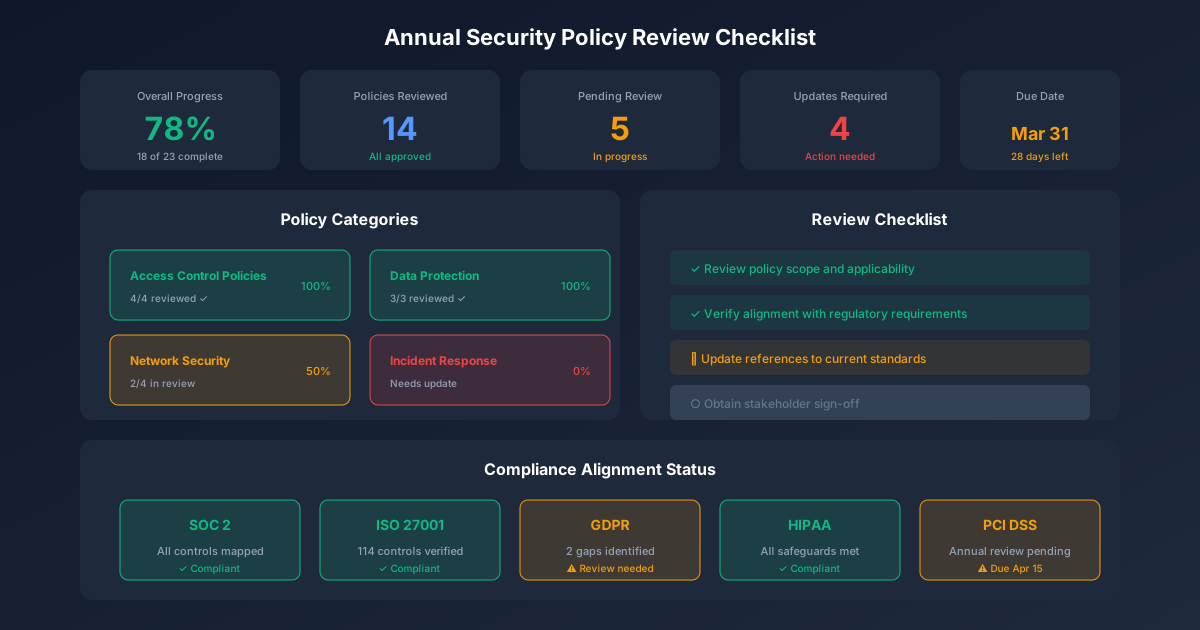
Security policies are living documents, not set-and-forget artifacts. Regulations evolve, threats change, technology advances, and your business grows—yet 68% of organizations haven't updated their security policies in the past year. Outdated policies create compliance gaps, leave you vulnerable to new threats, and expose the organization to audit findings.
An annual security policy review ensures your policies remain current, compliant, and effective. This guide provides a comprehensive checklist for reviewing and updating your entire security policy library, from acceptable use to incident response.
For your complete security policy library, visit our Security & Compliance Hub and Enterprise Security Policy Library. For technical control assessments, see our IT Security Assessment Checklist. For policy creation guidance, explore our IT Policy Framework Guide.
Why Annual Policy Reviews Matter
Compliance Requirements
Most security frameworks mandate regular policy reviews:
| Framework | Review Requirement | Documentation |
|---|---|---|
| ISO 27001 | At planned intervals or when significant changes occur | Documented review with approval records |
| SOC 2 | Annual review at minimum | Evidence of review and updates |
| NIST CSF | Periodic review based on risk | Review documentation |
| PCI DSS | Annual review of security policies | Review date and approvals |
| HIPAA | Periodic review as environmental changes warrant | Documentation of review process |
| GDPR | Regular review of processing activities | Record of review activities |
Audit Implications: Auditors specifically look for evidence of policy review. Missing or outdated review dates are common audit findings that can affect certification or compliance attestation.
Business Drivers
Beyond compliance, policy reviews address:
Threat Landscape Changes:
- New attack vectors (AI-powered phishing, deepfakes)
- Emerging vulnerabilities (zero-day exploits, supply chain attacks)
- Shifting threat actor tactics
Technology Evolution:
- Cloud migration and multi-cloud environments
- Remote/hybrid work expansion
- New applications and systems
- Shadow IT proliferation
Organizational Changes:
- Mergers and acquisitions
- New business lines or markets
- Headcount growth or restructuring
- Geographic expansion
Regulatory Updates:
- New privacy laws (state-level, international)
- Industry regulation changes
- Enforcement guidance updates
- Court decisions affecting interpretation
Annual Review Planning
Establish Your Review Calendar
Create a structured review schedule rather than reviewing all policies simultaneously:
Option A: Staggered Monthly Reviews
| Month | Policies to Review |
|---|---|
| January | Information Security Policy, Security Governance |
| February | Acceptable Use Policy, Email Security |
| March | Access Control, Password Management, MFA |
| April | Data Classification, Data Handling |
| May | Network Security, Firewall Management |
| June | Endpoint Security, BYOD, Mobile Device |
| July | Incident Response, Breach Notification |
| August | Business Continuity, Disaster Recovery |
| September | Vendor Management, Third-Party Risk |
| October | Physical Security, Facility Access |
| November | Compliance Policies (GDPR, HIPAA, PCI) |
| December | Annual Summary, Planning for Next Year |
Option B: Quarterly Bulk Reviews
| Quarter | Focus Area |
|---|---|
| Q1 | Core security policies (InfoSec, AUP, Access) |
| Q2 | Data and network policies |
| Q3 | Incident response and continuity |
| Q4 | Compliance and governance |
Option C: Annual Comprehensive Review
All policies reviewed in a concentrated period (typically 4-6 weeks), often timed to:
- Precede annual compliance audits
- Align with fiscal year planning
- Follow major regulatory updates
Assemble Your Review Team
Core Review Team:
| Role | Responsibilities |
|---|---|
| Information Security Officer/Manager | Lead review, assess technical accuracy, approve changes |
| Compliance Officer | Ensure regulatory alignment, track compliance requirements |
| Legal Counsel | Review legal implications, liability considerations |
| IT Operations | Validate operational feasibility, implementation status |
| HR Representative | Employee-facing policies, training implications |
Subject Matter Experts (As Needed):
- Network administrator (network security policies)
- DBA (data protection policies)
- Facilities manager (physical security)
- Privacy officer (data privacy policies)
- Business unit leaders (acceptable use, data handling)
Gather Review Inputs
Before beginning reviews, collect:
Internal Sources:
- Current policy documents with version history
- Previous review notes and action items
- Incident reports and lessons learned
- Audit findings and remediation status
- Employee feedback and policy questions
- Exception requests and approvals
- Training completion and quiz results
- Policy violation records
External Sources:
- Regulatory updates and guidance
- Industry standards updates (NIST, ISO, CIS)
- Threat intelligence reports
- Peer benchmarking data
- Vendor security advisories
- Insurance requirements
- Customer/contract requirements
Policy-by-Policy Review Checklist
Information Security Policy (Master Policy)
The overarching security policy sets the foundation for all others.
Review Checklist:
Scope and Applicability:
- Scope accurately reflects current organization (entities, locations, employees)
- Applicability includes all relevant parties (employees, contractors, vendors)
- Exclusions are documented and justified
Roles and Responsibilities:
- Security governance structure is current
- Named roles match current personnel
- Responsibility assignments are accurate
- Reporting relationships are correct
Policy Statements:
- Security objectives align with business strategy
- Risk appetite statements reflect current position
- Compliance commitments match actual requirements
- References to other policies are accurate
Framework Alignment:
- Framework references are current (e.g., NIST CSF 2.0, ISO 27001:2022)
- Control mappings are accurate
- Certification scope matches policy scope
Review Evidence:
- Last review date documented
- Approver signatures current
- Version number incremented
- Change log updated
Acceptable Use Policy
Governs how employees use organizational technology resources.
Review Checklist:
Technology Coverage:
- All current systems and applications referenced
- Cloud services and SaaS applications included
- Personal device usage addressed (BYOD provisions)
- Social media guidance current
- AI and emerging technology use addressed
- Remote work scenarios covered
Prohibited Activities:
- List remains appropriate and comprehensive
- New threat vectors addressed (e.g., GenAI prompt injection)
- Legal and regulatory prohibitions current
- Consequences clearly stated
Monitoring Disclosure:
- Monitoring practices accurately described
- Privacy expectations clearly communicated
- Consent language legally appropriate
- State/jurisdiction-specific requirements met
Updates Commonly Needed:
- AI tool usage policies
- Collaboration platform rules
- Video conferencing etiquette and security
- Home network requirements for remote work
Access Control Policy
Defines who can access what resources and how.
Review Checklist:
Access Principles:
- Least privilege principle clearly stated
- Need-to-know requirements defined
- Separation of duties requirements current
- Zero trust concepts incorporated (if applicable)
Authentication Requirements:
- Password requirements align with current standards (NIST 800-63B)
- MFA requirements comprehensive and current
- Passwordless options addressed if in use
- Biometric authentication covered if deployed
Account Management:
- Account provisioning process accurate
- Access review frequency appropriate
- Termination procedures complete
- Service account management included
- Emergency access procedures documented
Privileged Access:
- Admin account requirements appropriate
- Privileged access management (PAM) requirements current
- Session monitoring requirements defined
- Just-in-time access provisions included
Common Updates Needed:
- Cloud identity federation
- SSO and identity provider changes
- Conditional access policies
- Zero trust architecture alignment
Data Classification and Handling Policy
Defines how to classify and protect data based on sensitivity.
Review Checklist:
Classification Scheme:
- Classification levels still appropriate
- Definitions clear and actionable
- Examples current and relevant
- Labeling requirements feasible
Handling Requirements:
- Storage requirements match available solutions
- Transmission requirements technically accurate
- Disposal procedures practical and compliant
- Retention periods aligned with legal requirements
Regulatory Alignment:
- GDPR data categories mapped correctly
- HIPAA PHI requirements addressed
- PCI cardholder data requirements current
- Industry-specific data types included
New Data Types:
- AI training data addressed
- Biometric data classified
- IoT device data covered
- Third-party data handling defined
Network Security Policy
Governs network infrastructure protection.
Review Checklist:
Architecture:
- Network diagram references current
- Segmentation requirements match implementation
- Cloud network provisions included
- Hybrid environment considerations addressed
Perimeter Security:
- Firewall requirements current
- WAF provisions included for web applications
- DDoS protection addressed
- API security requirements defined
Remote Access:
- VPN requirements technically accurate
- ZTNA provisions included (if applicable)
- Remote work network security addressed
- Third-party access controls defined
Wireless Security:
- Wi-Fi standards current (WPA3)
- Guest network provisions appropriate
- IoT device network isolation addressed
Incident Response Policy
Defines how to detect, respond to, and recover from security incidents.
Review Checklist:
Incident Classification:
- Severity levels appropriate
- Classification criteria clear
- Examples current (include new attack types)
- Escalation thresholds defined
Response Procedures:
- Detection mechanisms referenced accurately
- Containment procedures technically feasible
- Eradication steps appropriate
- Recovery procedures current
Communication:
- Internal notification procedures current
- Contact lists up to date
- External reporting requirements accurate (regulatory, law enforcement)
- Customer notification triggers aligned with contracts and law
Post-Incident:
- Lessons learned process defined
- Documentation requirements clear
- Evidence preservation procedures legal-compliant
- Improvement process specified
Recent Incident Integration:
- Lessons from past year's incidents incorporated
- New attack vectors addressed
- Response gaps remediated
Business Continuity and Disaster Recovery Policy
Ensures operational resilience and recovery capabilities.
Review Checklist:
Recovery Objectives:
- RTO/RPO values current and achievable
- Critical system inventory accurate
- Dependencies documented correctly
- Recovery priorities still appropriate
Recovery Procedures:
- Backup procedures match current implementation
- Recovery procedures tested and validated
- Alternate site provisions current
- Cloud DR capabilities documented
Communication Plans:
- Emergency contact lists current
- Communication channels reliable and tested
- Stakeholder notification procedures appropriate
- Media communication guidelines current
Testing Requirements:
- Test frequency appropriate
- Test scope comprehensive
- Last test results documented
- Remediation from tests completed
Vendor and Third-Party Risk Policy
Governs security requirements for external parties.
Review Checklist:
Assessment Requirements:
- Risk assessment criteria appropriate
- Due diligence procedures comprehensive
- Security questionnaire current
- Assessment frequency defined
Contractual Requirements:
- Security clauses comprehensive
- Data protection provisions adequate
- Audit rights preserved
- Breach notification requirements defined
- Termination and data return provisions clear
Ongoing Monitoring:
- Continuous monitoring requirements defined
- Reassessment triggers identified
- Performance metrics tracked
- Issue escalation procedures clear
Vendor Inventory:
- All current vendors documented
- Risk ratings current
- Compliance status tracked
- Contract renewal dates monitored
Physical Security Policy
Controls physical access to facilities and equipment.
Review Checklist:
Access Control:
- Facility access requirements current
- Visitor procedures appropriate
- Badge/credential management current
- After-hours access provisions defined
Secure Areas:
- Data center access requirements current
- Server room controls appropriate
- Equipment disposal procedures compliant
- Media handling requirements defined
Environmental Controls:
- Environmental monitoring current
- Fire suppression requirements met
- Power backup provisions adequate
- Climate control requirements defined
Work-from-Home Provisions:
- Home office security requirements defined
- Equipment security addressed
- Visitor/family member considerations included
Compliance-Specific Review Requirements
ISO 27001 Policy Review
ISO 27001 requires documented information security policies reviewed at planned intervals.
ISO 27001 Review Requirements:
| Clause | Requirement | Review Evidence |
|---|---|---|
| 5.2 | Information security policy | Board/management approval, review date |
| 7.5.2 | Documented information | Version control, change history |
| 9.3 | Management review | Meeting minutes, action items |
| A.5.1 | Policies for information security | Review records, approval signatures |
Review Documentation Checklist:
- Review meeting scheduled and conducted
- Attendees documented (including management representation)
- Review inputs gathered (audit results, incidents, changes)
- Decisions and actions documented
- Follow-up actions assigned and tracked
- Minutes approved and filed
SOC 2 Policy Review
SOC 2 auditors examine policy review processes as part of the control environment.
SOC 2 Review Evidence:
| Trust Service Criteria | Policy Review Requirement |
|---|---|
| CC1.4 | Policies reviewed and updated at least annually |
| CC2.1 | Information about policies communicated |
| CC3.1 | Risk assessment includes policy adequacy |
Audit Evidence Checklist:
- Formal review schedule documented
- Review completion dates recorded
- Version history maintained
- Approval signatures captured
- Communication of changes documented
- Training updates for policy changes tracked
NIST CSF Policy Review
NIST Cybersecurity Framework emphasizes risk-based policy management.
NIST CSF Alignment:
| Function | Policy Review Consideration |
|---|---|
| Identify (ID.GV) | Governance policies reviewed for currency |
| Protect (PR.IP) | Protective process policies validated |
| Detect (DE.DP) | Detection policies aligned with current threats |
| Respond (RS.IM) | Response policies updated with lessons learned |
| Recover (RC.IM) | Recovery policies tested and current |
PCI DSS Policy Review
PCI DSS 4.0 requires annual policy review with specific documentation.
PCI DSS 4.0 Requirements:
| Requirement | Policy Review Element |
|---|---|
| 12.1.2 | Security policy reviewed at least annually |
| 12.1.3 | Security policy updated when environment changes |
| 12.3 | Policies for protecting cardholder data reviewed |
Review Documentation:
- Annual review date documented on policy
- Reviewer name and title recorded
- Changes made documented
- Unchanged policies still require review notation
- Distribution of updated policies documented
The Review Process
Step 1: Pre-Review Preparation
Gather Materials:
- Current policy document (latest approved version)
- Previous review notes and action items
- Change log since last review
- Relevant regulatory updates
- Industry guidance updates
- Internal incident reports
- Audit findings related to the policy
- Employee feedback and questions
Identify Stakeholders:
- Policy owner (typically approves content)
- Subject matter experts (validate technical accuracy)
- Legal/compliance (ensure regulatory alignment)
- Affected business units (validate operational feasibility)
Step 2: Content Review
Technical Accuracy Assessment:
| Element | Review Question |
|---|---|
| Procedures | Do they match current operational practices? |
| Technologies | Are referenced systems still in use? |
| Standards | Are technical standards current (encryption, protocols)? |
| Tools | Are named tools still deployed? |
Regulatory Alignment Check:
| Element | Review Question |
|---|---|
| Requirements | Are all applicable regulations addressed? |
| Definitions | Do terms match regulatory definitions? |
| Timelines | Are notification/response timelines compliant? |
| Documentation | Are record-keeping requirements met? |
Organizational Alignment Check:
| Element | Review Question |
|---|---|
| Structure | Does org chart/reporting match current state? |
| Roles | Are named roles filled and accurate? |
| Processes | Do workflows match actual practice? |
| Scope | Does coverage match current operations? |
Step 3: Stakeholder Review
Review Workflow:
Draft Updates → SME Review → Legal Review → Owner Approval → Executive Sign-off
     ↓              ↓            ↓              ↓                  ↓
  (1 week)      (1 week)     (1 week)       (3 days)           (3 days)
Stakeholder Review Template:
For each reviewer, document:
- Reviewer name and role
- Date review requested
- Date review completed
- Comments/feedback provided
- Resolution of comments
- Final approval/sign-off
Step 4: Approval and Publication
Approval Requirements:
| Policy Type | Typical Approver |
|---|---|
| Information Security Policy | CISO + Executive (CEO/COO) |
| Acceptable Use Policy | CISO + HR Director |
| Data Classification | CISO + Data Governance Lead |
| Incident Response | CISO |
| Business Continuity | CISO + COO |
| Privacy Policy | Privacy Officer + Legal |
Publication Checklist:
- Final version approved with signatures
- Version number incremented
- Effective date set
- Change log updated
- Old version archived
- New version published to policy repository
- Distribution list notified
- Acknowledgment process initiated (if required)
- Training updates scheduled (if significant changes)
Step 5: Post-Review Actions
Communication Plan:
| Audience | Communication Method | Content |
|---|---|---|
| All employees | Email + intranet announcement | Summary of key changes |
| IT staff | Team meeting + detailed briefing | Technical changes |
| Managers | Manager briefing | Enforcement expectations |
| Compliance | Compliance meeting | Regulatory alignment |
| Auditors | Audit evidence file | Review documentation |
Training Updates:
If policy changes affect employee behavior:
- Training materials updated
- Training delivery scheduled
- Completion tracking established
- Acknowledgment forms updated
Policy Version Control and Documentation
Version Numbering Convention
Adopt a consistent versioning scheme:
Major.Minor.Patch Format:
- Major (1.0 → 2.0): Significant structural changes, new requirements
- Minor (1.0 → 1.1): Content updates, clarifications, new sections
- Patch (1.0.0 → 1.0.1): Typos, formatting, minor corrections
Version History Table:
| Version | Date | Author | Changes | Approver |
|---|---|---|---|---|
| 1.0 | 2023-01-15 | J. Smith | Initial release | A. Johnson |
| 1.1 | 2023-06-01 | J. Smith | Added cloud provisions | A. Johnson |
| 2.0 | 2024-02-01 | M. Chen | Major restructure, MFA requirements | A. Johnson |
| 2.1 | 2025-02-03 | M. Chen | Annual review, AI usage added | A. Johnson |
Document Metadata
Each policy should include standardized metadata:
Policy Header Template:
Policy Title: [Name]
Policy Number: [POL-SEC-001]
Version: [2.1]
Effective Date: [2025-02-03]
Last Review Date: [2025-02-03]
Next Review Date: [2026-02-03]
Policy Owner: [Name, Title]
Approved By: [Name, Title]
Classification: [Internal/Confidential]
Change Log Requirements
Maintain detailed change logs for audit evidence:
Change Log Template:
| Date | Version | Section | Change Description | Reason | Changed By |
|---|---|---|---|---|---|
| 2025-02-03 | 2.1 | 4.2 | Added AI tool usage guidelines | New technology adoption | M. Chen |
| 2025-02-03 | 2.1 | 5.1 | Updated MFA requirements | NIST guidance update | M. Chen |
| 2025-02-03 | 2.1 | 6.3 | Clarified remote work provisions | Employee feedback | M. Chen |
Archival Requirements
Retention Schedule:
- Current version: Readily accessible in policy repository
- Previous versions: Archived for 7 years minimum
- Superseded versions: Marked as "superseded" with effective date range
Archive Documentation:
- Original approved document (PDF with signatures)
- Version metadata
- Reason for supersession
- Date archived
- Archive location
Measuring Policy Effectiveness
Policy Health Metrics
Track these metrics to assess policy program health:
Review Metrics:
| Metric | Target | Measurement |
|---|---|---|
| Review completion rate | 100% | Policies reviewed on schedule / Total policies |
| On-time review rate | 95%+ | Reviews completed by due date / Total reviews |
| Average review cycle time | Under 30 days | Days from review start to approval |
| Stakeholder participation | 100% | Required reviewers participating / Total required |
Compliance Metrics:
| Metric | Target | Measurement |
|---|---|---|
| Policy acknowledgment rate | 100% | Employees acknowledging / Total employees |
| Training completion rate | 95%+ | Training completed / Training required |
| Policy violation rate | Decreasing | Violations per quarter |
| Exception rate | Under 5% | Approved exceptions / Policy requirements |
Audit Metrics:
| Metric | Target | Measurement |
|---|---|---|
| Audit findings (policy-related) | 0 critical/high | Findings by severity |
| Finding remediation rate | 100% | Findings remediated / Total findings |
| Documentation completeness | 100% | Required evidence available / Total required |
Policy Effectiveness Assessment
Beyond metrics, assess whether policies achieve their objectives:
Effectiveness Indicators:
| Indicator | Assessment Method |
|---|---|
| Employee awareness | Survey, quiz scores |
| Behavioral compliance | Observation, monitoring |
| Incident reduction | Incident trend analysis |
| Audit performance | Audit findings trend |
| Risk reduction | Risk assessment comparison |
Annual Effectiveness Review Questions:
- Did any security incidents result from policy gaps?
- Were there frequent exception requests indicating impractical requirements?
- Did employees report confusion about policy requirements?
- Were audit findings related to policy inadequacy?
- Did regulatory changes expose policy gaps?
Common Review Pitfalls and Solutions
Pitfall 1: Rubber-Stamp Reviews
Problem: Reviews become formalities without substantive assessment.
Solution:
- Require documented evidence of actual changes considered
- Track specific review inputs (incidents, regulatory changes)
- Include external parties in reviews periodically
- Rotate primary reviewers to bring fresh perspectives
Pitfall 2: Scope Creep
Problem: Policies become bloated with excessive detail.
Solution:
- Separate policy (what) from procedure (how)
- Use appendices for detailed guidance
- Link to separate procedure documents
- Apply "one policy, one purpose" principle
Pitfall 3: Stakeholder Bottlenecks
Problem: Reviews stall waiting for approvals.
Solution:
- Set clear deadlines with escalation procedures
- Allow parallel reviews where possible
- Use electronic approval workflows
- Establish delegation of authority for approvers
Pitfall 4: Ignoring Operational Reality
Problem: Policies don't match actual practices.
Solution:
- Include operational staff in reviews
- Validate technical requirements with IT
- Test procedures before documenting
- Track exception requests as feedback
Pitfall 5: Poor Change Communication
Problem: Updated policies aren't effectively communicated.
Solution:
- Develop communication plan for each update
- Highlight specific changes (not just "policy updated")
- Provide training for significant changes
- Require re-acknowledgment for major updates
Pitfall 6: Insufficient Documentation
Problem: Review activities aren't documented for audit evidence.
Solution:
- Use standardized review templates
- Maintain centralized review records
- Document decisions and rationale
- Preserve all review artifacts
Annual Review Timeline Template
12-Month Review Cycle
Month 1-2: Planning and Preparation
| Week | Activity |
|---|---|
| 1 | Review prior year's review results and open items |
| 2 | Gather regulatory and industry updates from past year |
| 3 | Compile incident reports, audit findings, feedback |
| 4 | Finalize review schedule and assign reviewers |
| 5-8 | Distribute review packages to policy owners |
Month 3-8: Policy Reviews
| Week | Activity |
|---|---|
| 9-12 | Core security policies (InfoSec, AUP, Access Control) |
| 13-16 | Data and privacy policies |
| 17-20 | Network and endpoint policies |
| 21-24 | Incident response and continuity policies |
| 25-28 | Vendor and compliance policies |
| 29-32 | Physical security and remaining policies |
Month 9-10: Approval and Publication
| Week | Activity |
|---|---|
| 33-36 | Final stakeholder reviews and approvals |
| 37-38 | Executive sign-offs |
| 39-40 | Publication and communication |
Month 11-12: Training and Documentation
| Week | Activity |
|---|---|
| 41-44 | Training updates and delivery |
| 45-46 | Acknowledgment collection |
| 47-48 | Documentation and audit file preparation |
| 49-52 | Year-end summary and next year planning |
Tools and Templates
Policy Review Tracking Spreadsheet
Track all policies through the review cycle:
| Policy Name | Owner | Last Review | Next Review | Status | Reviewer | Due Date | Completion Date |
|---|---|---|---|---|---|---|---|
| Information Security | CISO | 2024-02-01 | 2025-02-01 | Complete | M. Chen | 2025-01-31 | 2025-01-28 |
| Acceptable Use | CISO | 2024-02-01 | 2025-02-01 | In Review | J. Smith | 2025-02-15 | — |
| Access Control | CISO | 2024-02-01 | 2025-02-01 | Pending | — | 2025-02-28 | — |
Review Meeting Agenda Template
Policy Review Meeting
Attendees: [List] Date: [Date] Policy: [Policy Name and Version]
Agenda:
-
Review Inputs (10 min)
- Incidents since last review
- Regulatory changes
- Technology changes
- Feedback received
-
Section-by-Section Review (30 min)
- Technical accuracy
- Regulatory alignment
- Operational feasibility
-
Proposed Changes Discussion (15 min)
- Change justification
- Impact assessment
- Implementation considerations
-
Decisions and Actions (10 min)
- Changes approved
- Additional review needed
- Action items assigned
-
Next Steps (5 min)
- Timeline to finalization
- Communication plan
Policy Change Request Form
Change Request Information:
| Field | Entry |
|---|---|
| Policy Name | |
| Current Version | |
| Requested By | |
| Request Date | |
| Change Type | [ ] Update [ ] Addition [ ] Deletion [ ] Clarification |
Change Description: [Detailed description of proposed change]
Justification: [Why is this change needed?]
Impact Assessment: [Who/what is affected by this change?]
Approvals:
| Role | Name | Date | Signature |
|---|---|---|---|
| Policy Owner | |||
| Legal | |||
| Executive |
Conclusion
Annual security policy reviews are essential for maintaining compliance, addressing evolving threats, and ensuring policies reflect operational reality. A structured review process transforms this obligation from an administrative burden into a strategic opportunity to strengthen your security posture.
Your Annual Policy Review Checklist Summary:
- Establish review calendar and schedule
- Assemble review team with appropriate stakeholders
- Gather review inputs (incidents, regulatory changes, feedback)
- Review each policy for technical accuracy
- Validate regulatory and compliance alignment
- Confirm operational feasibility with IT and business
- Document all changes with justification
- Obtain required approvals with signatures
- Update version numbers and metadata
- Publish updated policies to repository
- Communicate changes to affected parties
- Update training materials if needed
- Collect employee acknowledgments
- Archive previous versions
- Document review completion for audit evidence
- Plan for next review cycle
Related Resources:
- Enterprise Security Policy Library - Complete security policy collection
- IT Security Assessment Checklist - Technical controls assessment
- IT Policy Framework Guide - Policy creation and governance
- Compliance Audit Templates - Audit preparation resources
Keep your security policies current, and your compliance posture strong.