Compliance Without Chaos: The HR Director's Path to Audit-Ready Organization

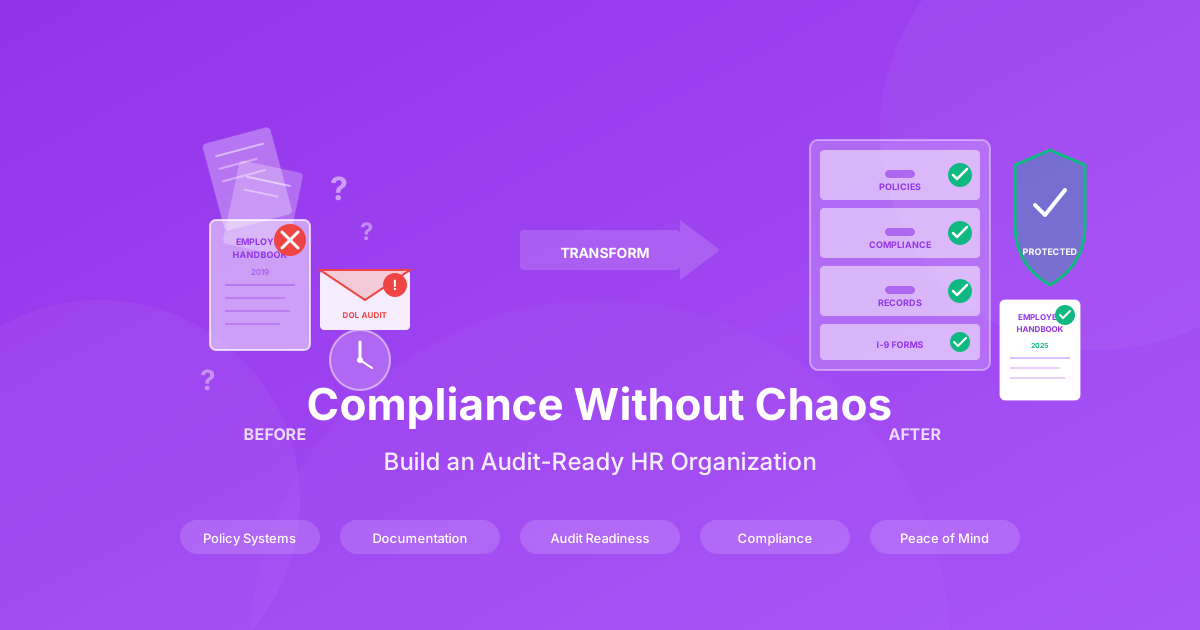
The email arrives at 3pm on a Thursday.
"DOL audit scheduled for next month. Please have all documentation ready for review."
Your stomach drops. You know exactly what's waiting in those files. The employee handbook hasn't been updated since 2019. At least three policies reference laws that have changed. You're not entirely sure where the I-9 forms are stored, or if they're even organized properly. And that remote work policy you've been meaning to formalize for the past two years? Still a collection of email threads and verbal agreements.
Meanwhile, your inbox is flooding with questions about benefits enrollment, a manager needs help with a performance issue, someone's asking about FMLA eligibility, and recruiting wants to know why their offer letter template is missing a required disclosure.
Welcome to HR in the real world.
Every HR director knows this feeling. The constant tension between fighting today's fires and building the systems that would prevent tomorrow's disasters. The 3am anxiety about what you might have missed. The nagging fear that somewhere in your organization, there's a ticking compliance bomb just waiting to explode.
You're not alone. According to SHRM research, HR professionals spend up to 73% of their time on administrative tasks, leaving precious little bandwidth for the strategic work that actually prevents problems. And when the audit notice arrives or the lawsuit lands on your desk, all those urgent employee relations fires suddenly seem trivial compared to the documentation gap that could cost your company hundreds of thousands of dollars.
The truth is, most HR departments aren't poorly run. They're understaffed, under-resourced, and perpetually reacting to the crisis of the moment. The handbook doesn't get updated because there's always something more pressing. The compliance calendar doesn't exist because building one feels overwhelming when you're already drowning.
But here's what separates HR leaders who sleep well from those who don't: systems. Not heroic individual effort. Not working longer hours. Systems that make compliance the default, not the exception.
This guide incorporates insights from HR directors and CHROs across manufacturing, healthcare, and professional services who have built audit-ready compliance programs.
The Hidden Costs of HR Chaos
Before we talk solutions, let's be honest about what's at stake. HR compliance failures aren't just inconvenient. They're expensive in ways that often don't show up until it's too late.
Legal Exposure
Employment lawsuits average over $200,000 in defense costs alone, regardless of outcome. Discrimination claims, wrongful termination suits, wage and hour class actions. These cases often hinge on documentation, or the lack of it. That performance issue you didn't document? That policy exception you made without a paper trail? Those become plaintiff's exhibits.
Regulatory Penalties
The Department of Labor doesn't issue warnings. I-9 violations can reach $2,500 per form for first offenses and escalate dramatically from there. OSHA fines, ADA violations, FMLA interference claims. Each regulatory agency has its own penalty structure, and they're all getting more aggressive about enforcement. The DOL recovers over $300 million annually in back wages alone.
Turnover Costs
Poor HR practices drive turnover. When employees don't trust that policies are applied consistently, when they can't get answers to basic questions, when they feel the company is disorganized, they leave. Replacing an employee costs 50-200% of their annual salary. Multiply that across your workforce, and inconsistent HR practices become your biggest hidden expense.
Time Drain
HR teams without systems spend 40% or more of their time on administrative tasks that could be systematized. Answering the same policy questions repeatedly. Hunting for documents. Recreating templates. That's time not spent on talent development, culture building, or strategic initiatives that actually move the business forward.
Reputation Damage
Glassdoor reviews mention HR practices. Candidates research your company before applying. One viral story about an HR failure can damage your employer brand for years. And in a tight labor market, that reputation costs you every single hire.
Personal Cost
Perhaps the heaviest burden: the toll on you. The Sunday evening dread. The inability to fully disconnect on vacation. The constant low-grade anxiety that something important has slipped through the cracks. This isn't sustainable, and it's not necessary.
The Framework: Building an HR Compliance System
The path from chaos to confidence isn't about working harder. It's about building interconnected systems that make compliance automatic. Here's the framework that transforms HR departments from reactive firefighting to proactive protection.

Component 1: Policy Foundation
Every audit, every lawsuit, every employee dispute ultimately comes back to one question: "What does your policy say?"
Your policy foundation includes:
Core Policies Every Organization Needs:
- Employee handbook (comprehensive, current, accessible)
- Anti-harassment and non-discrimination policy
- Code of conduct and ethics
- Attendance and time off policies
- Remote work and flexible schedule policies
- Social media and technology use policies
- Safety and workplace violence prevention
- Leave policies (FMLA, state leaves, company leaves)
- Compensation and pay practices
- Performance management guidelines
- Disciplinary action procedures
- Confidentiality and data protection
- Conflict of interest policy
- Drug and alcohol policy
- Equal employment opportunity statement
- At-will employment disclaimer
- Whistleblower protection
- Expense reimbursement
- Travel policies
- Emergency procedures
The Policy Review Calendar:
- Annual comprehensive review of all policies
- Triggered reviews when laws change
- Quarterly spot-checks of most-referenced policies
- Version control and change documentation
Employee Acknowledgment Tracking:
- Initial acknowledgment at hire
- Re-acknowledgment when significant changes occur
- Digital signature capture with timestamps
- Organized records by employee
Your policy foundation isn't a one-time project. It's a living system that requires regular attention. But with proper templates and calendars in place, maintaining it becomes routine rather than overwhelming.
Explore comprehensive HR policy templates to build your policy foundation.
Component 2: Compliance Calendar
Compliance isn't something you think about when auditors call. It's something you schedule, track, and systematize throughout the year.
Annual Compliance Deadlines:
- EEO-1 reporting (typically due in March)
- ACA reporting (January-March)
- 401(k) non-discrimination testing
- State-specific reporting requirements
- Minimum wage updates (varies by state)
- Poster compliance verification
- Benefits enrollment periods
Recurring Review Cycles:
- I-9 audits (quarterly recommended)
- Policy review and updates (annual minimum)
- Training completion verification
- Certification renewals
- Employee file audits
- Classification reviews (exempt/non-exempt)
Triggered Compliance Activities:
- New hire documentation (within 3 days for I-9)
- Termination documentation (immediately)
- Leave administration (specific timeframes for notices)
- Accommodation requests (prompt engagement required)
- Incident investigations (immediate response)
Building a compliance calendar transforms reactive scrambling into proactive management. When you know what's coming, you can prepare. When you track deadlines, nothing slips through.
Component 3: Documentation Discipline
"If it isn't documented, it didn't happen." This HR mantra exists because it's true. In any dispute, investigation, or audit, documentation is your protection.
What to Document:
- Performance discussions (positive and corrective)
- Policy violations and disciplinary actions
- Accommodation requests and interactive process
- Leave requests and approvals
- Complaints and investigation outcomes
- Training completion
- Policy acknowledgments
- Compensation decisions and rationale
- Termination decisions and reasoning
How to Document:
- Contemporaneous notes (same day or next day)
- Factual language (observations, not interpretations)
- Specific examples with dates
- Consistent format across the organization
- Secure storage with appropriate access controls
Record Retention Requirements:
- Personnel files: 7 years after termination (varies by state)
- I-9 forms: 3 years from hire OR 1 year after termination, whichever is later
- Payroll records: 3-7 years depending on type
- Benefits records: 6 years minimum under ERISA
- Training records: Duration of employment plus 3 years
- Applicant records: 2 years minimum (4 years for federal contractors)
Audit Trail Best Practices:
- Date and signature on all documents
- Version control for updated policies
- Chain of custody for sensitive documents
- Regular backup of electronic records
- Secure destruction protocols when retention expires
Documentation discipline isn't bureaucracy. It's protection. Every documented conversation, every filed form, every saved email becomes evidence of your organization's good faith efforts to comply.
Component 4: Compensation Structure
Pay equity isn't just a compliance issue. It's a retention issue, a recruiting issue, and increasingly, a legal exposure issue. States are expanding pay transparency requirements, and the EEOC is focused on compensation discrimination.
Pay Equity Analysis:
- Regular review of compensation by gender, race, and other protected categories
- Job grouping methodology (similar skills, effort, responsibility)
- Statistical analysis for disparities
- Documented explanation for legitimate differences (experience, performance, location)
- Remediation plans for identified issues
Salary Planning Systems:
- Job descriptions with salary grades/bands
- Market data integration and benchmarking
- Merit increase guidelines and budgets
- Promotion and adjustment protocols
- Documentation of all compensation decisions
Benefits Documentation:
- Plan documents and summary plan descriptions
- Enrollment records
- COBRA administration
- ACA compliance records
- Beneficiary designations
Your compensation planning resources provide frameworks for building defensible pay structures.
Component 5: Employee Lifecycle Management
From application to exit interview, every stage of the employee lifecycle creates compliance obligations and documentation needs.
Onboarding Documentation:
- Offer letters with required disclosures
- I-9 completion (Section 1 by Day 1, Section 2 within 3 business days)
- W-4 and state tax forms
- Benefits enrollment
- Policy acknowledgments
- Equipment and access provisioning
- Training completion records
Ongoing Employment:
- Performance reviews and documentation
- Goal setting and progress tracking
- Training and development records
- Disciplinary actions and warnings
- Transfers and promotions
- Compensation adjustments
- Leave management
Offboarding Checklists:
- Resignation acceptance or termination documentation
- Final pay compliance (varies significantly by state)
- Benefits continuation notices (COBRA)
- Exit interview documentation
- Equipment return
- Access revocation
- Reference request protocols
- File retention and archiving
Each lifecycle stage has specific compliance requirements and timelines. Missing any of them creates exposure. Systematic checklists ensure nothing falls through the cracks.
Explore recruitment resources and performance management tools to strengthen lifecycle management.
The Toolkit: Templates That Transform
Knowing what you need is only half the battle. Having the actual documents, forms, and templates makes the difference between good intentions and actual compliance.
| Challenge | Template Solution | Outcome |
|---|---|---|
| Outdated employee handbook | Employee Handbook Template | Current, compliant, comprehensive policies in one document |
| Audit notice received | HR Compliance Checklist | Step-by-step preparation, nothing overlooked |
| Policies are inconsistent | HR Policy Bundle | Standardized language, professional formatting, legal compliance |
| No documentation trail | Employee Documentation Forms | Consistent records that protect against liability |
| Compensation questions | Salary Planning Spreadsheet | Pay equity analysis, defensible compensation decisions |
| Chaotic onboarding | Onboarding Checklist Bundle | Consistent new hire experience, complete compliance |
| Performance issues | Performance Documentation Templates | Progressive discipline records that hold up in court |
| Leave management confusion | FMLA/Leave Tracking System | Proper notices, accurate tracking, deadline compliance |
| Termination anxiety | Termination Checklist and Documentation | Complete final pay compliance, reduced wrongful termination risk |
These templates aren't just forms. They're an integrated system. The handbook references the policies. The policies connect to the documentation forms. The documentation forms support the compliance calendar. Everything works together to create comprehensive protection.
Visit the HR Management Hub to explore the complete toolkit.
Quick Wins: Start Today
You don't have to transform everything at once. Here are immediate actions that create real protection:
This Week
Pull your five most-referenced policies. Read them. Are they current? Do they reflect actual practice? Do they comply with current law? If you find one that references a law that's changed or a practice you no longer follow, that's your first priority.
Check your I-9 storage. Are they separate from personnel files? Are they organized by employee status (active vs. terminated)? Can you retrieve any employee's I-9 within minutes? I-9 violations are among the most common and most expensive compliance failures.
This Month
Create a policy review calendar. List every policy, assign an owner, set a review date. Even if you can't update everything immediately, you'll know what exists and when it was last reviewed.
Audit your employee files. Pick 10 random files. Do they contain required documents? Are they organized consistently? Is confidential medical information separated? This spot-check reveals systemic issues before auditors do.
This Quarter
Verify required postings. Federal and state labor law postings change regularly. Are yours current? Are they visible in all required locations, including for remote workers?
Review your handbook acknowledgments. Can you prove every employee received the current handbook? If not, conduct a re-acknowledgment campaign now, before you need that documentation.
Conduct classification review. Are your exempt employees properly classified? Misclassification claims are the fastest-growing area of employment litigation.
Ongoing
Document everything. The conversation you think is minor might be evidence later. Train your managers to document consistently. Create a culture where documentation is routine, not punitive.
Audit Readiness Assessment
Take this quick assessment to understand your current state:
- Employee handbook updated within the last 12 months
- All employees have signed current policy acknowledgments
- I-9 forms completed correctly and stored separately from personnel files
- Required labor law postings current and visible (including for remote workers)
- Personnel files organized with confidential information separated
- Termination documentation consistent and thorough
- Pay practices documented and defensible
- Training records maintained for all required training
- Performance documentation exists for all employees with issues
- Compliance calendar created and actively tracked
- Leave administration follows proper notice requirements
- Accommodation requests documented through interactive process
If you checked fewer than half, you have significant exposure. If you checked most, you're ahead of many organizations but still have work to do. If you checked all, you're genuinely audit-ready.
The Transformation
Picture this instead:
The audit notice arrives. You acknowledge it calmly and pull the prepared documentation binder. I-9s organized by year and status. Personnel files complete and consistent. Policy acknowledgments with timestamps. Training records with completion dates. The auditor spends two days finding minor paperwork corrections. No penalties. No drama.
A new employment law passes. Within a week, your updated policy is drafted, reviewed by counsel, and distributed to employees for acknowledgment. You track completions automatically and follow up with stragglers. Compliance achieved before the deadline.
A manager messages: "What's our policy on personal cell phone use during work hours?" You send a link to the relevant policy section in 30 seconds. They have their answer. You've moved on.
An employee files a complaint. You pull comprehensive documentation of your investigation, the actions taken, and the follow-up. The EEOC reviews it and closes the case. Your systematic approach protected the organization.
A compensation discrimination claim arrives. You produce the job grouping analysis, the market data, the documented rationale for every pay decision. The claim has no merit because your process was defensible.
And perhaps most importantly: you sleep better. You take vacations without checking email constantly. You focus on the strategic work, on building culture and developing talent, on making your organization a great place to work. Because the compliance foundation is solid, you have bandwidth for everything else.
This isn't fantasy. It's what systematic HR looks like. It's achievable with the right frameworks, templates, and discipline.
Building Your Audit-Ready Organization
Transforming from chaos to compliance doesn't happen overnight. But it does happen through consistent, systematic effort. Start with the highest-risk areas. Build your documentation habits. Create your compliance calendar. Implement the templates that enforce consistency.
Every policy you update, every form you standardize, every process you document makes your organization stronger. Every audit you pass, every lawsuit you avoid, every compliance question you answer confidently proves the value of the investment.
Your HR department can be the strategic partner your organization needs. It can drive engagement, develop talent, and build culture. But only when the compliance foundation is solid. Only when the administrative chaos is tamed. Only when the systems are in place.
The auditors will come eventually. The lawsuits may arrive. The compliance questions will definitely keep coming. The only question is whether you'll face them with anxiety or confidence.
Build the system. Create the documentation. Establish the processes. Transform compliance from your biggest worry into your strongest protection.
Ready to build an audit-ready HR organization? Explore our comprehensive HR Management Hub for templates, checklists, and resources that transform compliance chaos into systematic confidence. Start with our HR policy templates or review our compliance documentation tools to begin your transformation today.