HIPAA Compliance Checklist: Complete Guide for Healthcare Organizations

The Health Insurance Portability and Accountability Act (HIPAA) establishes national standards for protecting sensitive patient health information. For healthcare organizations and their business associates, HIPAA compliance is not optional—violations can result in penalties ranging from $100 to $50,000 per incident, with annual maximums reaching $1.5 million per violation category. This comprehensive checklist breaks down HIPAA requirements into actionable steps. For additional security and compliance resources, visit our Enterprise Security Policy Library.
Understanding HIPAA Fundamentals
Before implementing compliance measures, it's essential to understand HIPAA's core concepts and who must comply.
Key HIPAA Terms
- Protected Health Information (PHI) - Any individually identifiable health information transmitted or maintained in any form
- Electronic PHI (ePHI) - PHI that is created, stored, transmitted, or received electronically
- Covered Entities - Healthcare providers, health plans, and healthcare clearinghouses
- Business Associates - Third parties that create, receive, maintain, or transmit PHI on behalf of covered entities
- Minimum Necessary Standard - Only access or disclose the minimum PHI needed for a specific purpose
HIPAA Rules Overview
HIPAA consists of several interconnected rules:
| Rule | Purpose | Key Requirements |
|---|---|---|
| Privacy Rule | Protects PHI in all forms | Patient rights, permitted uses, authorizations |
| Security Rule | Protects ePHI specifically | Administrative, physical, technical safeguards |
| Breach Notification Rule | Requires breach reporting | Notification timelines and procedures |
| Enforcement Rule | Establishes penalties | Violation categories and fine structures |
| Omnibus Rule | Strengthens protections | Business associate requirements, penalties |
Determine Your Compliance Obligations
First, determine whether your organization is a covered entity or business associate:
Covered entities must comply with all HIPAA rules. Business associates must comply with the Security Rule and relevant Privacy Rule provisions through Business Associate Agreements (BAAs).
Administrative Safeguards Checklist
Administrative safeguards are policies and procedures designed to clearly show how the entity complies with HIPAA. These represent the largest category of HIPAA requirements.
1. Security Management Process
Implement policies and procedures to prevent, detect, contain, and correct security violations:
- Risk Analysis - Conduct accurate and thorough assessment of potential risks to ePHI
- Risk Management - Implement security measures to reduce risks to appropriate levels
- Sanction Policy - Apply appropriate sanctions against workforce members who violate policies
- Information System Activity Review - Regularly review audit logs, access reports, and security incidents
2. Assigned Security Responsibility
- Designate a Security Officer responsible for developing and implementing security policies
- Designate a Privacy Officer responsible for privacy policy development and compliance
- Document responsibilities and ensure adequate authority to fulfill duties
3. Workforce Security
Implement policies ensuring appropriate workforce access to ePHI:
| Control | Purpose | Implementation |
|---|---|---|
| Authorization procedures | Control access to ePHI | Role-based access approval process |
| Workforce clearance | Verify appropriate access | Background checks, access reviews |
| Termination procedures | Remove access promptly | Immediate access revocation process |
4. Information Access Management
- Access Authorization - Implement policies for granting access to ePHI
- Access Establishment and Modification - Document procedures for creating, modifying, and reviewing access rights
- Minimum Necessary - Limit access to only the PHI needed for job functions
5. Security Awareness and Training
Develop comprehensive training programs:
- Initial Training - All workforce members before accessing ePHI
- Periodic Reminders - Regular security updates and awareness communications
- Phishing Protection - Training to recognize and report suspicious emails
- Password Management - Policies for creating and protecting passwords
- Malware Prevention - Procedures for detecting and reporting malicious software
Security awareness training must be ongoing—a single annual session is insufficient for HIPAA compliance.
6. Security Incident Procedures
Establish procedures to identify, respond to, and document security incidents:
- Incident Identification - Define what constitutes a security incident
- Response Procedures - Document steps for containing and investigating incidents
- Documentation - Maintain records of all security incidents and outcomes
- Lessons Learned - Update policies and training based on incident analysis
7. Contingency Planning
Develop and maintain emergency procedures:
- Data Backup Plan - Create and maintain retrievable exact copies of ePHI
- Disaster Recovery Plan - Procedures to restore lost data and systems
- Emergency Mode Operation Plan - Enable continuation of critical processes during emergencies
- Testing and Revision - Periodically test and update contingency plans
- Applications and Data Criticality Analysis - Identify critical systems and prioritize recovery
8. Evaluation
- Periodic Assessment - Conduct periodic technical and non-technical evaluations
- Response to Changes - Evaluate when environmental or operational changes occur
- Documentation - Maintain evaluation records and remediation plans
9. Business Associate Contracts
- BAA Requirements - Ensure contracts require appropriate safeguards for PHI
- Subcontractor Management - Require business associates to obtain same assurances from subcontractors
- Breach Reporting - Include provisions for breach notification to covered entity
Physical Safeguards Checklist
Physical safeguards protect the physical systems and buildings where ePHI is stored or accessed.
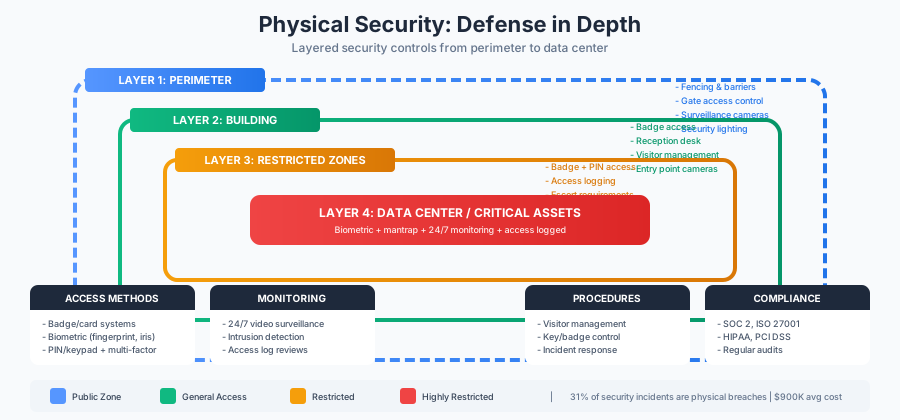
1. Facility Access Controls
Limit physical access to electronic information systems:
- Contingency Operations - Procedures for facility access during emergencies
- Facility Security Plan - Document safeguards to protect facility and equipment
- Access Control and Validation - Control and validate physical access based on role
- Maintenance Records - Document repairs and modifications to physical components
2. Workstation Use and Security
- Workstation Use Policy - Specify proper functions and physical attributes of workstations
- Workstation Security - Implement physical safeguards restricting access to authorized users
- Screen Positioning - Ensure screens are not visible to unauthorized individuals
- Clean Desk Policy - Require clearing of PHI from workstations when unattended
3. Device and Media Controls
Govern receipt, movement, and disposal of hardware and electronic media:
| Control | Requirement | Implementation |
|---|---|---|
| Disposal | Policies for final disposition of ePHI/media | Secure destruction, sanitization |
| Media Re-use | Procedures for removing ePHI before re-use | Verified data wiping |
| Accountability | Records of hardware/media movements | Inventory tracking system |
| Data Backup | Copy of ePHI before moving equipment | Backup verification process |
Technical Safeguards Checklist
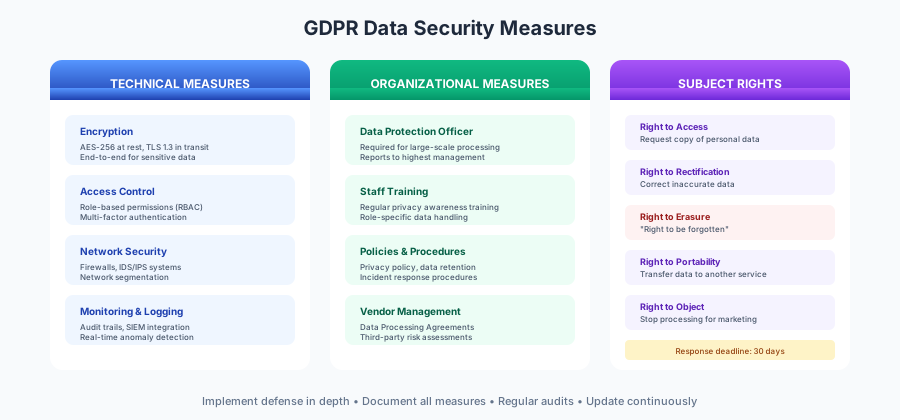
Technical safeguards are the technology and related policies protecting ePHI and controlling access.
1. Access Control
Implement technical policies limiting access to ePHI:
- Unique User Identification - Assign unique identifier for tracking user identity
- Emergency Access Procedure - Establish procedures for obtaining ePHI during emergencies
- Automatic Logoff - Terminate sessions after predetermined period of inactivity
- Encryption and Decryption - Implement mechanism to encrypt and decrypt ePHI
2. Audit Controls
- Implement Audit Logging - Record and examine activity in systems containing ePHI
- Log Content - Include user ID, timestamp, action performed, and data accessed
- Log Retention - Maintain audit logs for minimum of six years
- Regular Review - Establish procedures for reviewing audit log activity
3. Integrity Controls
- Mechanism to Authenticate ePHI - Ensure ePHI has not been altered or destroyed improperly
- Electronic Signatures - Implement controls for document authenticity where applicable
- Error Correcting Mechanisms - Detect and correct errors in transmission
4. Person or Entity Authentication
- Verify Identity - Implement procedures verifying persons seeking access are who they claim to be
- Multi-Factor Authentication - Consider implementing MFA for remote access
- Authentication Mechanisms - Passwords, tokens, biometrics, or combinations
5. Transmission Security
Protect ePHI transmitted over electronic networks:
- Integrity Controls - Ensure ePHI is not improperly modified during transmission
- Encryption - Implement encryption mechanism for transmitting ePHI
- Secure Protocols - Use TLS 1.2 or higher for data in transit
- VPN Requirements - Establish VPN policies for remote access to ePHI
Breach Notification Requirements
HIPAA requires specific actions when a breach of unsecured PHI occurs.
What Constitutes a Breach
A breach is the acquisition, access, use, or disclosure of PHI in violation of the Privacy Rule that compromises the security or privacy of the PHI. Exceptions include:
- Unintentional acquisition by workforce member acting in good faith
- Inadvertent disclosure between authorized persons
- Disclosure where recipient could not reasonably retain information
Breach Notification Timeline
| Breach Size | Notification Requirement | Timeline |
|---|---|---|
| 500+ individuals (same state) | HHS, individuals, and media | Within 60 days of discovery |
| Under 500 individuals | HHS and affected individuals | 60 days (individuals), annual log (HHS) |
| All breaches | Document in breach log | Ongoing |
Notification Content Requirements
Individual notifications must include:
- Description of what happened and dates
- Types of PHI involved
- Steps individuals should take to protect themselves
- What the organization is doing to investigate, mitigate, and prevent future breaches
- Contact procedures for questions
The 60-day clock starts when the breach is discovered, not when the investigation concludes—don't delay notification while investigating.
Risk Assessment Process
Regular risk assessments are the foundation of HIPAA compliance.
Risk Assessment Steps
- Identify ePHI - Document where ePHI is created, received, maintained, or transmitted
- Identify Threats - Document potential threats to ePHI (natural, human, environmental)
- Identify Vulnerabilities - Assess weaknesses that could be exploited
- Assess Current Controls - Evaluate existing security measures
- Determine Likelihood - Estimate probability of threat occurrence
- Determine Impact - Assess potential impact if threat exploits vulnerability
- Calculate Risk Level - Combine likelihood and impact for risk rating
- Document Findings - Maintain comprehensive risk assessment documentation
- Implement Remediation - Address identified risks based on priority
- Monitor and Review - Continuously monitor and update assessment
Risk Assessment Frequency
- Annual Assessment - Conduct comprehensive assessment at least annually
- Triggered Assessment - Perform when significant changes occur
- Post-Incident Assessment - Evaluate after security incidents or breaches
Documentation Requirements
HIPAA requires extensive documentation, retained for six years from creation or last effective date.
Required Documentation
- Security policies and procedures
- Risk assessments and management plans
- Workforce training records
- Business Associate Agreements
- Incident reports and responses
- Contingency and disaster recovery plans
- Access authorization records
- Audit logs and review documentation
- Breach notification records
Documentation Best Practices
- Use version control for all policies
- Maintain evidence of policy acknowledgment
- Document policy exceptions and approvals
- Keep training attendance and completion records
- Archive superseded documents for retention period
Common HIPAA Compliance Mistakes
1. Insufficient Risk Analysis
Many organizations conduct superficial risk assessments or treat them as one-time events. HIPAA requires thorough, ongoing risk analysis.
2. Inadequate Business Associate Management
Failing to execute proper BAAs or monitor business associate compliance exposes covered entities to liability.
3. Lack of Encryption
While encryption is "addressable" under HIPAA, failing to encrypt ePHI without documented equivalent alternatives is a common violation.
4. Poor Access Controls
Granting excessive access, failing to revoke access promptly, and not implementing minimum necessary standards lead to violations.
5. Insufficient Training
One-time or infrequent training programs fail to maintain security awareness and demonstrate compliance commitment.
6. Delayed Breach Response
Failing to identify breaches promptly or delaying notification beyond 60 days results in additional penalties.
HIPAA Compliance Templates and Tools
Implementing HIPAA compliance requires comprehensive documentation. Our toolkit includes:
- HIPAA Security Assessment Template - Complete security risk assessment framework
- Security Policy Templates - Comprehensive policy documentation
- Compliance Audit Checklists - Assessment and audit frameworks
- Incident Response Templates - Breach response procedures
Additional Resources:
- Enterprise Security Policy Library - Comprehensive security documentation hub
- Security & Compliance Hub - All compliance resources
- Regulatory Compliance Guides - GDPR, SOC 2, and more
- GDPR Compliance Guide - EU data protection compliance
Take Action on HIPAA Compliance Today
HIPAA compliance protects both your patients and your organization. The consequences of non-compliance—financial penalties, reputational damage, and potential harm to patients—far outweigh the investment in proper security measures.
Start with a comprehensive risk assessment, implement the safeguards outlined in this checklist, and maintain ongoing documentation of your compliance efforts. Remember that HIPAA compliance is not a destination but an ongoing process of assessment, implementation, and improvement.
Ready to strengthen your healthcare compliance posture? Explore our HIPAA Security Assessment Template and Security & Compliance Hub for the tools you need to protect patient data effectively.