Contract Agreement Templates for Small Business: Service, Employment & NDA

Every business relationship needs clear expectations and legal protection. Whether you're hiring your first employee, working with contractors, or serving customers, having the right contracts in place protects your interests and prevents costly disputes. For comprehensive resources, visit our HR Management Hub and Security & Compliance Hub.
Why Professional Contracts Are Essential
Properly drafted contracts serve as the foundation of all business relationships:
- Legal protection - Clearly defined rights and obligations
- Dispute prevention - Reduces misunderstandings and conflicts
- Payment security - Ensures timely payment and clear terms
- Intellectual property protection - Safeguards your business assets
- Professional credibility - Demonstrates business sophistication
The cost of inadequate contracts
Without proper contracts, businesses face payment delays, scope creep, legal disputes, and loss of intellectual property. Don't leave your business vulnerable.
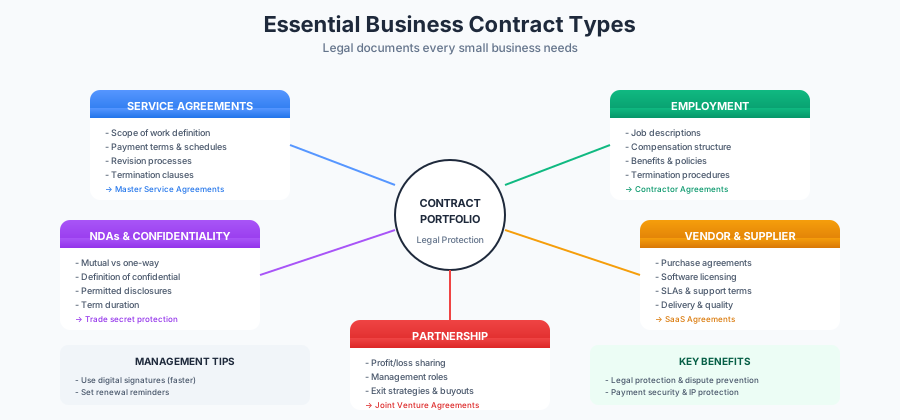
Essential Business Contract Types
1. Service Agreements
The backbone of service-based businesses. For projects and consulting engagements, pair your service agreement with a Statement of Work Template to clearly define deliverables, timelines, and acceptance criteria.
- Scope of work definition and deliverables
- Payment terms and schedules
- Timeline and milestones for project completion
- Revision and change order processes
- Termination clauses and notice requirements
2. Employment Contracts
Protect both employer and employee interests:
Key components: Job description, compensation structure, benefits, confidentiality agreements, and termination procedures.
3. Independent Contractor Agreements
Essential for working with freelancers and consultants:
- Classification compliance - Avoid misclassification issues
- Intellectual property ownership and licensing
- Payment terms and expense policies
- Non-compete and non-disclosure provisions
Client and Customer Contracts
Master Service Agreements (MSA)
Streamline repeat business relationships:
Benefits:
- Faster project initiation
- Consistent terms across all projects
- Reduced legal review time
- Improved efficiency in contract management
Key Elements:
- General terms and conditions
- Statement of work templates
- Payment and invoicing procedures
- Liability and indemnification clauses
Software as a Service (SaaS) Agreements
For digital service providers:
Essential Clauses:
- Service level agreements (SLAs) and uptime guarantees
- Data protection and privacy provisions
- Subscription terms and auto-renewal policies
- Limitation of liability and warranty disclaimers
Non-Disclosure Agreements (NDAs)
Protect sensitive business information:
- Mutual vs. one-way protection
- Definition of confidential information
- Permitted disclosures and exceptions
- Term duration and return of information
A well-drafted NDA can be the difference between maintaining competitive advantage and losing trade secrets.
Vendor and Supplier Contracts
Purchase Agreements
Ensure smooth vendor relationships:
- Product specifications and quality standards
- Delivery terms and shipping responsibilities
- Payment schedules and early payment discounts
- Return and warranty policies
Software Licensing Agreements
Navigate complex software relationships:
- License scope and permitted uses
- User limitations and restrictions
- Maintenance and support provisions
- Termination rights and data portability
Professional Services Contracts
When hiring lawyers, accountants, and consultants:
- Engagement scope and objectives
- Fee structure and billing practices
- Confidentiality and conflict of interest policies
- Professional liability and insurance requirements
Partnership and Joint Venture Agreements
Business Partnership Contracts
Structure successful business partnerships:
Critical Elements:
- Profit and loss sharing arrangements
- Management responsibilities and decision-making authority
- Capital contributions and additional funding requirements
- Exit strategies and partnership dissolution procedures
Joint Venture Agreements
For collaborative business projects:
- Project scope and objectives
- Resource contributions from each party
- Intellectual property creation and ownership
- Revenue sharing and expense allocation
Contract Agreement Template Checklist
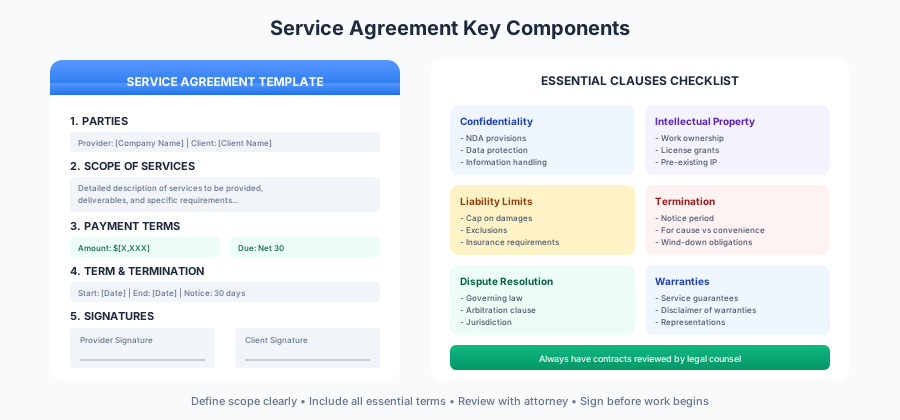
Before using any contract agreement template, verify it includes these essential elements:
| Element | Why It Matters | Common Mistake |
|---|---|---|
| Parties and recitals | Establishes who is bound | Missing legal entity names |
| Scope of work / deliverables | Defines what's being exchanged | Vague or open-ended scope |
| Payment terms and schedule | Prevents payment disputes | No late payment penalties |
| Intellectual property clause | Protects created work | Unclear ownership of deliverables |
| Confidentiality provisions | Safeguards sensitive information | No definition of what's confidential |
| Termination and notice period | Allows exit without breach | No notice period specified |
| Dispute resolution method | Determines how conflicts are handled | Defaulting to litigation |
| Governing law and jurisdiction | Sets legal framework | Mismatched state laws |
| Force majeure clause | Covers unforeseeable events | Not included at all |
| Signatures and effective date | Makes contract enforceable | Missing date or witness |
Contract Management Best Practices
Template Customization
Make templates work for your business:
- Industry-specific modifications and requirements
- State law compliance and local regulations
- Business model alignment and operational needs
- Risk tolerance and liability preferences
When to Use Which Contract Type
Choosing the right contract agreement template depends on the business relationship:
- One-time project with a client — Use a Service Agreement with a detailed Statement of Work
- Ongoing client relationship — Use a Master Service Agreement (MSA) with individual SOWs
- Hiring a full-time employee — Use an Employment Contract with non-compete and IP assignment
- Hiring a freelancer or consultant — Use an Independent Contractor Agreement (be careful about worker classification)
- Sharing confidential information — Use a Non-Disclosure Agreement before disclosing anything sensitive
- Working with a vendor or supplier — Use a Purchase Agreement or Vendor Agreement
- Launching a business partnership — Use a Partnership Agreement or Joint Venture Agreement
- Licensing software — Use a Software License Agreement with SLA terms
Digital Contract Management
Streamline your contract processes:
- Electronic signatures for faster execution
- Cloud storage for easy access and organization
- Automated reminders for renewal and key dates
- Version control to track changes and updates
Common Contract Mistakes to Avoid
Even with professional templates, businesses make avoidable errors:
- Using verbal agreements for significant deals — Verbal contracts are legally binding in some cases but nearly impossible to enforce. Always put agreements in writing.
- Copy-pasting contracts without customization — Generic templates miss industry-specific requirements. A SaaS contract needs different clauses than a construction contract.
- Ignoring state-specific requirements — Employment contracts, non-competes, and NDAs vary significantly by state. California, for example, generally prohibits non-compete agreements.
- Not defining deliverables precisely — "Website development" is too vague. Specify pages, features, revisions, browser compatibility, and acceptance criteria.
- Skipping the termination clause — Without clear exit terms, ending a contract can become as expensive as the contract itself.
Ready-to-Use Contract Templates
Our comprehensive Contract Templates Toolkit includes:
- Service Agreement Templates - Multiple service types
- Employment Contract Package - All employment documents
- NDA and Confidentiality Templates - Various protection levels
- Partnership Agreement Forms - Business partnerships
- Terms and Conditions Generator - Website and app terms
- Vendor Agreement Templates - Supplier relationships
- Statement of Work Template - Project scope definition
Each template is attorney-reviewed, customizable, and includes guidance for proper completion and execution.
Frequently Asked Questions
What should a basic contract agreement template include?
A basic contract agreement template should include identification of parties, scope of work or deliverables, payment terms and schedule, timeline, confidentiality provisions, termination clause, dispute resolution method, governing law, and signatures with an effective date. More complex relationships may require additional clauses for intellectual property, indemnification, and liability limitations.
Are free contract templates legally binding?
Yes, free contract templates can be legally binding when properly executed. A contract is enforceable when it contains an offer, acceptance, consideration (something of value exchanged), and mutual consent. However, free templates should be reviewed by a legal professional to ensure they comply with your state's laws and adequately protect your specific business interests.
What is the difference between a service agreement and an independent contractor agreement?
A service agreement defines the terms of a service being provided, including scope, payment, and deliverables. An independent contractor agreement specifically establishes that the worker is not an employee, addressing tax responsibilities, benefits exclusion, and worker classification. Using the wrong agreement type can result in misclassification penalties from the IRS.
How often should business contracts be reviewed and updated?
Business contracts should be reviewed at least annually and updated whenever there are changes in law, business operations, or the relationship itself. Employment contracts should be updated when compensation or roles change. Vendor agreements should be reviewed at renewal. Any contract should be reviewed immediately if a dispute arises or if relevant regulations change.
Do I need a lawyer to create a contract for my small business?
While templates provide a strong starting point, consulting a lawyer is recommended for high-value contracts, employment agreements in states with complex labor laws, intellectual property assignments, and any agreement involving significant liability. For routine service agreements and NDAs under $10,000 in value, a well-drafted template is often sufficient.
What is a Master Service Agreement and when should I use one?
A Master Service Agreement (MSA) is a contract that establishes the overarching terms for an ongoing business relationship. Individual projects are then governed by Statements of Work (SOWs) under the MSA. Use an MSA when you expect to do multiple projects with the same client, as it eliminates the need to renegotiate general terms for each engagement.
Protect Your Business Today
Don't operate without proper legal protection. Professional contracts are an investment in your business's security and success, preventing costly disputes and ensuring smooth operations.
Ready to protect your business? Get our Contract Templates Toolkit and establish professional legal foundations for all your business relationships.