<- Back to Blog

Complete Business Formation Guide: Legal Templates & Requirements

Vik Chadha
Vik Chadha · Founder & CEO ·
Complete Business Formation Guide: Legal Templates & Requirements

Starting a business is one of the most exciting ventures you can undertake, but the legal requirements can feel overwhelming. The good news? With the right templates and guidance, business formation becomes a manageable, step-by-step process that sets you up for long-term success. For comprehensive resources, visit our Financial Planning Hub and Security & Compliance Hub.

Why Proper Business Formation Matters

Professional business formation isn't just about paperwork—it's about protecting your personal assets, establishing credibility, and creating a foundation for growth:

  • Personal asset protection - Shield your personal finances from business liabilities
  • Tax optimization - Choose the structure that minimizes your tax burden
  • Credibility and trust - Professional structure builds confidence with customers and partners
  • Access to funding - Investors and lenders prefer properly formed entities
  • Compliance protection - Avoid costly penalties and legal issues
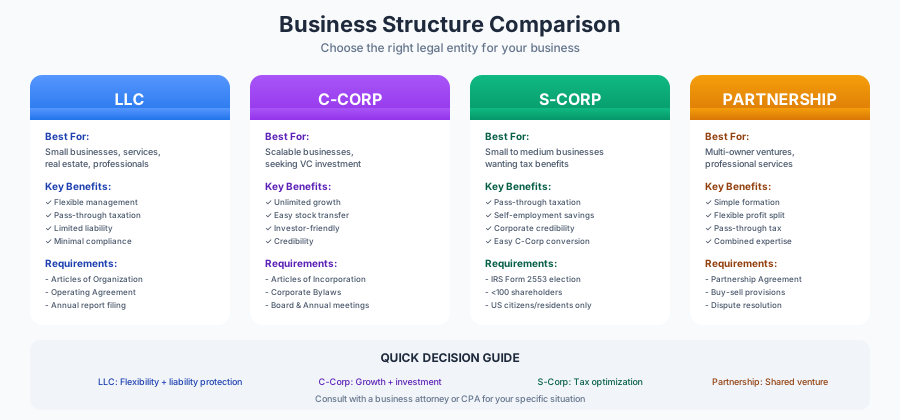
Business Structure Comparison - Choose the right legal entity for your business

The Cost of Improper Formation

Without proper legal structure, business owners face significant risks that can threaten both their business and personal assets.

Risk CategoryPotential ImpactPrevention
Personal liabilityUnlimited exposure to business debtsProper entity formation
Tax penalties20-75% of underpaid taxesCorrect structure selection
Contract disputes$50K-500K+ litigation costsClear agreements
Compliance violations$10K-100K+ finesAnnual filing compliance
Partner disputesBusiness dissolutionOperating/shareholder agreements
Pierced corporate veilPersonal asset seizureMaintain corporate formalities

Business Structure Comparison

Choosing the right entity type is the most important decision you'll make. Here's a comprehensive comparison:

Entity Type Comparison Matrix

FactorSole ProprietorLLCS-CorporationC-Corporation
Liability ProtectionNoneFullFullFull
Formation ComplexityNoneLowMediumHigh
Ongoing ComplianceMinimalLowMediumHigh
TaxationPersonal ratesPass-throughPass-throughDouble taxation
Self-Employment TaxFull (15.3%)FullReducedNone on salary
Ownership FlexibilityN/AUnlimited100 shareholders maxUnlimited
Investor AppealLowMediumMediumHigh
Ease of TransferDifficultModerateModerateEasy

Tax Implications by Structure

EntityIncome TaxSelf-EmploymentPayroll TaxPotential Savings
Sole Proprietor10-37%15.3% on all profitN/ABaseline
LLC (single member)10-37%15.3% on all profitN/ALiability protection
LLC (elect S-Corp)10-37%15.3% on salary onlyYes$5K-30K/year
S-Corporation10-37%15.3% on salary onlyYes$5K-30K/year
C-Corporation21% flatNoneYesVaries by situation

When Each Structure Makes Sense:

SituationRecommended StructureReasoning
Side business, low revenueSole Proprietor → LLCSimple start, upgrade when profitable
Service business, $75K+ profitLLC with S-Corp electionSE tax savings exceed compliance costs
Real estate holdingsLLC (separate per property)Asset isolation, pass-through losses
Tech startup seeking VCC-Corporation (Delaware)Required by most investors
Professional services (doctors, lawyers)PLLCState licensing requirements
Multiple owners, equal controlLLCFlexible management structure
Family business successionS-CorporationEasy stock gifting, estate planning

Essential Business Formation Documents

1. Articles of Incorporation/Organization

The foundational document that officially creates your business entity with the state:

LLC Articles of Organization Requirements:

ElementRequiredDescription
Business nameYesMust include LLC/L.L.C. designation
Registered agentYesPerson/service to receive legal notices
Principal officeYesPrimary business address
Organizer signatureYesPerson filing the articles
Purpose statementSome statesGeneral or specific business purpose
Management structureSome statesMember-managed or manager-managed
DurationOptionalPerpetual unless specified
Initial membersSome statesNames of founding members

Corporation Articles of Incorporation Requirements:

ElementRequiredDescription
Corporate nameYesMust include Inc./Corp./Ltd. designation
Authorized sharesYesNumber and class of shares authorized
Registered agentYesAgent for service of process
IncorporatorYesPerson filing the documents
DirectorsSome statesInitial board members
Par valueOptionalNominal share value
PurposeYesBusiness activities permitted
Stock classesIf applicableCommon, preferred, voting rights

2. Operating Agreements (LLC)

While not always legally required, an operating agreement is essential for protecting your LLC:

Operating Agreement Key Provisions:

SectionPurposeKey Elements
Ownership structureDefine member interestsPercentage ownership, capital contributions
ManagementEstablish controlMember-managed vs. manager-managed
Capital contributionsDocument investmentsInitial and additional contribution rules
Profit/loss allocationSpecify distributionsPro-rata or special allocations
Voting rightsDecision-making authorityMajority, supermajority, unanimous
Transfer restrictionsControl ownership changesRight of first refusal, approval requirements
DissolutionPlan for endingEvents triggering dissolution, wind-up process
Buy-sell provisionsHandle departuresBuyout triggers, valuation methods

Member Rights vs. Manager Rights:

Decision TypeMember-ManagedManager-Managed
Day-to-day operationsAll members voteManager decides
Major contractsMajority voteManager (up to limit)
New membersUnanimousUnanimous
Asset salesSupermajorityMember approval required
BorrowingVaries by amountManager (up to limit)
DistributionsManagerManager, per agreement

3. Corporate Bylaws

The internal rulebook governing corporation operations:

Bylaws Essential Components:

ComponentContentsImportance
Share structureClasses, voting rights, restrictionsDefines ownership rights
Board of DirectorsSize, terms, powers, removalCorporate governance
OfficersPositions, duties, appointmentDay-to-day management
MeetingsNotice, quorum, votingDecision-making process
CommitteesStanding and special committeesDelegated authority
IndemnificationOfficer/director protectionLiability protection
AmendmentsHow bylaws can be changedFuture flexibility
Fiscal yearAccounting periodTax and reporting

4. Shareholder Agreements

Critical for multi-owner corporations:

Shareholder Agreement Provisions:

ProvisionPurposeStandard Terms
Pre-emptive rightsMaintain ownership %Right to purchase pro-rata new shares
Right of first refusalControl who owns sharesCompany/shareholders can match offers
Tag-along rightsProtect minorityMinority can join majority sale
Drag-along rightsEnable exitsMajority can force minority sale
Voting agreementsAlign votingBoard seats, major decisions
Non-competeProtect businessDuration, geography, scope
ConfidentialityProtect informationPerpetual or time-limited
Anti-dilutionProtect valuePrice-based or structural

State-by-State Formation Guide

StateLLC Filing FeeCorp Filing FeeAnnual FeeTax ClimateBest For
Delaware$90$89$300+No sales tax, favorable courtsC-Corps, multi-state
Wyoming$100$100$52No income tax, privacyAsset protection, privacy
Nevada$75$75$350No income tax, privacyAsset protection
Texas$300$300$0No income taxLarge operations
Florida$125$70$139No income taxRetirees, tourism
New York$200$125$9High taxes, large marketLocal businesses
California$70$100$800+ minHigh taxes, large marketTech, entertainment

Formation Timeline by State

StateLLC ProcessingCorp ProcessingExpedited Available
Delaware3-5 business days3-5 business days24-hour ($50)
Wyoming2-3 business days2-3 business daysSame day ($100)
Nevada1-2 weeks1-2 weeks24-hour ($125)
Texas2-3 business days2-3 business daysSame day
California3-5 business days3-5 business daysSame day ($750)

Home State vs. Delaware Decision Framework

FactorForm in Home StateForm in Delaware
Single-state operations✓ RecommendedExtra costs, no benefit
Multi-state operationsQualify in each state✓ Centralized governance
Seeking VC fundingInvestors may require Delaware✓ Strongly preferred
Privacy concernsVaries by stateDirectors disclosed
Litigation concernsLocal courts✓ Specialized business courts
Annual costsLowerHigher ($300+ franchise tax)

Buy-Sell Agreements: Protecting Ownership Transitions

Triggering Events

EventDefinitionTypical Response
DeathOwner passes awayMandatory buyout
DisabilityUnable to perform dutiesBuyout option after period
RetirementVoluntary departure at ageBuyout right/obligation
TerminationEmployment endsVesting-based buyout
BankruptcyPersonal financial distressMandatory buyout
DivorceMarital dissolutionBuyout to prevent spousal ownership
Voluntary saleOwner wants to exitRight of first refusal
DeadlockOwners can't agreeShotgun clause or dissolution

Valuation Methods

MethodDescriptionBest ForProsCons
Fixed priceAgreed value, updated annuallySimple businessesSimple, predictableOften outdated
FormulaRevenue/earnings multipleStable businessesObjective, easyMay not reflect value
AppraisalProfessional valuation at eventComplex businessesMost accurateExpensive, slow
HybridFormula with appraisal ceiling/floorGrowing businessesBalance of speed and accuracyMore complex

Common Valuation Formulas:

Business TypeFormulaExample
Service business0.5-1.5x annual revenue$500K revenue = $250K-750K value
SaaS company3-10x ARR$1M ARR = $3M-10M value
Manufacturing3-5x EBITDA$200K EBITDA = $600K-1M value
Retail2-4x SDE$150K SDE = $300K-600K value
Professional services1-2x revenue + WIP$300K revenue = $300K-600K value

Funding Mechanisms

MechanismHow It WorksBest For
Life insuranceProceeds fund death buyoutDeath triggers
Disability insurancePolicies fund disability buyoutDisability triggers
Installment paymentsBuyer pays over 3-7 yearsVoluntary departures
Sinking fundCompany sets aside funds annuallyPlanned retirements
Seller financingDeparting owner finances buyerAny trigger
Bank loanBuyer obtains acquisition financingLarger buyouts

Corporate Governance Best Practices

Board of Directors Setup

Establish effective governance from the start:

Board Composition Guidelines:

Company StageBoard SizeCompositionMeeting Frequency
Early stage3 membersFounders + advisorQuarterly
Growth stage5 members2 founders, 2 investors, 1 independentMonthly
Mature7-9 members2-3 management, 4-6 independentMonthly + committees

Board Committee Structure:

CommitteePurposeMembersMeeting Frequency
AuditFinancial oversight3+ independentQuarterly
CompensationExecutive pay2-3 independentAnnually + as needed
Nominating/GovernanceBoard composition2-3 independentAnnually
RiskRisk management3+ mixedQuarterly

Compliance Calendar

Stay compliant with ongoing requirements:

Annual Compliance Requirements:

TaskDeadlineApplies ToConsequence of Missing
Annual reportAnniversary or calendar yearLLC, CorpAdministrative dissolution
Franchise taxVaries by stateAll entitiesPenalties + interest
Registered agent renewalAnnualAll entitiesLoss of good standing
Federal tax returnMarch 15 (S-Corp), April 15 (C-Corp)CorporationsPenalties + interest
State tax returnVariesAll entitiesPenalties + interest
Foreign qualification renewalVariesMulti-state entitiesLoss of authority
Meeting minutesAfter each meetingCorporationsPierced veil risk

Monthly/Quarterly Requirements:

TaskFrequencyApplies To
Payroll tax depositsPer payrollEmployers
Sales tax filingMonthly/quarterlyRetailers
Estimated tax paymentsQuarterlyAll entities
Board meetingsQuarterly minimumCorporations
Financial statementsMonthlyAll businesses

Partnership Agreements: Protecting All Parties

Partnership Type Comparison

TypeLiabilityManagementTaxationBest For
General PartnershipUnlimited, jointAll partnersPass-throughSimple, trust-based
Limited PartnershipGP unlimited, LP limitedGeneral Partner onlyPass-throughPassive investors
LLPLimited for allPer agreementPass-throughProfessionals
LLLPLimited for allGeneral PartnerPass-throughReal estate, investment

Partnership Agreement Essentials

General Partnership Key Terms:

ProvisionStandard TermsNegotiable Elements
Profit sharingEqual or per contributionSweat equity, preferred returns
Loss allocationFollows profit sharingLoss limitations
Management dutiesEqual management rightsDesignated managing partner
Capital accountsTrack contributionsInterest on capital
Draws/distributionsEqual or per agreementGuaranteed payments
New partnersUnanimous consentMajority approval
Withdrawal90-day noticeBuyout terms

Limited Partnership Structure

Partner TypeCapitalManagementLiabilityReturn
General Partner1-2%Full controlUnlimitedCarried interest + management fee
Limited Partner98-99%None (or lose protection)Investment onlyPro-rata profit share

LP Agreement Key Provisions:

ProvisionPurposeTypical Terms
Management feeCompensate GP1-2% of committed capital
Carried interestGP profit share20% over preferred return
Preferred returnLP priority8% annual hurdle
ClawbackProtect LPGP returns excess distributions
Capital callsFund investments10-day notice
Investment restrictionsLimit GP discretionDiversification, prohibited investments

Formation Checklist and Timeline

Pre-Formation (Week 1-2)

TaskDescriptionResources Needed
Choose business nameSearch availability, consider trademarkState database, USPTO
Select entity typeEvaluate tax and liability needsAccountant, attorney
Choose formation stateHome state vs. Delaware analysisThis guide
Draft operating agreementCustomize templateOperating agreement template
Obtain EINFederal tax ID numberIRS Form SS-4 (free)

Formation Filing (Week 2-3)

TaskDescriptionTypical Cost
Reserve business nameOptional 60-120 day hold$10-50
File articlesSubmit to Secretary of State$50-500
Appoint registered agentIn-state address for legal notices$50-300/year
Obtain certified copiesFor banking and licensing$10-50

Post-Formation (Week 3-4)

TaskDescriptionDeadline
Open business bank accountSeparate business financesImmediately
Obtain business licensesCity, county, state as neededBefore operations
Register for state taxesSales tax, payrollBefore first sale/hire
Set up accountingChart of accounts, softwareImmediately
Obtain insuranceGeneral liability, professionalBefore operations
File beneficial ownership reportFinCEN BOI ReportWithin 90 days of formation

Formation Cost Summary

ItemLLC RangeCorporation Range
State filing fee$50-500$50-500
Registered agent$0-300/year$0-300/year
Operating agreement/bylaws$0 (template) - $2,000 (attorney)$0-3,000
EINFreeFree
Business licenses$50-500$50-500
Initial accounting setup$200-1,000$500-2,000
Total Estimated$300-2,500$600-6,000

Industry-Specific Considerations

RequirementDetailsStates
PLLC/PC requiredCan't use standard LLC/CorpMost states
Professional licensingAll owners must be licensedAll states
Malpractice insuranceOften mandated minimumVaries
Peer reviewMay be requiredSome professions

Real Estate Investment

StructureUse CaseTax Treatment
Single-member LLCIndividual rental propertiesSchedule E pass-through
Multi-member LLCJoint venturesPartnership taxation
Series LLCMultiple propertiesSeparate liability per series
LP/LLC combinationSyndicationsGP control, LP investors

Technology Startups

StageRecommended StructureKey Documents
Pre-revenueLLC (convert later)Operating agreement, IP assignment
Seeking angelsDelaware C-CorpSAFE notes, stock purchase agreement
Seeking VCDelaware C-CorpPreferred stock, voting agreement
Pre-IPODelaware C-CorpAmended charter, registration rights

Ready-to-Use Business Formation Templates

Our comprehensive Business Formation Toolkit includes:

Each template is:

  • Attorney-reviewed for legal accuracy and best practices
  • State-compliant with guidance for jurisdiction-specific requirements
  • Fully customizable with clear instructions for personalization
  • Regularly updated to reflect current laws and regulations

Start Your Business the Right Way

Don't let legal complexity prevent you from starting your dream business. With proper formation documents and guidance, you can establish a professional, compliant business structure that protects your interests and positions you for growth.

Formation Investment ROI:

InvestmentCostPotential Protection
LLC formation$300-500Personal asset protection: unlimited
Operating agreement$0-2,000Partner dispute resolution: $50K-500K
Buy-sell agreement$500-3,000Ownership transition: business value
Annual compliance$100-500Maintained liability protection

Ready to get started? Download our Business Formation Toolkit and take the first step toward entrepreneurial success.

Explore More Financial Planning Resources

Financial planning templates, budgeting tools, and investment analysis resources

Need a Template for This?

Browse 200+ professional templates for IT governance, financial planning, and HR operations. 74 are completely free.